
You are applying to rent an apartment or a house. The landlord wants 2 to 3 months of bank statements plus 2
This page is the bank statement for rental application guide. It covers the income-to-rent ratio, the format landlords prefer, the conversion step-by-step, and the 2 things landlords flag immediately. The details are below.
Most mortgage lenders want 2 to 3 months of bank statements for every account on the application. Self-employed borrowers need 12 to 24 months. The format varies: most lenders accept PDF or Excel, some want both, and a few want a specific format like CSV.
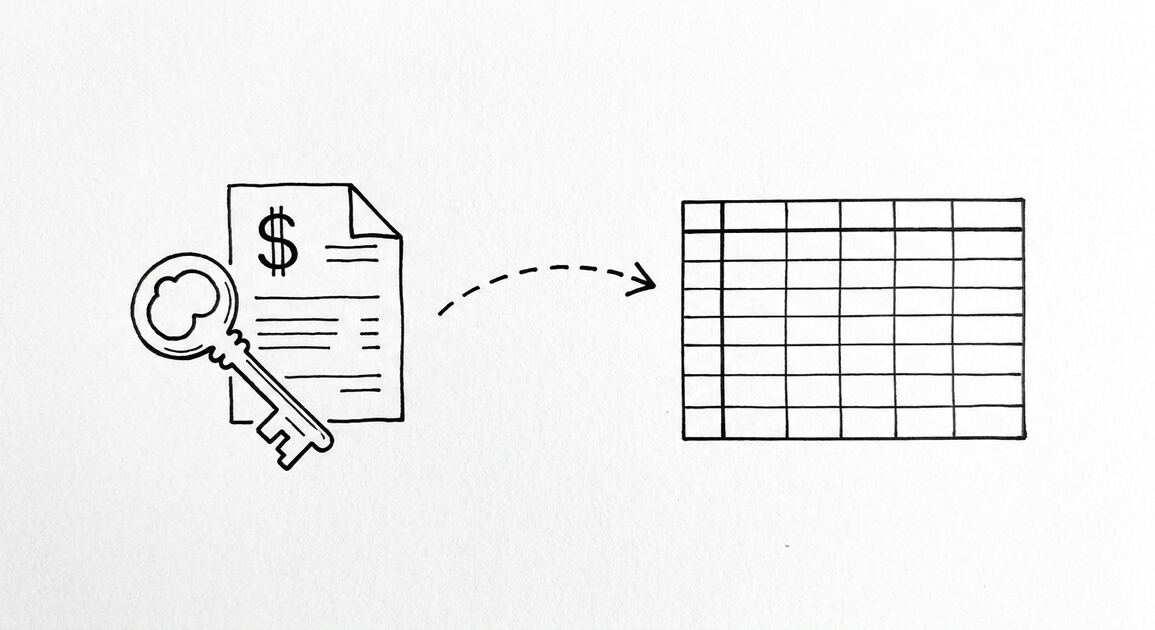
The conversion turns the 30-page PDF into a clean Excel file with Date, Description, Amount, and Balance as separate columns. The underwriter can search, filter, and sum the transactions in 30 seconds. Without conversion, the underwriter reads every page manually.
A mortgage application is one of 4 use cases covered in our bank statement for applications guide, which maps the time range and format for mortgage, loan, rental, and tax filing applications.
What Landlords Actually Want
Most landlords want 2 to 3 months of bank statements plus 2 to 3 pay stubs. The bank statement shows the savings and the cash flow. The pay stubs show the income. The landlord combines the two to verify that the income covers the rent (usually 2.5x to 3x the monthly rent).
What most guides miss about rental applications is that the quality depends on the mechanism, not on the tool. Two tools that look different on the surface often run the same 4-step process underneath: read, find, parse, verify. The difference is in how well each step handles edge cases (merged cells, missing balances, non-standard date formats, scanned vs digital input). Choosing between tools based on UI alone misses the actual quality lever.
The format is usually PDF or Excel. The landlord or the property management company processes the application. They want a clean, easy-to-read statement. The conversion makes the PDF into a file they can quickly verify.
For most rental applications, the bank statement is one of 3 to 5 documents: application form, pay stubs, bank statements, government ID, and sometimes a credit report authorization. The bank statement is often the deciding factor between two applicants with similar income.
The 2 Things the Landlord Looks For First
Landlords do not read every page of every statement. They look for 2 things first. If those 2 things check out, they move to the credit check and the background check. If they do not, the application gets rejected.
The first thing is the income-to-rent ratio. The applicant states the income. The pay stubs confirm the income. The bank statement shows the actual deposits. The landlord compares the deposits to the stated income. If the deposits match, the income is verified. If they do not match, the application is delayed while the applicant explains the discrepancy.
The second thing is overdrafts and bounced checks. NSF fees, returned checks, low balance warnings. Each one is a red flag. The landlord interprets them as a sign that the applicant may not be able to pay the rent on time. Three or more overdrafts in 3 months is usually enough to reject the application.
How to Download Bank Statements for a Rental Application
The first step is downloading the statements from your bank. Most banks offer 12 to 24 months of monthly statements as PDF downloads. For rental applications, you usually need only the most recent 2 to 3 months.
- Log into your bank or credit union. Click on the checking account where your paycheck is deposited.
- Look for “Documents” or “Statements” in the navigation. Most banks have a dedicated section.
- Download the most recent 2 to 3 months of statements as PDF.
- Save the PDFs to a folder on your computer. Name the folder “Rental Application – {address} – {date}.”
- Repeat for the savings account if the landlord asks for it. Most landlords only want the checking account.
For most rental applications, you need 2 to 3 months of statements. The download is fast (most banks make it easy). The conversion handles 2 to 3 statements in 2 to 3 minutes.


Turn PDF Bank Statements Into Workable Spreadsheets
Your bank statement is a mess of numbers, but your books shouldn't be. Use our converter to get Excel, CSV, or QBO files — ready for QuickBooks.
Try It Free NowHow to Convert Bank Statements for a Rental Application
The conversion is the same as for any other use case. PDF to Excel in 30 seconds per statement. The output is a clean Excel file with the transactions extracted.
- Open EasyStatementSheet. Drag the PDFs into the upload area. The conversion is automatic.
- Choose Excel (.xlsx) as the output format. Most lenders accept Excel.
- Download the converted files. Each PDF becomes a clean Excel file with Date, Description, Amount, and Balance as separate columns.
- Verify the first 5 transactions of each file. The dates should match the PDF. The descriptions should be intact. The amounts should match.
- Combine the statements if needed. Some lenders want a single file with all months. The conversion produces one file per month by default. Combine them in Excel with a simple append.
- Submit. Attach the Excel files to the application portal. Keep the PDFs as backup in case the lender asks for the originals.
The whole flow takes about 5 to 10 minutes for 2 to 3 months across 4 accounts. Without conversion, the applicant is sending 30-page PDFs that the underwriter has to read manually. With conversion, the underwriter gets searchable, summable files that take 30 seconds to verify.
What If the Lender Wants a Single Combined File?
Some lenders want a single Excel file with all months of statements combined. The conversion tool produces one file per PDF by default. To combine, open each Excel file, copy the rows, and paste them into a single file. Add a “Month” column to identify which month each transaction came from. Save the combined file. Submit the combined file.
The combined file is what most lenders prefer because the underwriter can sort, filter, and sum across all months. The underwriter can verify that the monthly deposits match the stated income. The underwriter can check for large deposits, overdrafts, and the balance trend across the full 2 to 3 month window.
What Landlords Flag on Rental Applications
Five patterns that mortgage underwriters flag. Each one is fixable with the right documentation. Each one delays the application if the documentation is missing.
Pattern 1: Large deposits without a source. A deposit of $5,000 in an account that usually has $2,000 in monthly deposits. The underwriter needs to know where the money came from. The applicant has to provide a letter or a transfer record.
The fix: keep records of all large deposits. Wire transfer confirmations, gift letters from relatives, employer bonus letters. The records go in the application file with the statements.
Pattern 2: Overdrafts and NSF fees. Three or more overdrafts in 3 months is a pattern. The underwriter flags it as a sign of financial distress. The fix: pay off the overdrafts before applying. Wait at least 60 days after the last overdraft to apply. The lender wants to see a clean 2 to 3 month window.
Pattern 3: Declining balance. Starting balance of $10,000, ending balance of $4,000 over 3 months. The underwriter flags it. The fix: stop the outflows. Show the underwriter that the balance is stable or growing. The 2 to 3 month window before applying should show a positive trend.
Pattern 4: Income that does not match deposits. The applicant states $6,000 per month income. The deposits show $3,000 per month. The underwriter flags the discrepancy. The fix: ensure the deposits match the stated income. If the income is variable, the applicant should provide 12 to 24 months of statements to show the average.
Pattern 5: Undisclosed liabilities. A car loan payment, a credit card payment, a personal loan payment that does not appear on the application. The underwriter finds it on the bank statement. The fix: disclose all liabilities on the application. The underwriter will find them anyway. Disclosure does not disqualify the application. Non-disclosure does.
Self-Employed Rental Applications
Self-employed rental applicants face a stricter documentation requirement. Most landlords want 12 to 24 months of bank statements plus the most recent 2 to 3 months. The longer time range shows the income consistency. The 2 to 3 months shows the current cash position.
The conversion handles 12 to 24 months of statements the same way it handles 2 to 3 months. The difference is the file count: 12 to 24 months across 2 to 3 accounts is 24 to 72 statements. The batch conversion handles them in 5 to 15 minutes.
For self-employed rental applicants, the landlord also wants:
- The most recent 2 years of tax returns (Form 1040 with Schedule C for sole proprietors, or the partnership/S-corp return for entities)
- A year-to-date profit and loss statement (P&L)
- Documentation of any large or unusual deposits (matching the bank statement)
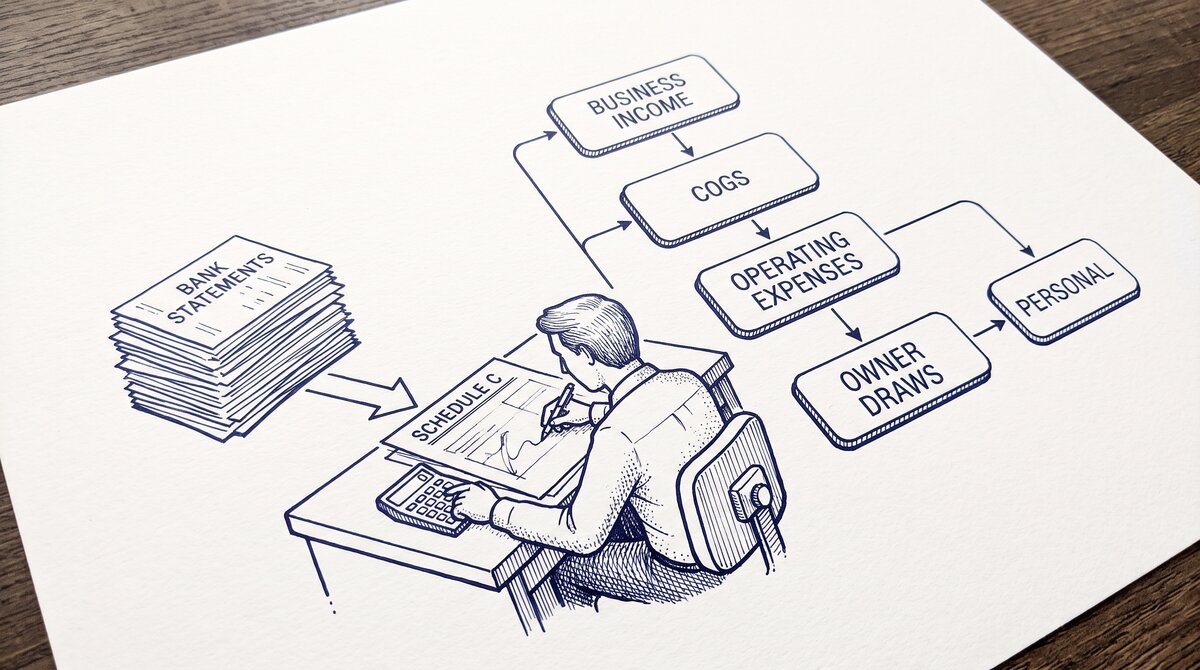
The bank statement is the source of truth for the income and expense record. The P&L should match the bank statement for the year-to-date period. The tax return should match the bank statement for the prior years. Discrepancies between the bank statement and the other documents delay the application.
I learned this the hard way the first time I helped a self-employed friend apply for a luxury apartment. We submitted 2 months of bank statements. The landlord asked for 12 months plus a year-to-date P&L. The application was delayed by 2 weeks while we gathered the additional documents.
The lesson: for self-employed applicants, submit 12 to 24 months of bank statements. The longer time range shows the income consistency, which is what the landlord wants to see.
How to Make Your Application Stand Out
For competitive rental markets, the bank statement is often the deciding factor between two applicants with similar income. Here are 3 things that make a rental application stand out:
1. A high savings balance. The landlord wants to see that the applicant can cover the move-in costs (first month, last month, security deposit) plus 2 to 3 months of rent in reserve. A savings balance of $5,000 to $10,000 makes the application stronger. Show the savings account in the bank statement conversion.
2. A consistent income pattern. The landlord wants to see the same deposit amount on the same date each month. A variable income (freelance, commission, tips) is harder to verify. The bank statement shows the pattern. The applicant should provide 2 to 3 months of statements to show the consistency.
3. No overdrafts or bounced checks. The landlord wants to see that the applicant manages money well. NSF fees, returned checks, low balance warnings are all red flags. Three or more in 3 months is enough to reject the application. The bank statement shows the pattern. The applicant should pay off the overdrafts and wait 60 days before applying.
For competitive rental markets, the bank statement is often the tie-breaker. The applicant with the cleanest statement, the highest savings, and the most consistent income wins. The conversion makes all three visible in 30 seconds.
What to Do If You Are Self-Employed or Have Variable Income
Some applicants do not have a traditional bank account. The applicant uses a check casher, a prepaid card, or a money order instead. The lender still wants a bank statement, but the applicant does not have one.
Three fallback options for applicants without a traditional bank account:
- Open a bank account before applying. Most banks offer free checking accounts. The applicant opens one, lets it accumulate 2 to 3 months of activity, and applies. The statement shows the income and the savings pattern.
- Use a prepaid card statement. Some prepaid cards offer PDF statements. The statement is similar to a bank statement but does not have the same legal weight. Some lenders accept it. Most do not.
- Use a money order receipt log. The applicant keeps a log of every money order purchased, the date, the amount, and the recipient. The log is a substitute for a bank statement. Some lenders accept it. Most want a traditional bank account.
For most applicants without a bank account, the best option is to open a bank account and let it accumulate 2 to 3 months of activity. The statement is the most credible documentation for a mortgage application.
The 2am Test for Rental Application Conversions
If you are converting bank statements for a rental application at 2am because the deadline is tomorrow, here is the flow that works.
- Log into your bank. Download the statement PDFs for the most recent 2 to 3 months. For self-employed, 12 months.
- Open EasyStatementSheet. Drag the PDFs into the upload area. The conversion is automatic.
- Choose Excel (.xlsx) as the output format. Most landlords accept Excel.
- Download the converted files. Open the first one. Verify the first 5 transactions: dates, descriptions, amounts.
- Combine the files if the landlord wants a single file. Add a “Month” column. Save.
- Submit. Attach the Excel file to the application portal or email it to the landlord. Keep the PDFs as backup.
If the conversion produces a file with merged cells, broken dates, or chopped descriptions, the conversion tool is not right. Try a different one. The output should be a clean Excel file with no formatting artifacts. The landlord reads the file in 30 seconds. Any formatting issues delay the application.
A rental application is one of 4 use cases covered in our bank statement for applications guide, which maps the time range and format for mortgage, loan, rental, and tax filing applications. The conversion step is the same regardless of the application. The differences are in the time range and the formatting standards the recipient expects.
A common failure mode bookkeepers report is treating this as a single operation rather than a chain of dependent steps. The temptation is to find a tool that ‘just works’ and stop investigating the mechanism. The result is a wrong-fix cycle: the tool gives partial output, the bookkeeper spends 30+ minutes troubleshooting, the fix is for the wrong step, and the same error recurs on the next statement. The fix: identify which step failed and apply the right intervention to that step.
Related Pages
For more on this topic, see the converter guide. For the broader conversion workflow, see the bank statement converter guideFor more on this topic, see the CSV guide. For the related rental applicant scenarios: self-employed, joint, and co-signer page, see the linked article. For the related rental special cases: large deposit, denial, and reapplication page, see the linked article. For the related rental income verification: from bank statement to landlord approval page, see the linked article. For more on this, see the bank statement for freelancers page.
For more on this, see the bank statement for small business page.
For more on this, see the bank statement loan page.
From PDF to Excel in one click
Forget retyping line by line. Upload any bank statement, get a spreadsheet you can actually use. Your files are never stored, and you can test the converter with 3 free conversions.
Try it free