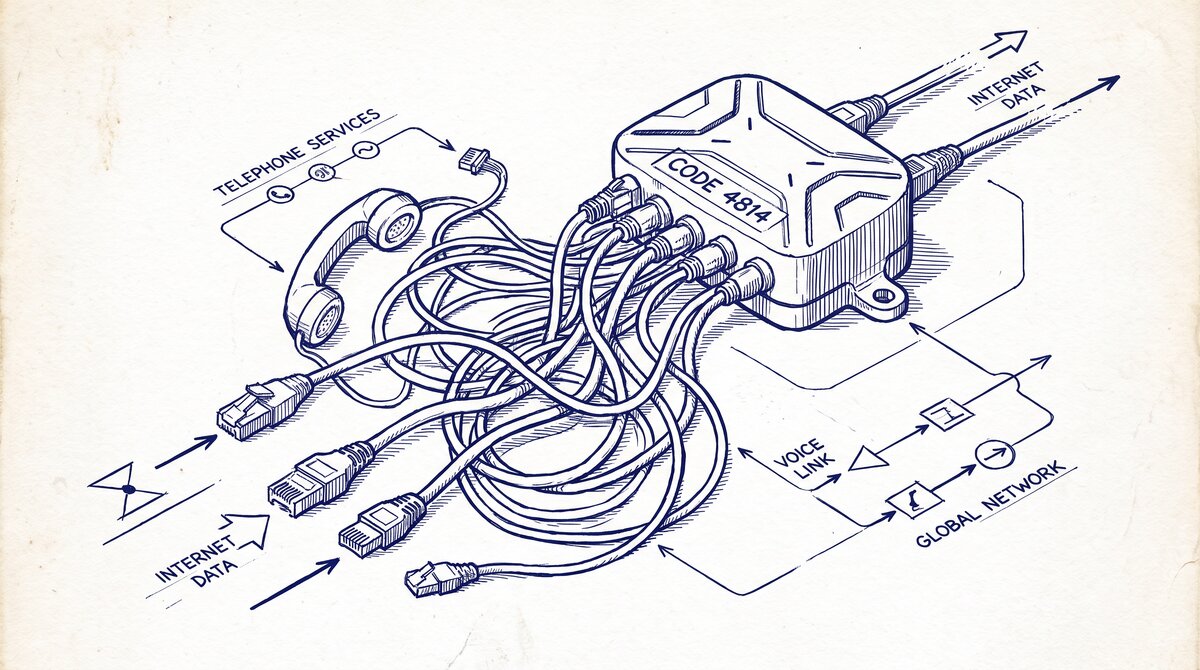

MCC 4814 is the Merchant Category Code for telecommunication services, including phone, internet, cable, and streaming services. The code is assigned by the card network to merchants in this category and covers a wider range than many users expect. For tax purposes, 4814 charges typically map to IRS Schedule C line 25 (utilities) for businesses.
What MCC 4814 Covers
MCC 4814 is the general telecommunication services code. It covers any merchant that provides communication services over wired or wireless networks. The category is defined by the card networks and is broad enough to include most modern communication services.
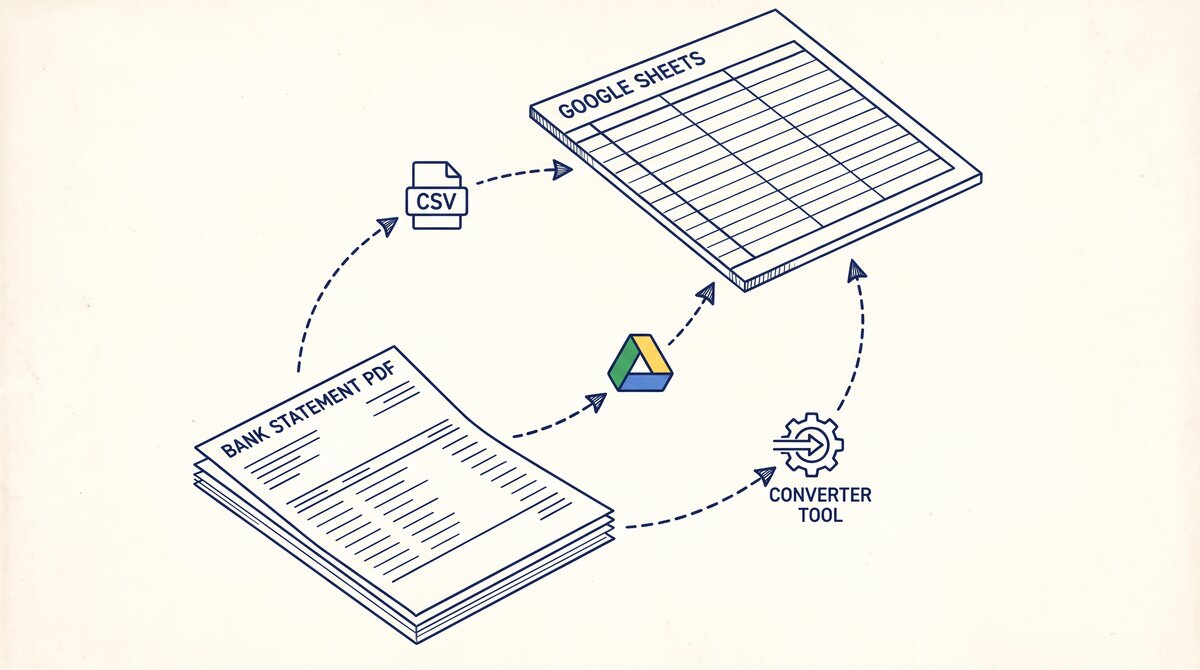
What most guides miss about credit card statements is that the quality depends on the mechanism, not on the tool. Two tools that look different on the surface often run the same 4-step process underneath: read, find, parse, verify. The difference is in how well each step handles edge cases (merged cells, missing balances, non-standard date formats, scanned vs digital input).
Choosing between tools based on UI alone misses the actual quality lever.
Included Services
- Telephone services: landline, mobile, long-distance
- Internet services: cable internet, DSL, fiber, fixed wireless
- Cable and satellite TV: traditional pay-TV services
- Streaming services: video streaming (Netflix, Hulu), audio streaming (Spotify), and live TV streaming (YouTube TV)
- VoIP services: Voice over IP, including business phone systems
- Teleconferencing: Zoom, GoToMeeting, WebEx subscriptions
- Cloud communication: Twilio, MessageBird, similar APIs
Excluded Services
- Telecom equipment sales: separate code (4812)
- Computer hardware: separate category
- Software as a Service (SaaS): depends on the merchant’s classification, often 5734 or 5817
- Gaming subscriptions: depends, may be 5816 or 7996
The merchant’s primary business activity determines the MCC. A phone company (Verizon, AT&T) is 4814 for service charges. A retailer selling phones (Best Buy) is 5732 (electronics store). A streaming service (Netflix) is often 4899 (cable, satellite, and other pay television and radio services) or 5817 (digital goods) depending on the card network.
The 4 Related Sub-Codes
The 4814 code is part of a family of related telecommunication codes. The sub-codes matter because they affect rewards rate calculations and tax categorization.
4812: Telecommunication Equipment
Covers merchants that primarily sell telecom equipment: phones, modems, routers, headsets. Best Buy and Apple stores are typically 5732 (electronics), but merchants that specialize in telecom equipment (like a phone dealer) may be 4812.
4813: Telecom Services Including Local and Long-Distance
Covers traditional telecom services with a focus on local and long-distance calling. This is a more specific code than 4814, used for legacy phone services. Most modern telecom merchants are coded 4814 instead.
4814: Telecommunication Services (General)
The general telecom services code, covering the broad range listed above. This is the most common code for telecom charges on a credit card statement.
4816: Computer Network/Information Services
Covers merchants that provide computer network services, including internet service providers (ISPs) in some classifications. May overlap with 4814 for ISP services. The card network’s classification rules determine which code is used.

Turn any PDF statement into a clean sheet
Skip the typos and the hours of copying. Our converter handles any bank statement format and outputs Excel, CSV, or QBO for QuickBooks. No file retention, free to try.
Convert your statementHow MCC 4814 Maps to IRS Schedule C
For self-employed individuals and small business owners, MCC 4814 charges map to specific IRS Schedule C lines based on the type of expense.
Line 25: Utilities
The most common mapping. Utilities on Schedule C include gas, electric, water, and telephone services used in the ordinary course of business. A cell phone used primarily for business is a utility expense; the deductible portion is the business-use percentage.
Line 17: Legal and Professional Services
Not a typical mapping for telecom. This line covers services from accountants, attorneys, and consultants, not communication services.
Line 18: Office Expense
Used for some software-related communication services, especially when the charge is bundled with other office tools (e.g., Microsoft 365, which includes Teams). The classification depends on the merchant’s primary business and the card network’s rules.
Line 20: Travel
Not a typical mapping for telecom. Travel covers transportation, lodging, and meals while away from the tax home. Communication services during travel are usually line 25 (utilities) or line 18 (office expense).
The Practical Rule
For a self-employed individual or small business, the cell phone bill is usually line 25 (utilities). The internet bill for a home office is line 25 (utilities) for the business-use portion. A streaming subscription for entertainment is not deductible. A conference call service for client meetings is line 18 (office expense) or line 25 (utilities).
The 5 Most Common Charges That Get Coded 4814
The most common 4814 charges on a credit card statement:
1. Cell Phone Bill (Monthly)
The cell phone provider (Verizon, AT&T, T-Mobile) charges a monthly fee for service. The MCC is 4814. The charge is typically $50-$200 per line per month. For a self-employed individual with a business-use cell phone, the deductible portion is the business-use percentage.
2. Home Internet Bill (Monthly)
The home internet provider (Comcast, AT&T, Spectrum) charges a monthly fee for service. The MCC is 4814 or 4816 depending on the carrier. For a home office, the business-use percentage of the bill is deductible.
3. Business VoIP Service (Monthly)
A business VoIP provider (RingCentral, 8×8, Vonage Business) charges a monthly fee. The MCC is 4814. The full charge is typically deductible as a business utility.
4. Streaming Subscription (Monthly)
A streaming service (Netflix, Hulu, Disney+) charges a monthly fee. The MCC is often 4899 (pay TV) or 5817 (digital goods). The charge is generally NOT deductible unless the streaming is for business research or content creation.
5. Conference Call Service (Per Use or Monthly)
A conference call provider (Zoom, GoToMeeting) charges a per-use or monthly fee. The MCC is 4814 or 7372 (computer programming, data processing). The charge is deductible as a business expense.
A common failure mode bookkeepers report is treating this as a single operation rather than a chain of dependent steps. The temptation is to find a tool that ‘just works’ and stop investigating the mechanism.
The result is a wrong-fix cycle: the tool gives partial output, the bookkeeper spends 30+ minutes troubleshooting, the fix is for the wrong step, and the same error recurs on the next statement. The fix: identify which step failed and apply the right intervention to that step.
When 4814 Differs from a “Streaming” Code
The streaming subscription case illustrates a common confusion. The user pays Netflix $15.99/month. The card charges the user’s account. The MCC may be 4814 (if the card network classifies streaming as a telecom service) or 4899 (if the card network classifies it as a pay TV service) or 5817 (if the card network classifies it as a digital good).
The card network’s classification is not consistent across networks or over time. The same merchant may be coded differently by different card networks, and the code may change as the merchant’s business mix changes.
For the cardholder, the inconsistency means the rewards rate may not be what the user expects. A card that offers 3% on streaming may not apply if the merchant is coded 4814 (telecom) instead of 4899 (pay TV). The cardholder has to check the merchant’s actual code on their statement, not assume.
For tax purposes, the inconsistency is less important. The IRS does not care about the specific MCC; the IRS cares about whether the expense is ordinary, necessary, and reasonable for the business. A 4814 charge for a streaming service used for business research is deductible regardless of the MCC; a 4899 charge for a personal streaming subscription is not deductible regardless of the MCC.
The common MCC codes pillar covers the 30 most common codes. The MCC 5968 (direct marketing subscription) sub-pillar covers subscription merchant codes. The MCC 6011 (ATM cash) sub-pillar covers ATM withdrawal codes. The MCC glossary entry covers the definition in isolation. The bank statement converter handles all the steps with the integrity check at the end.
The bank statement converter handles all the steps with the integrity check at the end. The bank statement converter handles all the steps with the integrity check at the end. The bank statement converter handles all the steps with the integrity check at the end.
See also: MCC 4814 in context
This explainer is one of the merchant category code guides on the site. The consolidated overview of the entire MCC system, including every US card-network overlay, lives in the complete MCC guide. The full code-by-code reference is the complete MCC code reference.
For the broader reading on what every column on a US bank statement means, including the merchant description column where MCC appears, see the expanded bank statement anatomy.
More on MCC 4814 in practice
Telecommunication charges are flagged by lenders and bookkeepers because they often appear as recurring monthly expenses that signal subscription creep. When the same MCC 4814 charge shows up 8-12 times in a single month across different merchants (the wireless carrier, the conference call service, the voicemail platform, the texting-software vendor), the aggregate is a real business expense.
In QuickBooks Online or Xero reconciliation, MCC 4814 charges flow naturally into the Utilities category or the Communications category depending on how the rule is set. Easy Statement Sheet reads the merchant category code labels inline as part of the merchant description on credit-card statements, so the categorization flows directly into your accounting software with no manual sorting.
On mortgage applications, MCC 4814 charges rarely draw individual scrutiny the way restaurants, bars, or cash advances do. But a cluster of repeated MCC 4814 charges during a slow-income month can complicate the borrower’s debt-to-income calculation if the lender treats them as recurring obligations.
If you are running a small business and want to consolidate recurring telecom costs onto one consolidated bill, the categorization step matters because some merchant category codes carry different sales-tax treatments and may also be subject to universal-service-fund assessments depending on the state.
Working with recurring MCC 4814 charges
A useful rule of thumb for recurring MCC 4814 charges is to consolidate them onto one bill per vendor before the statement cycle closes. That keeps the count of distinct MCC 4814 line items low and gives the lender a clearer view of actual communication costs.
When preparing a tax return, the SCCM expense tracking on MCC 4814 charges is fairly straightforward. They are categorized as Utilities or Communications depending on the accountant’s chart of accounts. The proper cut-off at month-end ensures that no charge slips between fiscal periods.
If you are self-employed and using personal credit cards for business telecom expenses, separating the personal card from the business card helps. The MCC 4814 charges on each card tell different stories at tax time and at mortgage underwriting time. Easy Statement Sheet reads the MCC from any converted statement.
From Bank Statement to QuickBooks-Ready File
That manual cleanup you just read about? This tool skips it. Turn your PDF into QBO for QuickBooks without storing your data anywhere.
Start Converting