
You need to send $50,000 today. ACH is free but takes 3 days. Wire costs $30 but settles in 10 minutes.
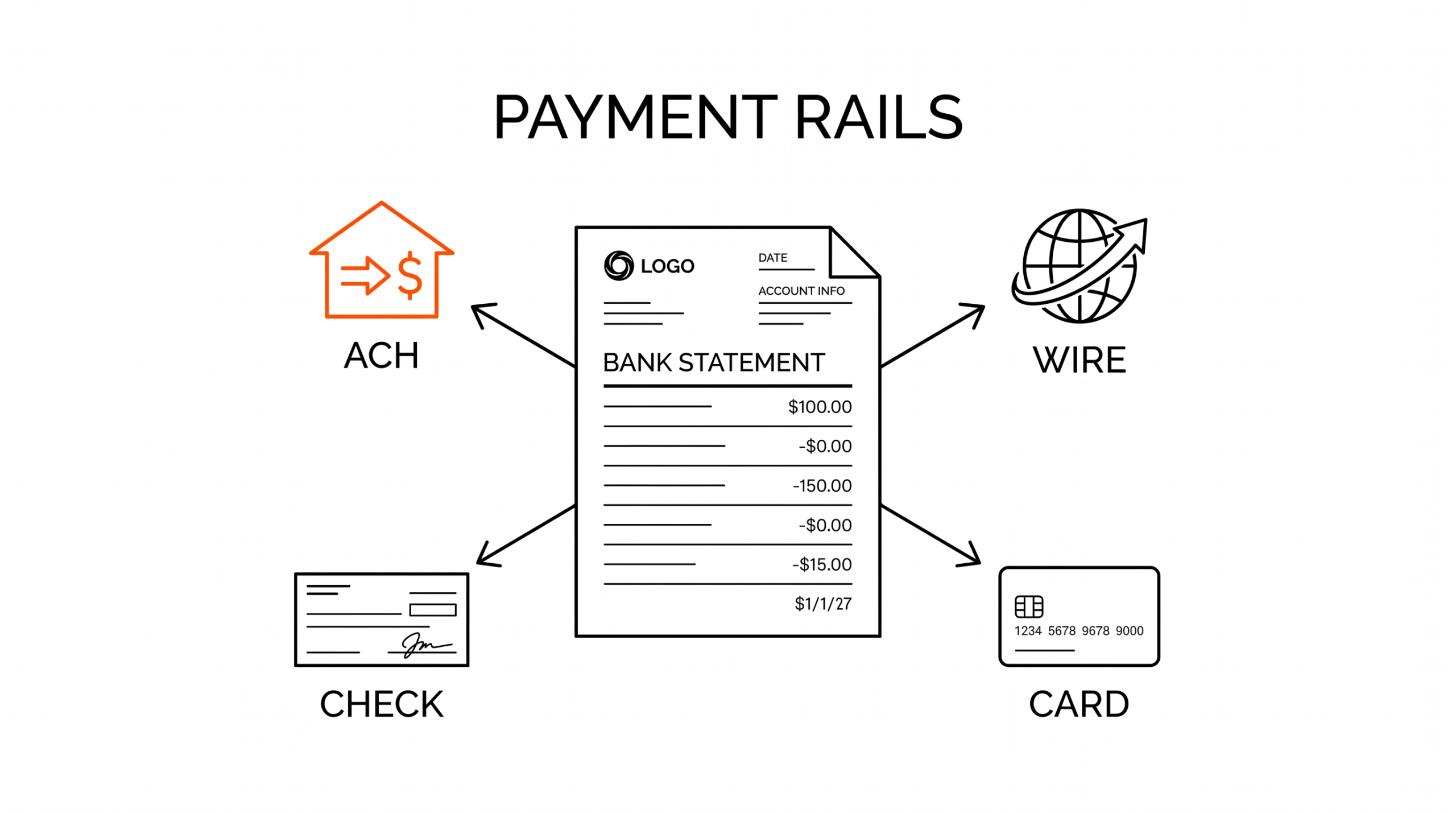
A payment rail is the system that moves money from one bank account to another. The US has 4 main rails: ACH (the slow, cheap batch system), Wire (the fast, expensive real-time system), Check (the legacy paper system), and Card (the consumer debit/credit system). Each rail has different rules for speed, cost, limits, reversibility, and use cases. Choosing the wrong one costs either money (wire for a routine transfer) or time (ACH for an urgent one).
The 4 US payment rails are ACH, Wire, Check, and Card. Different speed, cost, limits, reversibility, and use cases. The right choice depends on the urgency, amount, direction, and whether reversibility matters.
For the broader bank statement workflow, see the bank statement converter guide. For the bookkeeper workflow, see the bookkeeper workflow guide. For ACH vs wire specifically, see the ACH vs wire transfer comparison.
What most payment rail guides miss is that the choice is not about which is better. It is about matching the payment method to the situation. ACH is cheaper and reversible; wire is faster and irrevocable; check is slow and physical; card is consumer-focused. A routine vendor payment should be ACH. A same-day real estate closing should be wire. A payroll check should be ACH direct deposit. A consumer purchase should be card. The right answer depends on the urgency, the amount, the direction, and the risk tolerance. Most guides treat it as a feature comparison when it is actually a decision framework.
What Are the 4 US Payment Rails?
A payment rail is the infrastructure that moves money from one bank account to another. The 4 main US rails differ on every meaningful dimension. The summary:
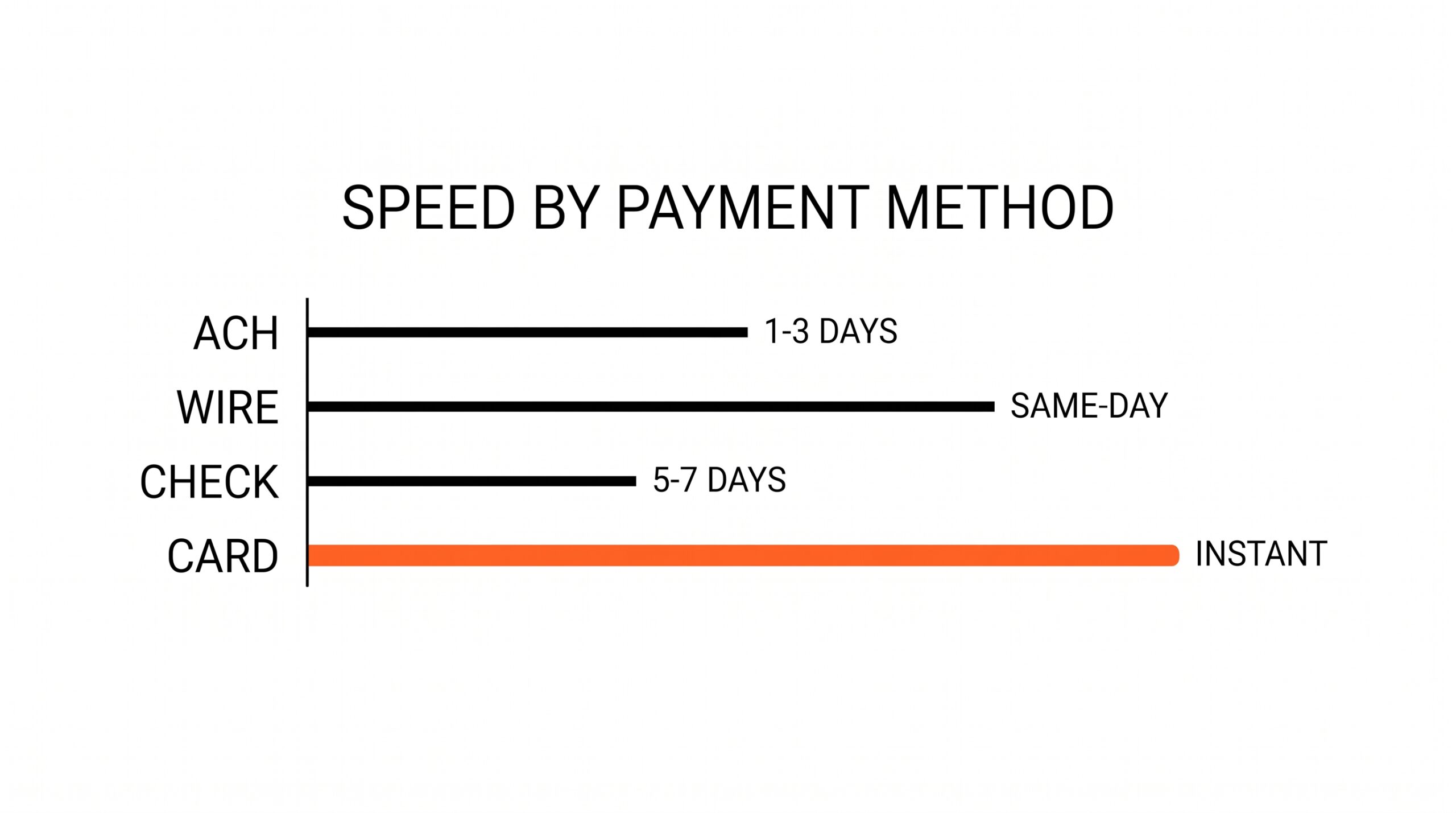
ACH (Automated Clearing House). A batch electronic payment system run by the National Automated Clearing House Association (NACHA). Settles in 1-3 business days for standard ACH, or same-day for an extra fee. Cost: $0-3 per transaction. Reversible within 5 business days. Used for payroll, bill pay, vendor payments, tax payments, peer-to-peer transfers.
Wire (Fedwire and CHIPS). A real-time gross settlement system run by the Federal Reserve (Fedwire) and the Clearing House (CHIPS). Settles in 10-30 minutes for domestic, same-day for international. Cost: $15-50 for domestic, $30-75 for international. Generally irrevocable. Used for real estate closings, large one-time transfers, international wires, urgent payments.
Check. A paper-based payment system using the Federal Reserve’s check processing network (now mostly electronic via check 21). Settles in 1-5 business days depending on the bank. Cost: $0-1 per check, plus postage. Reversible via stop payment (with fee). Used for personal payments, small business, payroll for some industries.
Card (Debit and Credit). A consumer payment system run by the card networks (Visa, Mastercard, Amex, Discover). Settles in 1-3 business days for the merchant. Cost: 0.5-3.5% of transaction value (merchant fee). Reversible via chargeback. Used for consumer purchases, small business purchases, online payments.
Each rail serves a different purpose. The choice depends on the situation, not on which is “best” in absolute terms.
ACH: The Batch Workhorse
ACH is the largest payment rail in the US by transaction count. In 2024, ACH processed over 33 billion transactions. The 3 main ACH use cases:
Direct deposit. Payroll, Social Security, tax refunds, and other recurring deposits. Most US workers receive their paycheck via ACH. Settles on the scheduled pay date.
Bill pay. Recurring payments to utilities, mortgages, insurance, subscriptions, and other vendors. The customer authorizes the biller (or their bank) to debit the account on a schedule. Settles in 1-3 business days.
Peer-to-peer transfers. Venmo, PayPal, Zelle, Cash App, and bank-to-bank transfers. Most P2P apps use ACH under the hood (with same-day ACH for some). The user sees the transfer as instant, but the underlying ACH settles in 1-3 business days.
ACH rules: 1-3 business day settlement, $0-3 cost, $1 million per-transaction cap (same-day ACH), reversible within 5 business days. Same-day ACH costs $0.10-$1.00 extra per transaction and has 3 settlement windows per day.
For a deeper ACH vs wire comparison, see the ACH vs wire transfer guide. For the routing number and account number that ACH requires, see the routing number guide and the how routing numbers work.
Turn PDF Bank Statements Into Workable Spreadsheets
Your bank statement is a mess of numbers, but your books shouldn't be. Use our converter to get Excel, CSV, or QBO files — ready for QuickBooks.
Try It Free NowWire: The Real-Time Option
Wire is the fastest payment rail in the US. Two main systems: Fedwire (run by the Federal Reserve, settles in real-time) and CHIPS (run by the Clearing House, used for large-value international wires). Domestic wires typically use Fedwire. International wires typically use both (Fedwire to a US correspondent bank, then SWIFT to the foreign bank).
Wire rules: 10-30 minute settlement for domestic, same-day for international, $15-50 cost (domestic) or $30-75 (international), no Federal limit but most banks cap at $100K-$500K per retail transaction, generally irrevocable once sent.
The 3 main wire use cases:
Real estate closings. Wire is the standard for real estate closings because the funds must arrive same-day. Title companies, escrow agents, and sellers require wire for amounts over a certain threshold (typically $50K+).
Large one-time transfers. Down payments, business acquisitions, estate distributions, large vendor payments, divorce settlements. The irrevocable nature of wire is a feature (finality) and a bug (no recourse for errors).
International transfers. Wires are the default for international because ACH is not available in most corridors. International wires use SWIFT messaging and may include intermediary bank fees ($10-50) plus the FX spread (1-3% of the amount).
For the international payment mechanics, see the ACH vs wire vs SWIFT comparison.
Check: The Legacy System
Check is the oldest payment rail still in use. The system has been mostly electronic since 2004 (Check 21 Act), but the physical check is still a primary payment method for some use cases. Settles in 1-5 business days depending on the bank and the check type.
Check rules: 1-5 business day settlement, $0-1 cost (plus postage), no per-check limit (but banks may cap), reversible via stop payment ($25-35 fee). The settlement is slower than ACH because the check has to be physically transported (or imaged and transmitted) and processed.
The 3 main check use cases:
Personal payments. Rent to a landlord, gifts, payments to contractors, payments between individuals. Check is still common for personal payments where neither party wants to share bank account information.
Small business and contractor payments. Some small businesses and independent contractors prefer checks because they avoid merchant fees (unlike card) and the setup is minimal.
Government and tax payments. Some government agencies (county, state, federal for some taxes) still accept checks. The IRS accepts checks for tax payments, though EFTPS (Electronic Federal Tax Payment System) is preferred.
Check usage is declining. The Federal Reserve reports check volume fell from 17 billion in 2010 to under 4 billion in 2024. ACH and card are taking share.
Card: The Consumer Network
Card is the payment rail for consumer purchases. 4 main networks: Visa, Mastercard, American Express, Discover. Each has slightly different merchant fee structures and acceptance. Cards process via the card network authorization, then settle in 1-3 business days.
Card rules: 1-3 business day merchant settlement, 0.5-3.5% merchant fee (varies by network and merchant category), no per-transaction limit for the consumer (but the card issuer may impose one), reversible via chargeback (60-120 days for the consumer, after which the merchant can dispute).
The 3 main card use cases:
Consumer purchases. Retail, online, restaurant, gas, grocery, travel. Card is the default for consumer purchases because of consumer protection (chargeback rights), rewards (cash back, points, miles), and convenience.
Small business purchases. Office supplies, travel, meals, software subscriptions. Small business credit cards often have bonus categories (3% on dining, 4% on travel) that make them more rewarding than ACH or check.
Online payments. E-commerce, subscriptions, SaaS. Card is the default for online because of chargeback protection and the card network’s fraud detection.
Card transactions appear differently on a bank statement than ACH or wire. Card transactions show the merchant name and the amount. ACH transactions show “ACH Debit” or “ACH Credit” with the originating company. Wire transactions show “Wire Transfer” or “Fedwire” with the originating bank. The difference matters for reconciliation.
The 7 Differences: Side-by-Side
| Dimension | ACH | Wire | Check | Card |
|---|---|---|---|---|
| Speed | 1-3 business days | 10-30 minutes | 1-5 business days | 1-3 business days to merchant |
| Cost (outgoing) | $0-3 | $15-50 (domestic), $30-75 (international) | $0-1 (plus postage) | 0.5-3.5% (merchant pays) |
| Per-transaction limit | $1 million (same-day) | No Federal limit, bank-set $100K-$500K | No Federal limit | Card issuer sets limit |
| Reversibility | 5 business days | Generally irrevocable | Stop payment ($25-35 fee) | 60-120 day chargeback |
| Best for | Payroll, vendor, bill pay | Real estate, large one-time, international | Personal, small business, some tax | Consumer, online, small business |
| Network operator | NACHA (the ACH Network) | Federal Reserve (Fedwire), CHIPS | Federal Reserve (Check 21) | Visa, Mastercard, Amex, Discover |
| International option | Limited corridors | Available worldwide | Limited (foreign checks) | Widely accepted internationally |
The Decision Framework: When to Use Each
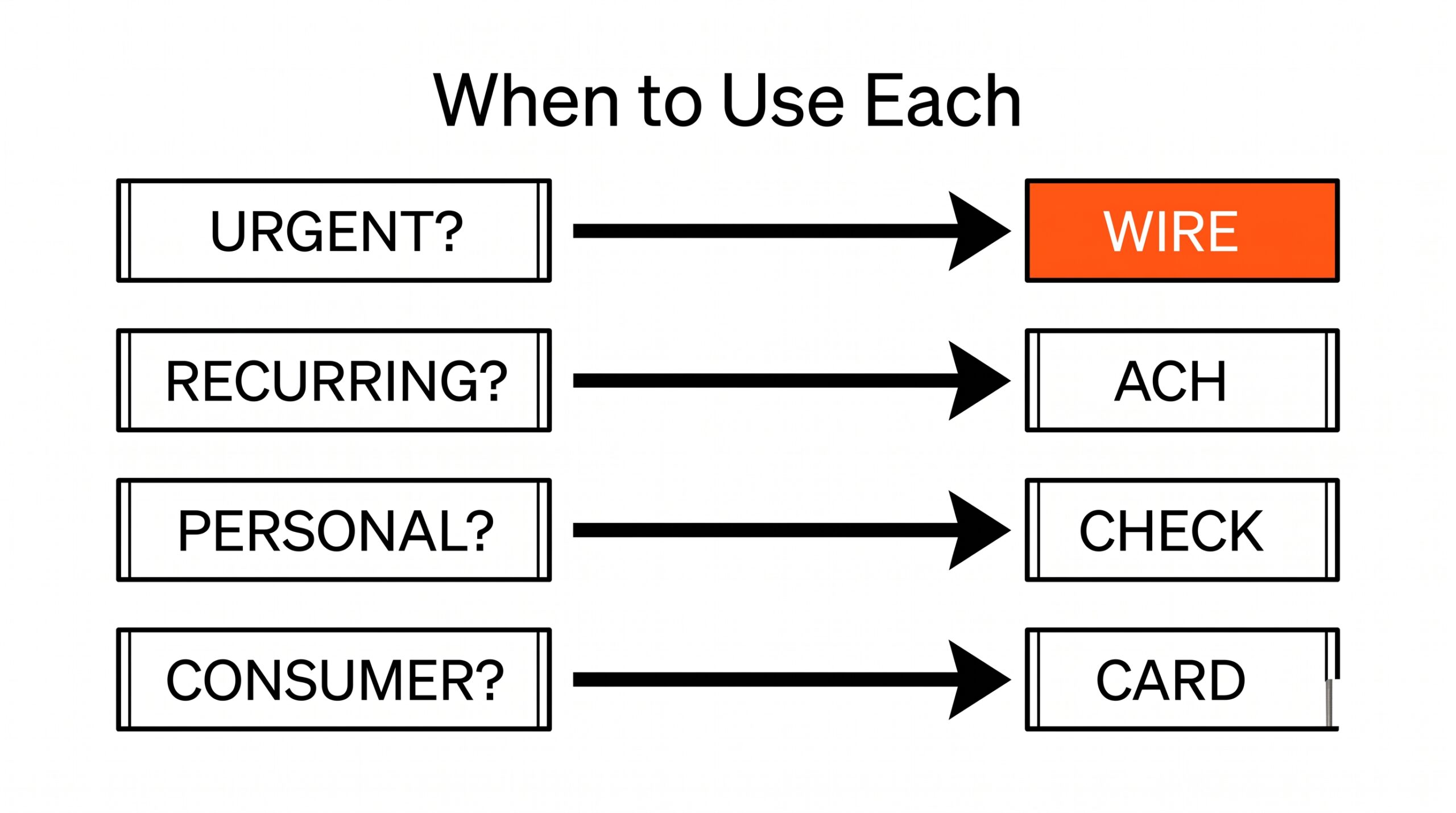
The decision framework has 4 inputs: urgency, amount, direction, and risk tolerance.
Use ACH when: the payment is routine (payroll, vendor, bill pay, subscription, tax), the amount is under $25,000, the direction is recurring (monthly, weekly), and the timing allows 1-3 business days. ACH is the default for 90%+ of US business payments.
Use wire when: the payment is urgent (real estate closing, same-day vendor payment, emergency fund transfer), the amount is over $25,000, the direction is one-time or infrequent, and the receiving bank is not ACH-enabled. Wire is the default for high-value, time-sensitive, or international payments.
Use check when: the payment is personal or to a small business that prefers check, the amount is under $5,000 (most common), the recipient cannot accept electronic payments, and the timing allows 1-5 business days.
Use card when: the payment is consumer (retail, online, restaurant), the amount is under $10,000, the recipient is a merchant, and the consumer wants chargeback protection and rewards.
For the broader decision-making workflow that ties into the bank statement, see the bookkeeper workflow guide.
Payment Rails on the Bank Statement
Each payment rail appears differently on a bank statement, and the differences matter for reconciliation. The typical pattern:
ACH transactions. Show as “ACH Credit” (incoming) or “ACH Debit” (outgoing) with the originating company name. The transaction description includes the company name (e.g., “ACME PAYROLL”), the date, and the amount. ACH is usually one-line per transaction.
Wire transactions. Show as “Wire Transfer,” “Fedwire,” or “Outgoing Wire” with the originating bank and beneficiary. The description includes the sending bank, the receiving bank, and the reference number. Wire is usually one-line per transaction, with more detail than ACH.
Check transactions. Show as “Check” with the check number (e.g., “Check #1234”). The check may be debited immediately (for cleared checks) or held for 1-3 days (for uncleared checks). The description includes the check number and the payee name (sometimes).
Card transactions. Show as “Card Purchase” or with the merchant name. The description includes the merchant name (e.g., “STARBUCKS #1234”), the date, and the amount. Card transactions may post the same day (debit) or 1-3 days later (credit).
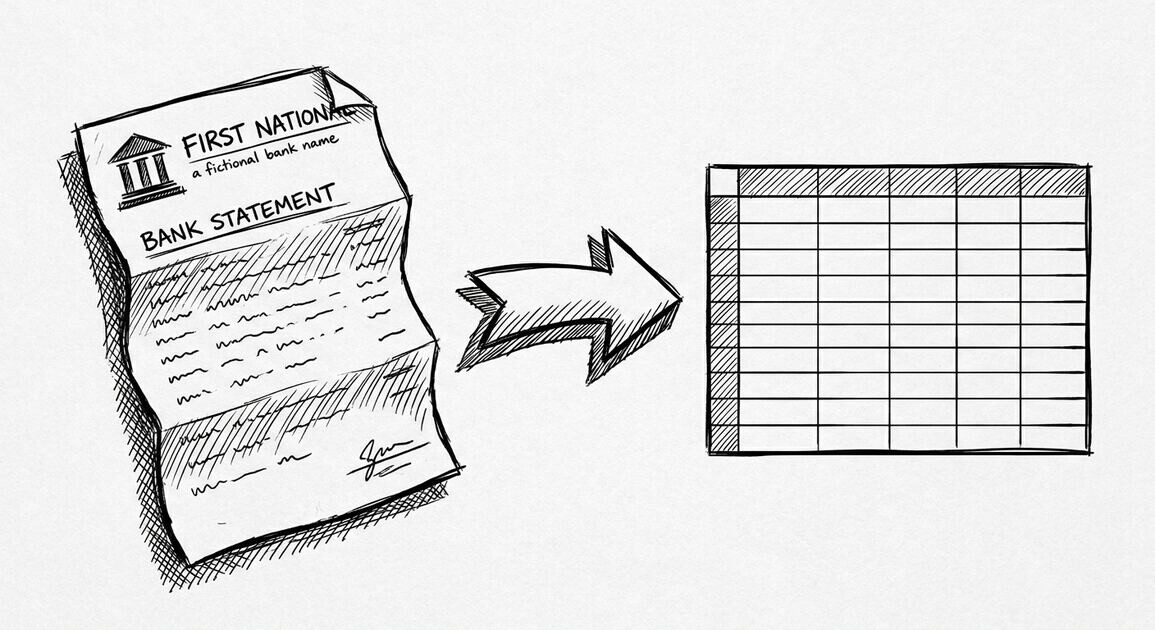
For the workflow that produces clean bank statement data with the payment rail identified, see the bank statement converter. The output includes a payment type column that distinguishes ACH from wire from check from card from other.
International Payments: ACH, Wire, SWIFT
International payments have a 3rd option: SWIFT, which is the global messaging system for international wires. The full comparison for US-to-international transfers:
International ACH. Available for some corridors (US to Canada, US to Mexico, US to Europe) but not universal. Settles in 1-5 business days. Cost is $5-25 per transaction. Limits vary by corridor and bank.
International wire. Available worldwide. Settles same-day or next business day. Cost is $30-75 per outgoing transaction. Limits are bank-set, typically $100K-$500K per transaction. May include intermediary bank fees ($10-50) plus the FX spread (1-3% of the amount).
SWIFT (which is a wire, not a separate method). SWIFT is the messaging network that international wires use. When you send an international wire, your bank sends a SWIFT message to the receiving bank, which credits the account. The cost includes the wire fee ($30-75) plus intermediary fees ($10-50), plus the FX spread.
For US to US, ACH is the default. For US to international, wire is the default. Same-day ACH is rare internationally. For very large international transfers ($1M+), consider using a foreign exchange specialist (OFX, Wise, Revolut Business) to avoid the wire fees and FX spread.
For the broader international payment context, see the ACH vs wire vs SWIFT comparison.
The 4 Common Mistakes with Payment Rails
4 mistakes that consistently cause problems:
1. Using wire for routine payments. Wire costs $15-50 per transaction. For 100 monthly vendor payments, that’s $1,500-$6,000/month in unnecessary fees. The fix: use ACH for routine payments, reserve wire for urgent or high-value.
2. Using ACH for time-sensitive payments. ACH takes 1-3 business days. A wire sent on Friday afternoon arrives same-day; an ACH sent on Friday might not arrive until Tuesday (skipping the weekend). The fix: for same-week payments, use wire or same-day ACH.
3. Assuming wire is always safer. Wire is irrevocable, which is a feature (finality) and a bug (no recourse if you sent to the wrong account). The fix: for large wires, verify the recipient details (routing number, account number, name, address) by phone before sending.
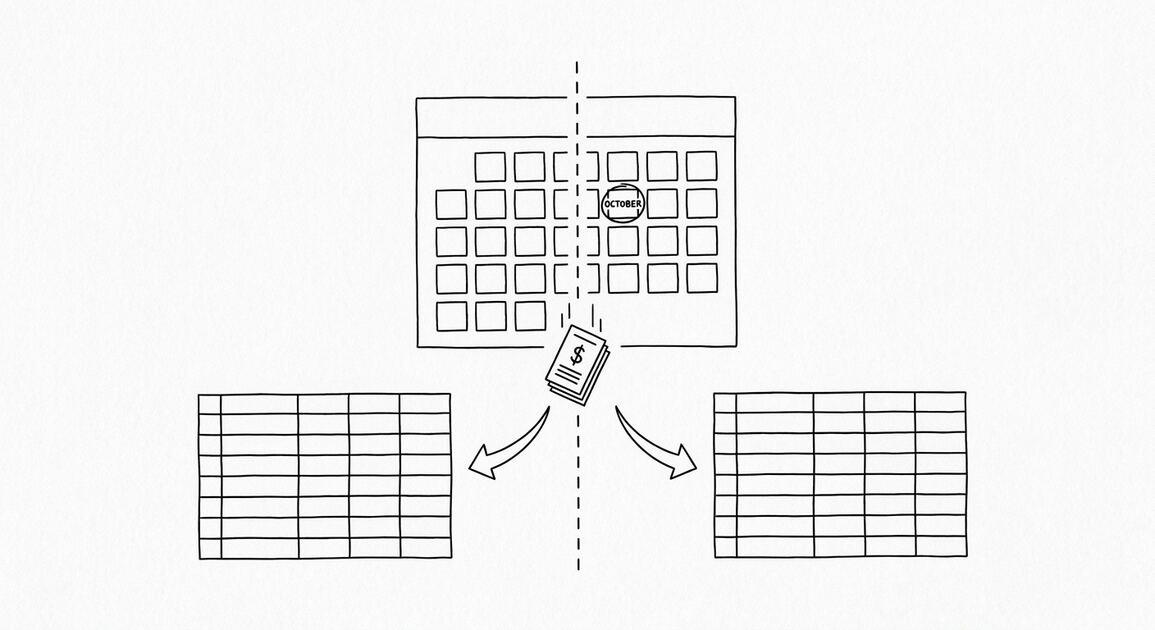
4. Misclassifying card transactions on the bank statement. A card transaction that posts the same day as a card transaction that posts 1-3 days later looks different in reconciliation. The fix: use the post date (not the transaction date) for bank reconciliation, and identify card transactions separately from ACH and wire.
A common failure mode bookkeepers report is misclassifying the payment rail in reconciliation, which leads to forecast errors of 1-3 days. The fix: tag every bank statement transaction with its rail (ACH, wire, check, card) before reconciling. The bank statement converter can identify the rail automatically from the transaction description.
The Memorable Line
ACH is the train, wire is the plane, check is the horse, card is the bicycle. Trains are cheap and reliable for cargo, planes are fast and expensive for urgent, horses are slow but personal, bicycles are convenient but only for short trips. Choosing the wrong one costs time or money; choosing the right one is invisible.
Related Pages
For ACH vs wire specifically, see the ACH vs wire transfer comparison. For routing numbers (required for all 4 rails), see the routing number guide and the how routing numbers work. For the bookkeeper workflow, see the bookkeeper workflow guide. For bank reconciliation, see the bank reconciliation cutoff and the how bank reconciliation works. For the bank statement glossary, see the bank statement glossary.
For the workflow that produces clean bank statement data with the payment rail identified, see the bank statement converter. The output includes a payment type column that distinguishes ACH from wire from check from card from other.
Turn PDF Bank Statements Into Workable Spreadsheets
Your bank statement is a mess of numbers, but your books shouldn't be. Use our converter to get Excel, CSV, or QBO files — ready for QuickBooks.
Try It Free Now