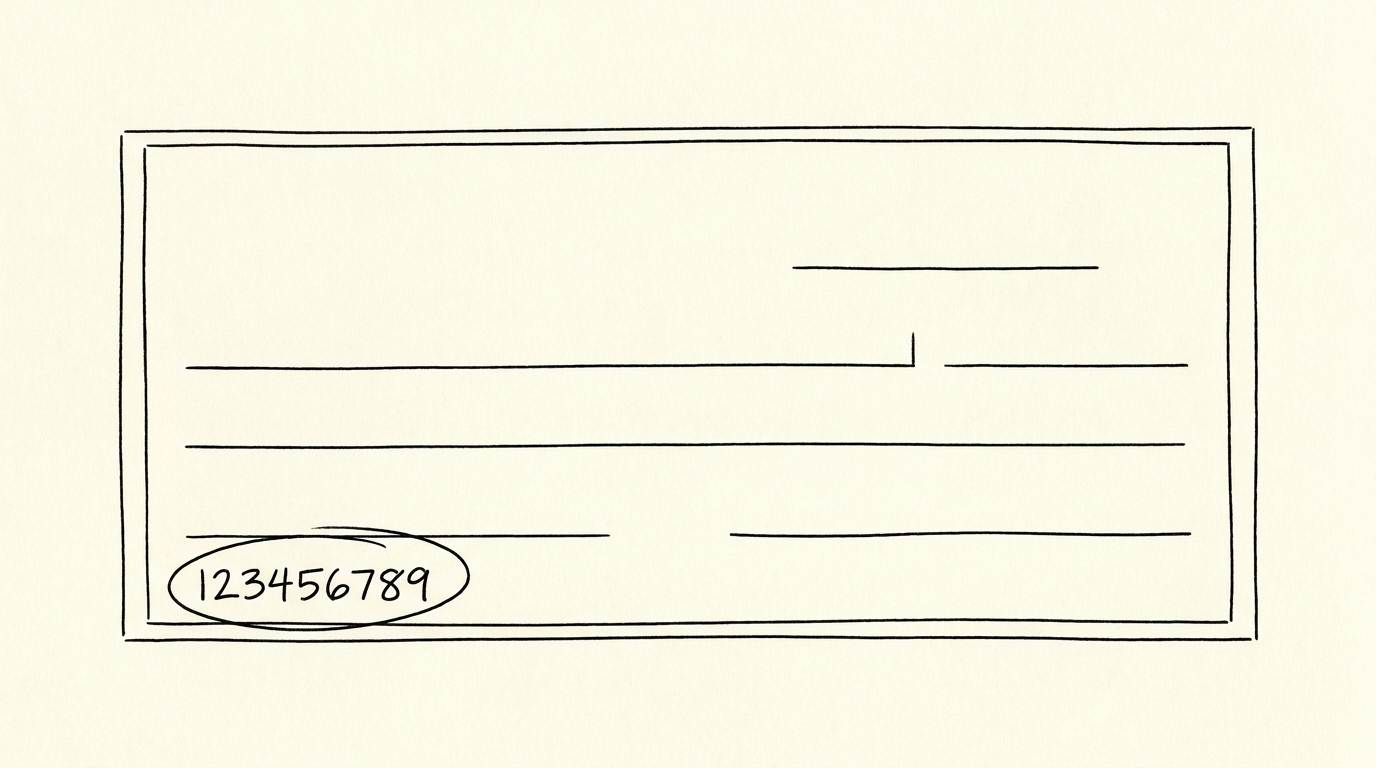

A routing number is a 9-digit code that identifies the bank in a US financial transaction. It appears at the bottom left of every check,
The routing number is public information (anyone with a check can read it), but it is not sensitive in itself. The account number is what matters for security.
This page covers what a routing number is, the 9-digit format breakdown, where routing numbers appear (checks, ACH, wire, direct deposit), the difference between ABA routing numbers and SWIFT/IBAN codes used internationally, common mistakes (using the wrong number for the wrong state, confusing routing number with account number), and how to find the right routing number for any US bank. For a broader look at how routing numbers fit into the bank statement and payment workflows, see the bank statement anatomy and the bank statement glossary.
TL;DR. A routing number (also called ABA routing number, routing transit number, RTN) is a 9-digit code that identifies the bank in a US financial transaction. The format breaks down as: first 2 digits = Federal Reserve district, digits 3-4 = specific bank, digit 5 = Federal Reserve branch, digits 6-9 = the specific bank office. Routing numbers are used for ACH transfers, wire transfers, direct deposit, and check processing. For international wires, use the SWIFT code instead. Common mistakes: using a state-specific routing number for the wrong state, confusing routing number with account number, and using the savings routing number for checking transactions (or vice versa). The routing number is not sensitive; the account number is.
What a Routing Number Is
A routing number is a 9-digit code assigned by the American Bankers Association to every bank and credit union in the United States. The code identifies the bank in the Federal Reserve’s payment system, so when someone initiates an ACH transfer or writes a check, the Federal Reserve knows exactly which bank to debit and which bank to credit. Without routing numbers, the US payment system would not work at scale.
The 9-digit format has internal structure that helps verify the number is valid. The first 2 digits identify the Federal Reserve district (01-12), which is a geographic indicator. For example, 02 covers New York, 03 covers Philadelphia, 11 covers San Francisco. The next 2 digits identify the specific bank within that district. The 5th digit identifies the Federal Reserve branch that services the bank. The last 4 digits were originally the specific branch office, but most banks now use the same 4 digits across all branches regardless of location, which is why the last 4 digits rarely matter for routing purposes today.
The 9-digit format also has a built-in checksum: a mathematical formula applied to the other 8 digits must produce the 9th digit. This is why a typo in a routing number almost always gets caught by the bank’s validation system. If you enter 123456780 but the checksum says the last digit should be 9, the system rejects the number before any money moves.
Where Routing Numbers Are Used: The 4 Payment Types
Routing numbers appear in 4 places in the US payment system, and the right routing number can differ by payment type:
1. ACH transfers (Automated Clearing House). ACH is the backbone of US electronic payments: direct deposit, bill pay, peer-to-peer transfers (Venmo, Zelle), and bank-to-bank transfers. ACH routing numbers are 9 digits and are the most common routing number format. For ACH, the routing number determines which Federal Reserve district processes the transfer, which matters for settlement timing. Most banks use a single ACH routing number for all states, but some larger banks (Wells Fargo, Chase) use state-specific ACH routing numbers to optimize settlement.
2. Wire transfers (domestic). Domestic wire transfers are faster than ACH (same-day vs 1-3 days) and more expensive ($15-$30 fee per transfer). For domestic wires, the routing number is the same as the ACH routing number in most cases, but some banks have a separate “wire routing number” that is technically the same 9-digit ABA number but routed through a different Federal Reserve channel. The practical difference is small, but using the wrong routing number for a wire can cause delays.
3. Direct deposit. Setting up direct deposit (payroll, Social Security, refunds) requires the bank’s routing number and the employee’s account number. The routing number for direct deposit is the ACH routing number. The employer enters both numbers into the payroll system, and the funds arrive on payday via ACH. For self-employed borrowers using direct deposit as income documentation, see the bank statement for loan application page.
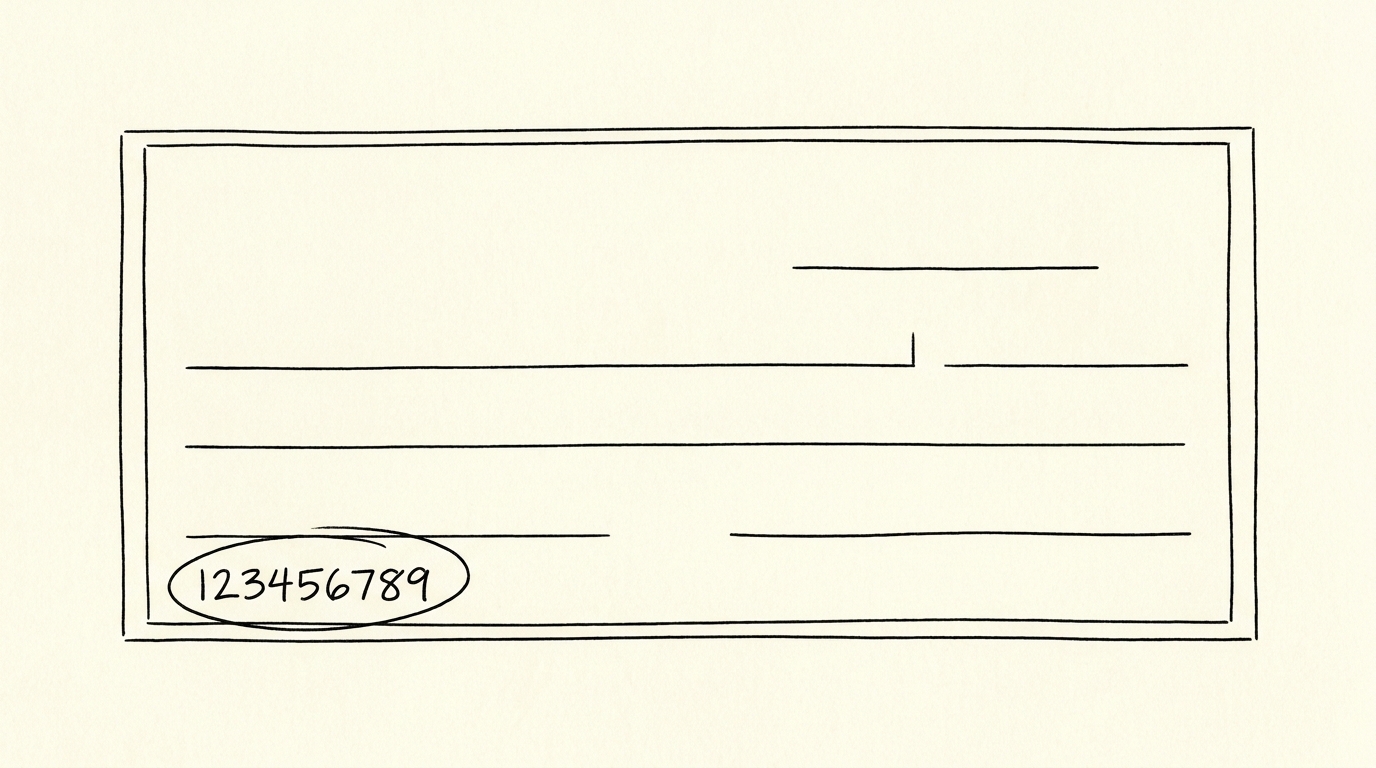
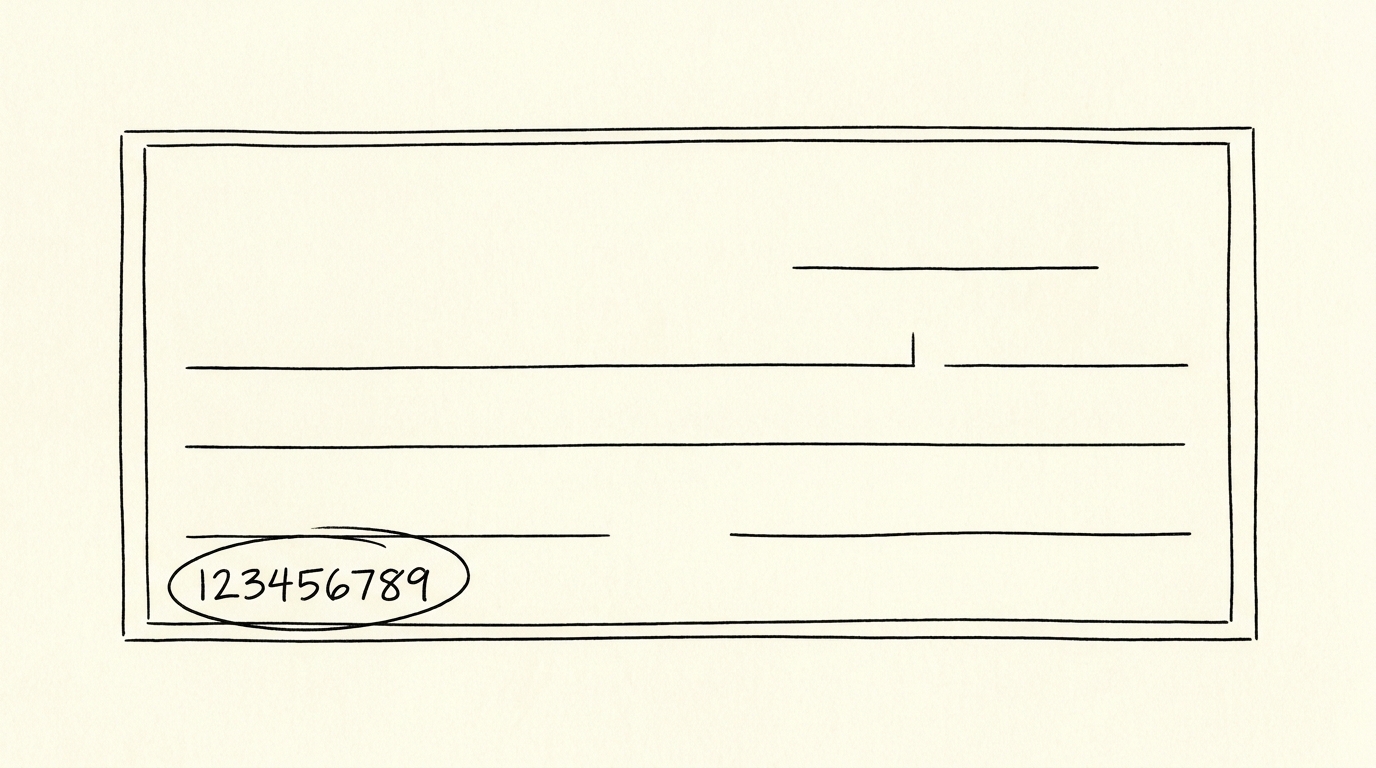
4. Check processing. Every check has the routing number printed at the bottom left in MICR (magnetic ink character recognition) format, along with the account number and check number. The routing number on a check is the same as the ACH routing number in nearly all cases. When the check is deposited, the bank reads the MICR line, identifies the receiving bank via the routing number, and initiates the funds transfer. For the MICR line details, see the MICR line definition.
Turn That PDF Into a Spreadsheet in Minutes
You've seen how to do it manually — now let the tool handle the heavy lifting. Upload your bank statement and get Excel, CSV, or QBO in a few clicks.
Try It FreeHow to Find the Right Routing Number for Any Bank
5 ways to find the right routing number:
1. The bank’s website. Every US bank has a routing number lookup page. Search “[bank name] routing number” and the bank’s official site will have a table showing ACH, wire, and state-specific routing numbers. The lookup is typically on the customer service or help page.
2. The bank’s mobile app. Most bank apps show the routing number on the account details page, often with separate entries for ACH and wire. The mobile app is the fastest source if the customer already has the app installed.
3. A check from the account. The routing number is printed at the bottom left of every check. The number on a check is always valid for that account, but it may not be the right number for all payment types (some banks use different numbers for different regions).
4. The Federal Reserve’s E-Payments Routing Directory. The Federal Reserve maintains a public database of all ABA routing numbers at frbservices.org (the Federal Reserve E-Payments Routing Directory). This is the authoritative source for validating that a routing number is real and active.
5. The ABA’s routing number lookup. The American Bankers Association also has a public lookup tool. Both the Federal Reserve and ABA directories are useful for confirming that a routing number on a check is the one the b
ank uses today (some banks merge and routing numbers change).
Routing Number vs SWIFT/IBAN: International Payments
Routing numbers are US-only. For international wires, banks use SWIFT codes (8 or 11 characters) or, in some regions, IBAN (International Bank Account Number) codes. The SWIFT code identifies the bank globally; the IBAN identifies the specific account with built-in country and bank identification. For sending money to or from a US bank account in a foreign currency, the sender needs the SWIFT code, not the routing number. For the international comparison, see the routing number comparison page.
A common failure mode bookkeepers report is clients who try to use a US routing number for an international wire. The wire gets rejected, returned, or sent to the wrong bank because the routing number is not a valid SWIFT. The fix: when the destination bank is outside the US, ask for t
he SWIFT code, not the routing number. For domestic transfers, the routing number is correct; for international, the SWIFT is correct.
The 4 Common Routing Number Mistakes
4 mistakes that consistently cause routing number errors:
1. Using the wrong state routing number. Some banks (Wells Fargo, Chase, Bank of America) have different routing numbers for different states. The routing number on a check from a California account may not work for an ACH transfer to a Texas account at the same bank. The fix: look up the routing number for the specific state where the account was opened, not the state where the customer currently lives.
2. Confusing routing number with account number. Both numbers appear on a check and are 9-12 digits. The routing number identifies the bank; the account number identifies the specific account. Mixing them up means the transfer goes to the right bank but the wrong account (or vice versa), which can take days to unravel. The fix: the routing number is always at the bottom left of a check; the account number is in the middle.
3. Using the savings routing number for checking. Some banks have separate routing numbers for savings and checking accounts. Using the savings routing number for a checking transaction means the transfer fails or goes to the wrong account type. The fix: confirm with the bank which routing number to use for which account type, or use the same routing number for both if the bank has consolidated them.
4. Using an old routing number after a bank merger. When banks merge, the surviving bank typically retires the acquired bank’s routing numbers over time. A check written 2 years after a merger may have a routing number that no longer routes to a real account. The fix: verify the routing number on a recent statement or the current bank’s website, not on an old check.
Routing Numbers and the Bank Statement
The routing number appears on the bank statement in 2 places: at the top of the statement (in the account holder information section, often next to the bank’s address) and at the bottom of any cleared checks imaged on the statement. For a bookkeeper or loan officer verifying the account, the routing number on the statement should match the routing number the customer provided. A mismatch can indicate a fraudulent statement (where the routing number was changed to redirect funds) or a bank merger (where the routing number changed but the account number stayed the same).
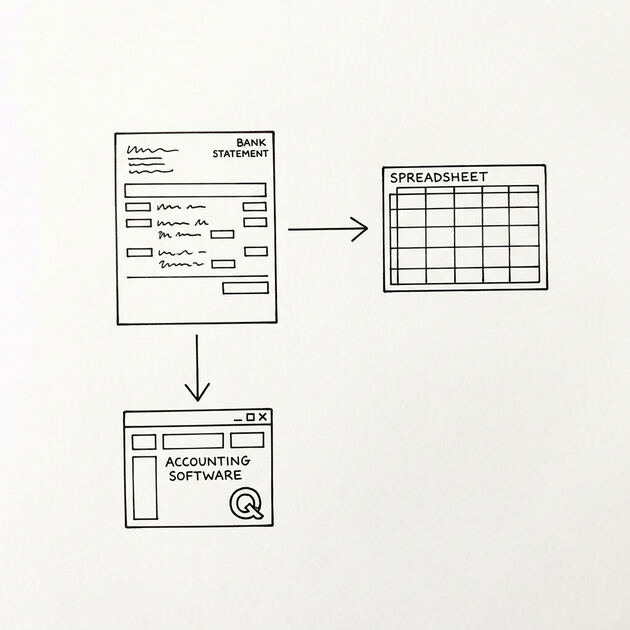
For the bank statement workflow that produces a clean PDF-to-spreadsheet conversion, see the bank statement converter, which preserves the routing number and other bank identifiers in the extracted data. For the broader context of how the routing number fits into the bank’s MICR line, see the MICR line definition.
Start with the Workflow
The fastest path is to start with the conversion step, which produces the data that every other step needs. The bank statement converter handles the PDF-to-Excel step in 2-5 minutes, with no upload to a server.
For a complete reference of the terms used throughout this article, see the bank statement glossary.
From PDF to Excel in one click
Forget retyping line by line. Upload any bank statement, get a spreadsheet you can actually use. Your files are never stored, and you can test the converter with 3 free conversions.
Try it free