
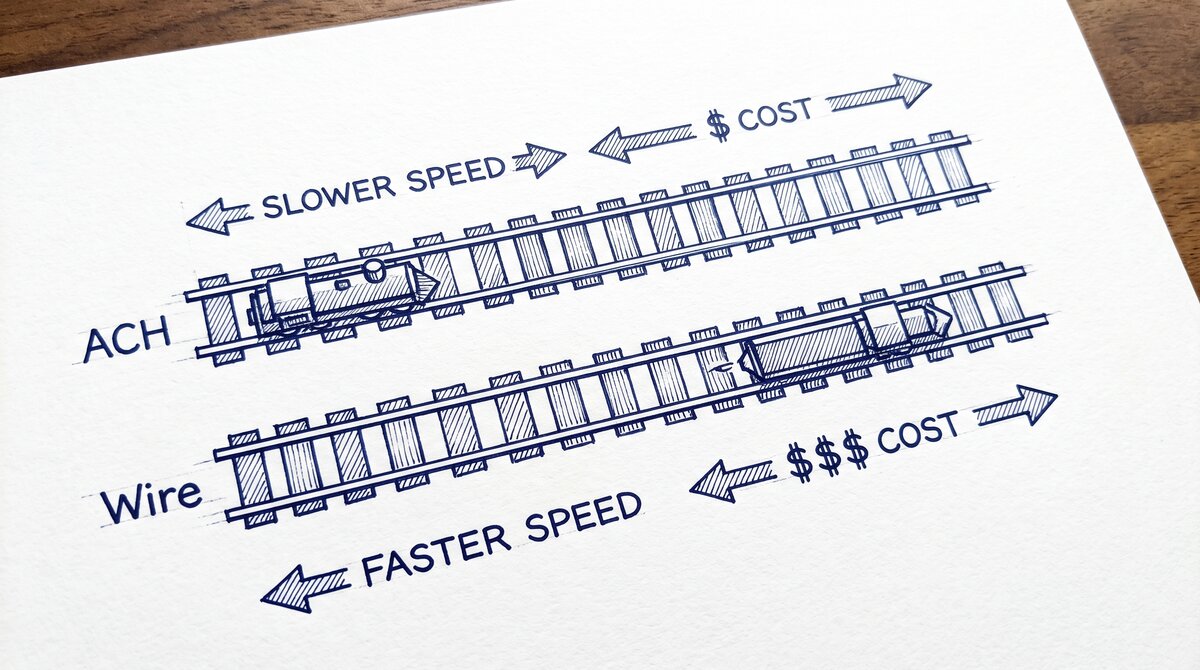
A domestic ACH costs $0.20-$1.50. A domestic wire costs $15-$50. The headline is misleading: international wires have 3 hidden layers that can double the cost, and the breakeven point for ACH is around $5,000 for time-sensitive payments. Below that threshold, ACH is almost always cheaper. Above it, the time value of money flips the answer.
The Headline Cost Difference (and Why It’s Misleading)
The headline: ACH is $0.20-$1.50, wire is $15-$50 domestic, $40-$75 international. The conclusion most comparisons draw: ACH is cheaper, use ACH when possible.
What most guides miss about this workflow is that the quality depends on the mechanism, not on the tool. Two tools that look different on the surface often run the same 4-step process underneath: read, find, parse, verify. The difference is in how well each step handles edge cases (merged cells, missing balances, non-standard date formats, scanned vs digital input).
Choosing between tools based on UI alone misses the actual quality lever.
The misleading part: the headline captures only the sender’s fee. For international wires, the total cost includes 3 additional layers (intermediary bank fees, FX margin, recipient bank fees) that can double the cost. And for time-sensitive domestic payments, the headline misses the time value of money: a $25 wire fee may be cheaper than a day’s delay.
The 3 Cost Layers Most Comparisons Miss
Layer 1: Sender bank fee. ACH: $0.20-$1.50 (often free to consumer accounts). Wire: $15-$35 domestic, $40-$75 international. This is the only layer most comparisons cover.
Layer 2: Intermediary bank fee (international wires only). A wire to a foreign bank goes through 1-3 intermediary banks, each potentially deducting $15-$30 from the amount. The recipient receives less than was sent. This layer is invisible to the sender; the recipient’s bank statement shows the deducted amount.
Layer 3: Recipient bank fee. The recipient’s bank may charge a fee to receive a wire ($0-$20 domestic, $0-$30 international). For ACH, recipient fees are rare.
Layer 4 (international only): FX margin. When the wire involves a currency conversion, the bank or intermediary applies a 1-3% margin to the exchange rate. On a $10,000 transfer, the FX margin is $100-$300, often more than the wire fee itself.
The Breakeven Math: When Wire Becomes Worth the Fee
The decision between ACH and wire is not just about the fee. It is about the fee versus the time value of money.
The Formula
Wire fee / hours of delay = hourly breakeven rate.
If a day’s delay costs the user more than the wire fee, wire is the right choice. If it costs less, ACH is the right choice.
The Worked Example
A freelancer needs to pay a $5,000 client invoice today. ACH: $0.50 fee, settles in 1-3 business days. Wire: $25 fee, settles same day.
If the freelancer bills $200/hour with 8 billable hours per day, the cost of a 1-day delay is $1,600. The wire fee of $25 is 1.5% of that cost. Wire is the right choice.
For a non-time-critical payment (rent, vendor invoice, subscription), the day’s delay has no opportunity cost. ACH is the right choice.
The Breakeven Threshold
For a typical business (8-hour day, $100/hour billing), the breakeven point is around $4,800-$5,000. Below that, ACH is cheaper. Above that, wire’s same-day certainty saves money.
For a high-billing-rate business (e.g., law firm at $500/hour), the breakeven point drops to $1,000-$1,200. For a low-rate business (e.g., retail at $30/hour), the breakeven point is $15,000-$20,000. The right answer depends on the user’s hourly opportunity cost.
Turn PDF Bank Statements Into Workable Spreadsheets
Your bank statement is a mess of numbers, but your books shouldn't be. Use our converter to get Excel, CSV, or QBO files — ready for QuickBooks.
Try It Free NowInternational Wire Costs: 5 Hidden Charges
International wires have 5 cost components, not 1.
Sender Bank Fee
$40-$75 for the outgoing wire. This is the only visible cost on the sender’s statement.
Intermediary Bank Fees
$15-$30 per intermediary, deducted from the amount. A wire from US to Asia may go through 2-3 intermediary banks. Total intermediary fees: $30-$90, invisible to the sender.
FX Margin
1-3% applied to the exchange rate. On $10,000, this is $100-$300. The sender specifies the amount in USD; the recipient receives the equivalent in local currency minus the margin.
Recipient Bank Fee
$0-$30 deducted from the amount by the receiving bank. Some banks waive this for premium accounts.
Correspondent Banking Fee
$10-$25, sometimes bundled into the intermediary fees. Charged by the US bank’s correspondent for routing the wire internationally.
The Total
For a $10,000 wire from US to Europe, the total cost to the sender is $40-$75. The recipient receives $9,700-$9,850 (after intermediary fees, FX margin, and recipient bank fee). The total system cost is $250-$375, or 2.5-3.75% of the transfer amount.
A common failure mode bookkeepers report is treating this as a single operation rather than a chain of dependent steps. The temptation is to find a tool that ‘just works’ and stop investigating the mechanism.
The result is a wrong-fix cycle: the tool gives partial output, the bookkeeper spends 30+ minutes troubleshooting, the fix is for the wrong step, and the same error recurs on the next statement. The fix: identify which step failed and apply the right intervention to that step.
How to Read Your Bank’s Wire Fee Schedule
A typical bank’s wire fee schedule lists 4-6 fee tiers: outgoing domestic wire, outgoing international wire, incoming domestic wire, incoming international wire, plus variations for online vs branch-initiated wires.
Online-initiated wires are typically $5-$10 cheaper than branch-initiated. Some banks waive the fee for premium accounts (with $50K+ balance). Some banks offer free incoming wires for business accounts.
For ACH, the fee schedule is simpler: most banks charge $0 for consumer ACH transfers and $0.20-$1.50 for business ACH transfers. Some banks charge per-batch (a single fee for up to 100 transactions).
The pattern: the wire fee schedule is a 4-6 line document. The ACH fee schedule is a 1-2 line document. The difference reflects the underlying cost structure: wire is a real-time individual settlement; ACH is a batched system with low marginal cost.
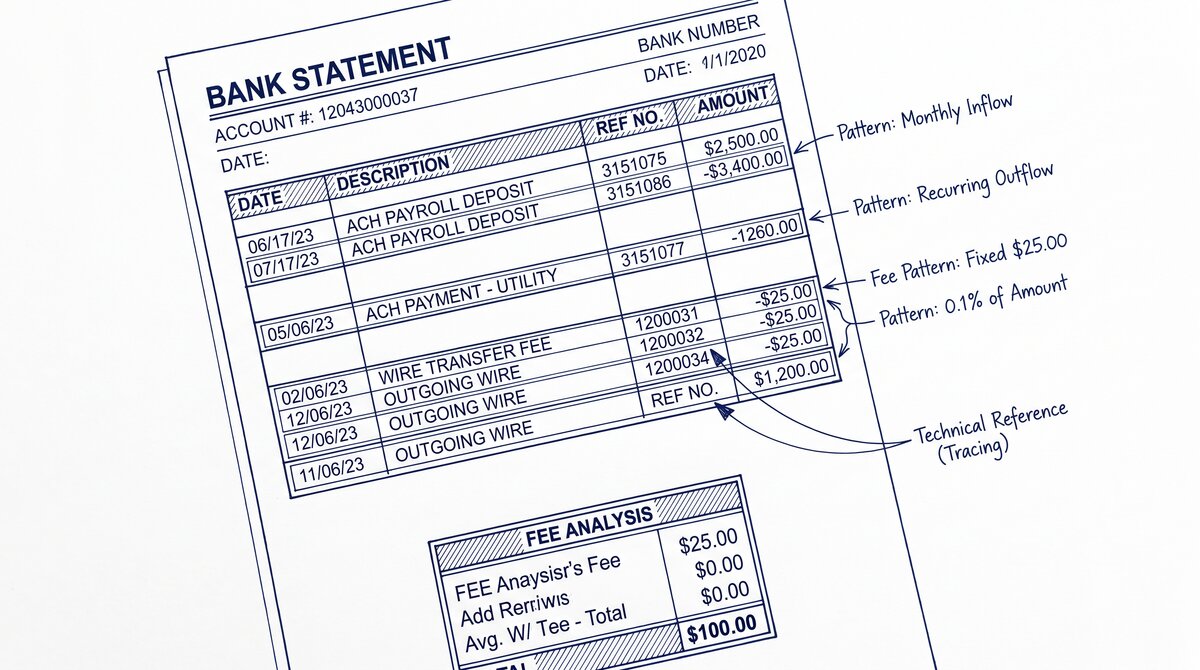
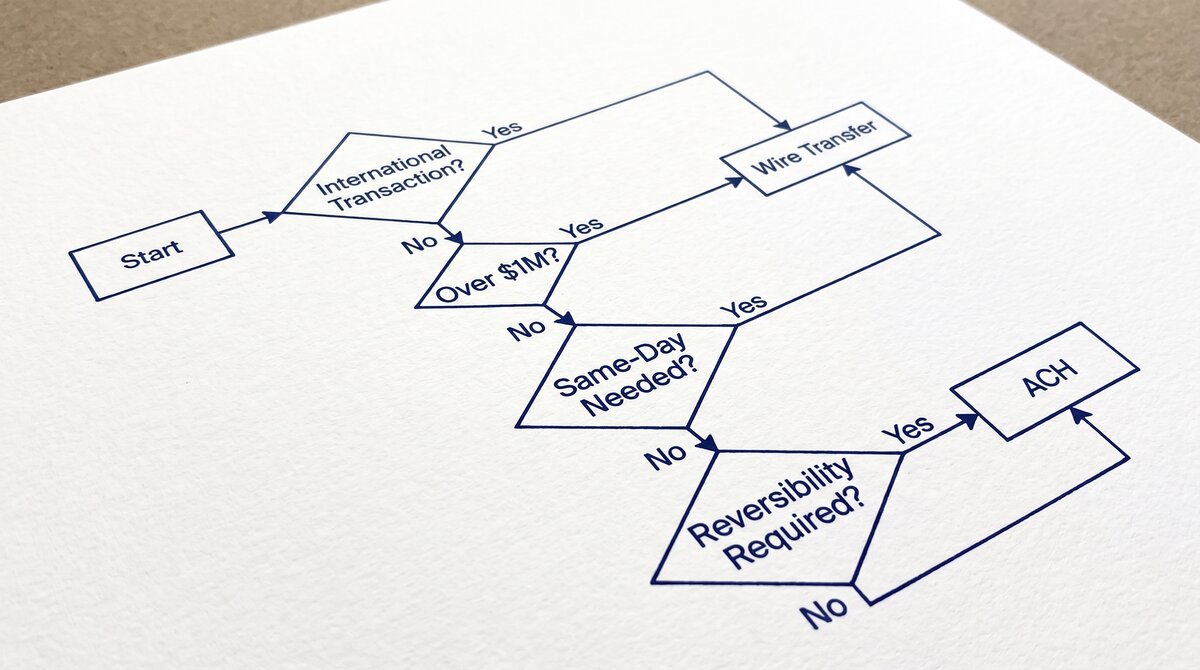
The ACH vs wire transfer pillar covers the 5-criteria decision matrix. The when to use wire vs ACH sub-pillar covers the decision tree. The speed comparison covers the time component of the breakeven math. The statement appearance covers how to identify each on a bank statement.
For a deeper understanding, see: payment rails pillar . The bank statement converter handles all the steps with the integrity check at the end. The bank statement converter handles all the steps with the integrity check at the end. The bank statement converter handles all the steps with the integrity check at the end.
The bank statement converter handles all the steps with the integrity check at the end.
See also: ACH vs wire cost in context
This explainer is part of the payment rails coverage on this site. The consolidated overview of ACH, wire, Zelle, RTP, and FedNow for US banks now lives in the complete US bank payment rails guide, which is the modern hub for the topic.
For parallel reading on the merchant category codes that flow over the card-network rails, see the complete MCC guide. For what every column on a US bank statement means and where the rail labels appear, see the expanded bank statement anatomy.
Cost comparison in practice
For small-dollar recurring transfers, ACH is the cheapest rail by an order of magnitude. Most banks charge nothing for outbound ACH and absorb the receiving fee as well. Same-day ACH adds a small per-entry fee but is still typically under $1 per entry.
Wire is the most expensive rail. Per-transfer fees are $20-$50 at most US banks, with the originating bank typically charging the receiver nothing. Some banks waive wire fees for transfers above a high-dollar threshold or for premium account holders.
Real-time rails (RTP and FedNow) sit between ACH and wire in cost. Originating banks pay about $0.045 per credit transfer; receiving banks usually do not charge. As adoption grows, banks increasingly pass the originating fee through to the customer at low or zero markup.
For a small business transferring $5,000 to a vendor once a month, ACH saves roughly $240/year over wire. For a higher-frequency bill-pay platform, ACH-vs-wire matters at scale.
Cost-side considerations for small businesses
A small business running 50 outgoing vendor payments per month over ACH saves roughly $1,200/year over wire on cost alone. Add the additional cost of any customer ACH-pulls and the saving grows.
For high-dollar, low-frequency transfers (e.g., real estate closing), the wire fee is negligible relative to the dollar amount and the time sensitivity. So the cost-vs-speed trade-off flips.
Real-time rails fall in the middle on cost: roughly $0.045 per credit transfer. As more banks adopt and compete on consumer pricing, this number is likely to decline. The complete US bank payment rails guide covers cost-vs-speed for all four rails today.
When wire cost is justified
Wire cost is justified for transactions over $10,000 where time-savings matter. For example, a $40,000 equipment purchase that needs to land by a specific date justifies the $25-$30 wire fee when the alternative would be late fees or contract penalties.
Wire cost is justified when the destination requires irrevocable funds. Some vendors, contractors, and government entities mandate wire for receipt. ACH cannot guarantee that.
Wire cost is justified for transactions where reversal risk is unacceptable. Court-ordered settlements, property closings, and capital movements are typical examples. ACH carries some reversal risk; wire is irreversible.
For routine recurring flows, ACH is always cheaper. The complete US bank payment rails guide covers the cost-vs-speed trade-off for ACH, wire, Zelle, RTP, and FedNow side by side.
Cost trade-offs at scale
For a business running 200+ outgoing payments per month, ACH vs wire cost differential sums to thousands of dollars per year. For a freelancer with 5 monthly vendor payments, ACH vs wire cost differential is negligible. The right rail scales with payment volume.
Wire cost is usually zero for inbound wire receipts. Many banks do not charge for incoming wires. Outbound wires carry the $20-$50 fee. So if you are setting up a system where customers wire you, you save on the receiving side.
Real-time rails (RTP, FedNow) cost approximately $0.045 per credit transfer for the originating bank. The receiving bank usually does not charge. Whether this cost is passed through to the customer depends on the bank’s pricing model.
Output format: which one matches the destination?
Picking the right output format is a separate decision from picking the right converter.
XLSX for human spreadsheet review. CSV for downstream scripts and tools. Google Sheets-compatible for shared cloud review. QBO for QuickBooks.
The four canonical columns are preserved across every format. What differs is how the downstream consumer expects the rows.
For a side-by-side rule of thumb that maps destination to format, see the decision framework on the output format pillar.
Read the full output format decision framework
Turn any PDF statement into a clean sheet
Skip the typos and the hours of copying. Our converter handles any bank statement format and outputs Excel, CSV, or QBO for QuickBooks. No file retention, free to try.
Convert your statement