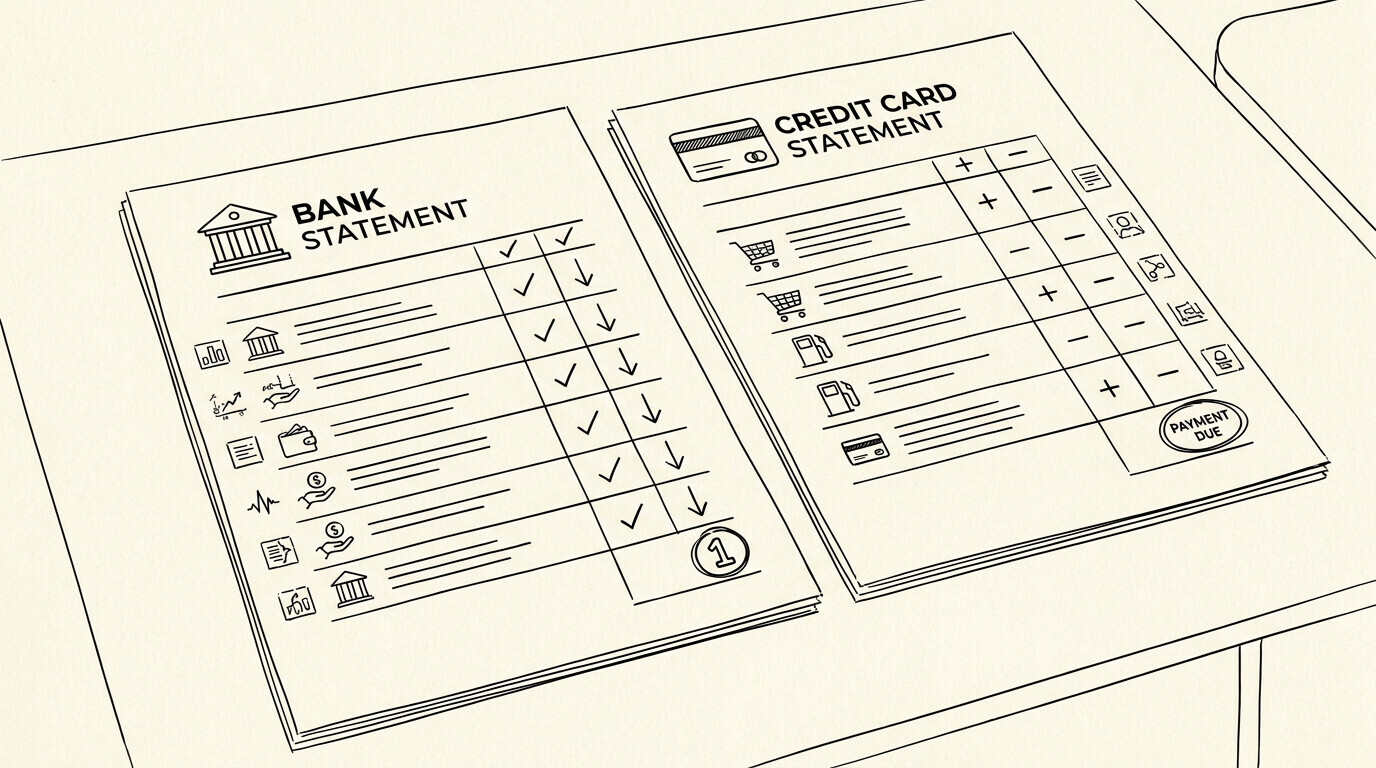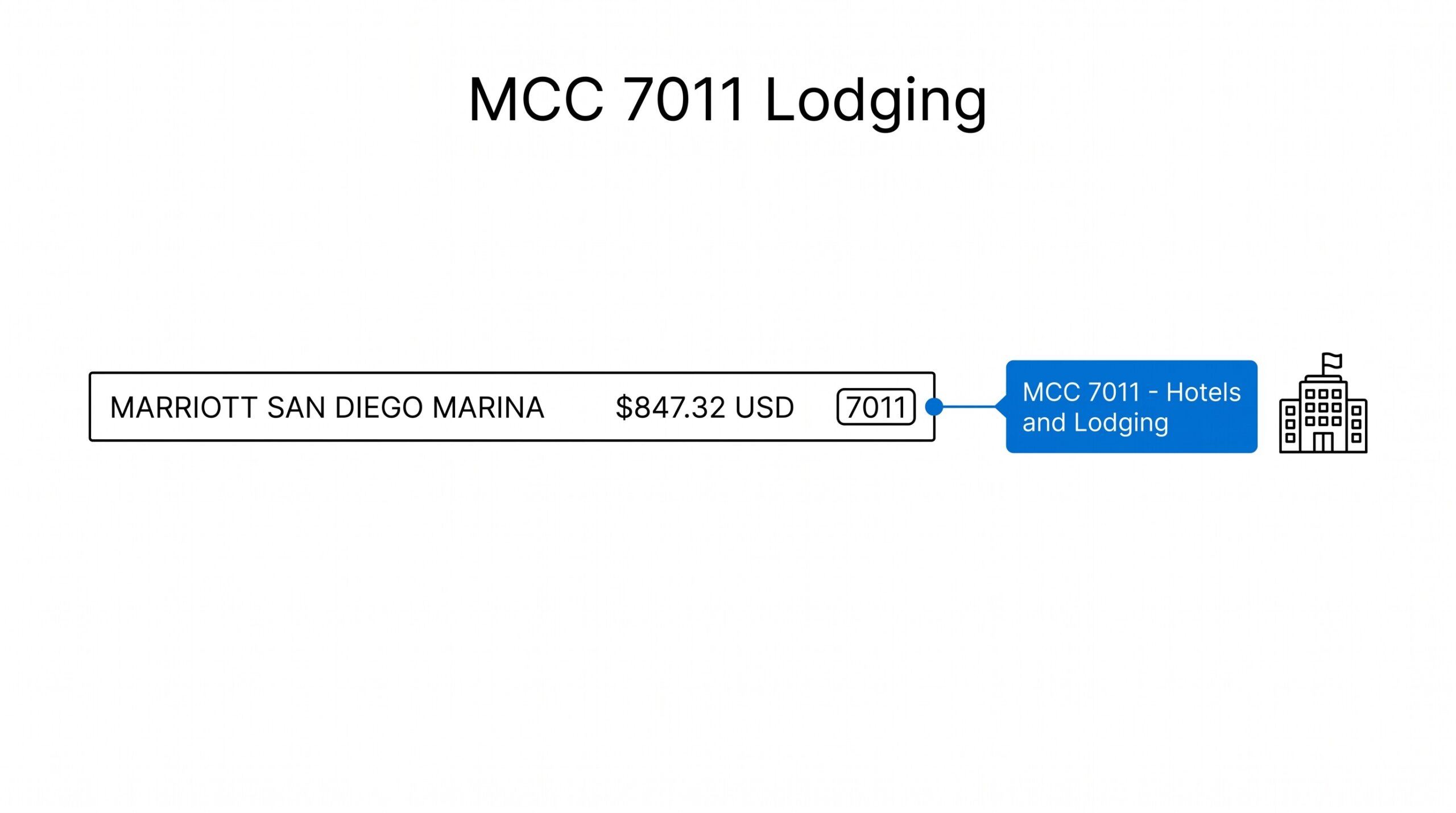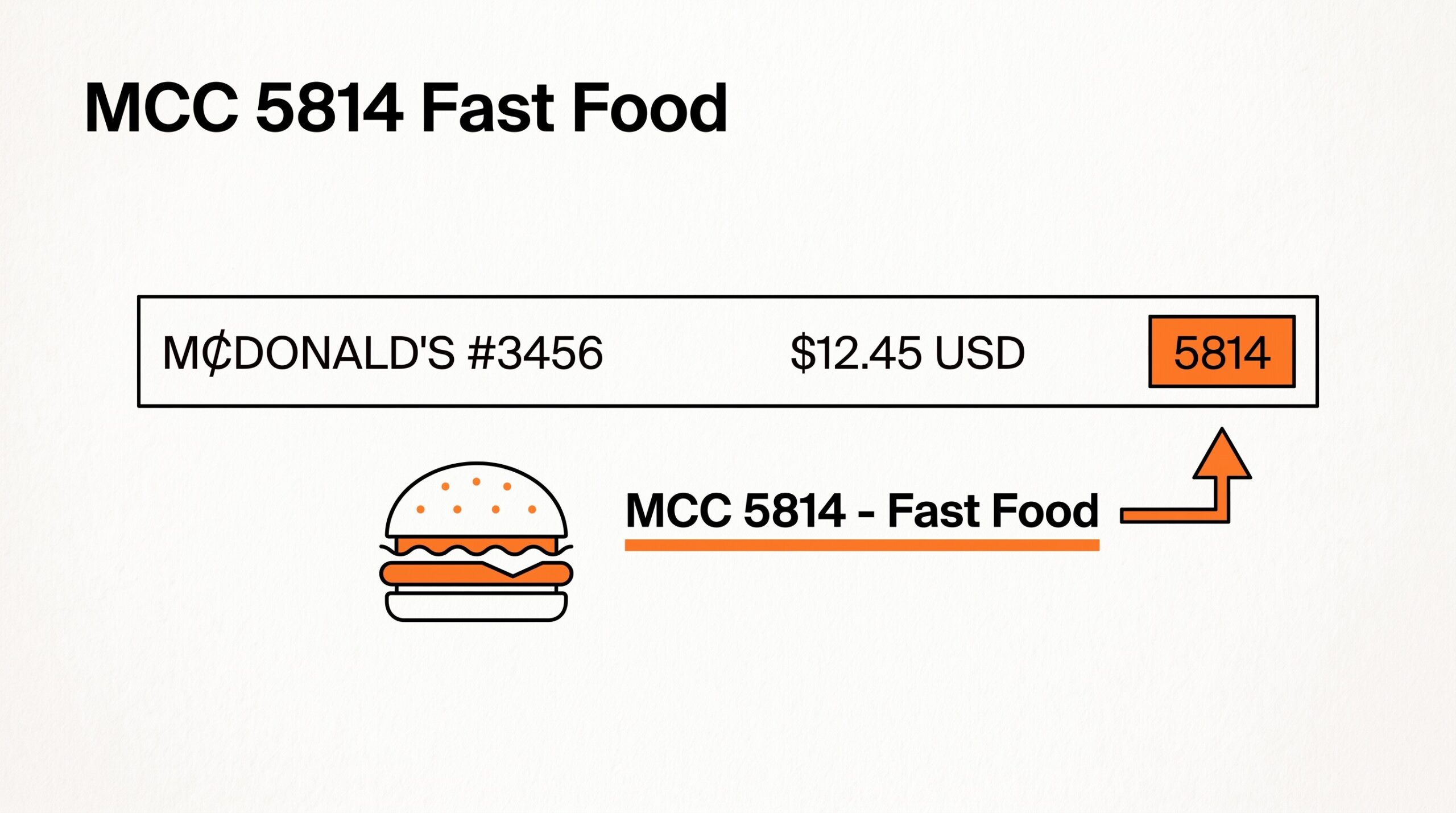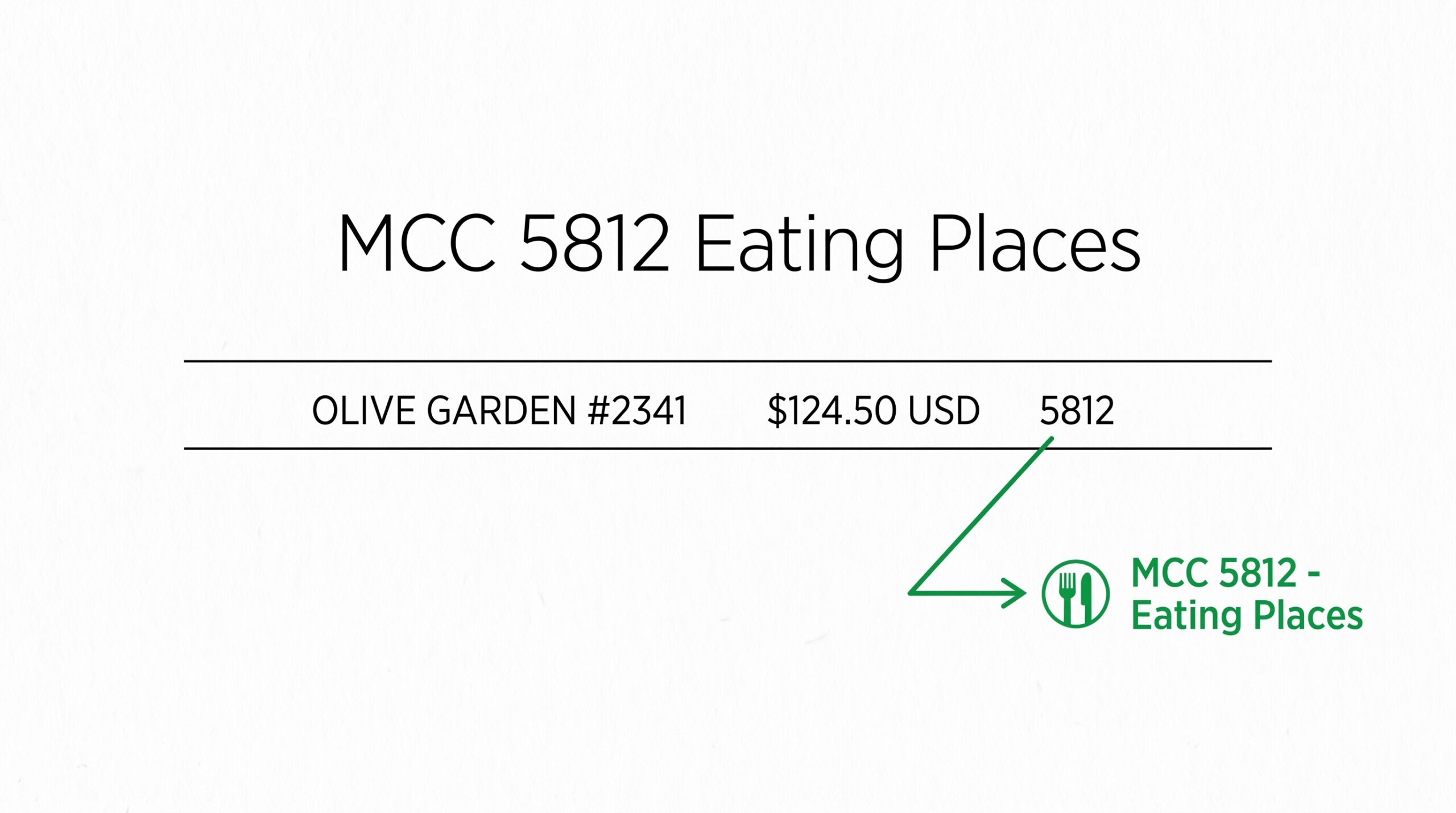

MCC 5967 shows up on a credit card or bank statement next to a charge from a company that sells by phone. The code stands for Direct Marketing: Inbound Telemarketing Merchants, as listed in the Mastercard Quick Reference Booklet.
Put simply, it describes a merchant that reaches you because you picked up the phone and called them. That is the key difference from 5966, which covers outbound telemarketing, where the merchant calls you first.
Seeing 5967 usually means the transaction came from a call center you contacted yourself: an order desk for a mail order or telephone order retailer, or a subscription service you joined after speaking to a representative on the phone.
What MCC 5967 actually describes
The Mastercard Quick Reference Booklet lists 5967 as Direct Marketing: Inbound Telemarketing Merchants. Mastercard describes direct marketers as providers of services such as non-store retailing, mail order, or telephone order.
A related definition in the same booklet covers Mail Order/Telephone Order Providers, which use direct marketing techniques such as mailings, advertising, or other methods to sell products, services, or information.
Both definitions point to the same business model: selling without a physical storefront, driven by advertising and phone contact rather than walk-in traffic.
The inbound and outbound split is the entire point of having two codes. Outbound means the merchant initiated contact by telephone. Inbound means you initiated contact by telephone.
Direction of the call does not change the merchant type. A credit union that calls you about a loan is 5966. The same credit union that answers your call about that loan is 5967.
How 5967 sits with the other direct marketing codes
Telemarketing is one corner of the direct marketing family, and Mastercard assigns a separate code to each business type. Knowing the neighbors makes a 5967 line easier to place.
- 5960: insurance services
- 5962: travel related arrangement services
- 5963: door to door sales
- 5964: catalog merchants
- 5965: combination catalog and retail
- 5966: Direct Marketing: Outbound Telemarketing Merchants
- 5967: Direct Marketing: Inbound Telemarketing Merchants
- 5968: continuity and subscription merchants
- 5969: other direct marketers not elsewhere classified
Read that list as a routing table. If you called a travel agent, the charge is 5962. If you bought from a printed catalog by phone, it is 5964.
If you enrolled in a monthly membership by phone, it is 5968. If you called a merchant and they took the order, it is 5967.
The full list of codes is worth keeping nearby. Our MCC code reference covers the broader structure of how Mastercard organizes merchants.
Turn any PDF statement into a clean sheet
Skip the typos and the hours of copying. Our converter handles any bank statement format and outputs Excel, CSV, or QBO for QuickBooks. No file retention, free to try.
Convert your statementHow 5967 differs from 5966 in practice
The practical difference is about expectation. With 5966, a charge you did not initiate is waiting for you, and the merchant already had your number.
With 5967, you made the call, so you know which company you dealt with and roughly what you asked for. The descriptor is often easier to recognize once you understand the pattern.
A line showing a company you rang about a product reorder, a service renewal handled by phone, or a product bundle you discussed with a representative is a strong candidate for 5967.
One nuance matters here. A single merchant can appear under different codes for different transactions.
If the same vendor sells by telephone and also runs a subscription membership program, you may see 5967 on one statement line and 5968 on another. The code informs your reading of the transaction, it does not replace it.
We explain how 5968 works in detail in what MCC 5968 means for direct marketing.
Why the code shows on your statement at all
Payment networks attach merchant category information to the authorization message that travels with your transaction. That category information is what your statement formatter uses when it needs a plain language descriptor.
The result is a familiar pattern: a charge line that reads like a city and state, a phone number, or a generic label, where the MCC is the only clue about the merchant type.
Without the code, that line is genuinely opaque. With it, you have something you can search and compare against other statements from the same merchant.
Two practical situations benefit from this. First, chargeback and dispute preparation, where an MCC plus a transaction date plus an amount is often the only identifying set you have.
Second, year end categorization. If you reconcile across a full year of statements, a repeatable code saves you from re-investigating the same unfamiliar descriptor every quarter.
If you want a wider view of how codes are distributed across merchant types, our guide to common MCC codes on credit card statements is a useful starting point.
How to verify a 5967 charge on your own statement
Here is a short workflow you can run against any statement, credit card or business checking account alike.
1. Locate the line and read the whole descriptor
Do not judge a charge from the first six characters. Many formatters place the merchant category in the middle of the line and the amount at the end.
Read the entire description before deciding what it is, then note the date and the exact amount.
2. Confirm the direction of the call
Ask one question: who picked up first? If you called them, inbound telemarketing fits. If they called you, look at 5966 instead.
If the merchant sold through a printed catalog or a subscription program, use 5964 or 5968. You can compare against the direct marketing list in our MCC code list for 2026.
3. Match it to your own records
Search your invoices, order confirmations, emails, or account portal for that merchant and date. In most cases the documentation turns a puzzling line into a routine expense.
The code simply confirms what the paperwork already told you, which is exactly what you want to see before you act.
4. Decide the category for your books
Assign the expense the way your accounting method requires, whether that is supplies, software, insurance, travel, or something else.
The MCC is a merchant classification, not an accounting category. If you are unsure how to treat the deduction, run it past your tax professional before filing.
Getting your statement into a usable format
The verification step above is only fast if the transaction data is readable. Most statements arrive as a PDF with a running balance column.
That means every line has to be read by eye and retyped if you want it in a spreadsheet. Retyping is where most of the bookkeeping time actually goes.
Easy Statement Sheet converts that PDF into Excel, CSV, Google Sheets, or QuickBooks Online using four clean columns: Date, Description, Amount, and Balance.
Each row is reconciled against the printed running balance, so the totals check out against what your bank shows. Files are processed in memory only and never stored.
Every major US bank is supported, and you can export directly to QBO for QuickBooks Online and Desktop. Plans start at $15 per month, and the first three conversions are free with no card required.
Once the transactions sit in a spreadsheet, the MCC column becomes searchable. You can sort every line that came from an inbound telemarketing merchant and review them together, instead of hunting one unfamiliar descriptor at a time.
That is the workflow that scales for anyone processing months of history at once.
Common situations where 5967 appears
Inbound telemarketing merchants tend to cluster in a few areas. Call center order desks for mail order and telephone order retailers are the most common case, where you phone in an item and it ships to you.
Telephone order desks for products that are hard to shop for in person, such as replacement parts or specialty equipment, also fall here.
Some membership and continuity programs record a phone enrollment as 5967, even when the ongoing renewal later bills under a different code.
Some small or regional sellers reach exactly these categories only after you call their published number.
If a 5967 charge looks unusual, that is worth a second look, because the code narrows the field of possible explanation considerably.
It says the transaction was processed by a merchant in the inbound telemarketing category, so it is far more likely to be an ordinary phone order than something mysterious.
If it still does not match your records, the merchant descriptor and the MCC together give you two concrete identifiers to search for when you contact the company or your card issuer.
Watch for the renewal pattern
Inbound telemarketing merchants are not always a one time purchase. A membership you joined by phone often renews automatically, and the renewal may post months after the original call, sometimes with a different descriptor entirely.
When a 5967 line repeats, check whether the amount is stable. A recurring charge of the same amount on the same monthly or annual rhythm usually points to a continuity or subscription arrangement, which the Quick Reference Booklet assigns to 5968 rather than 5967.
That distinction matters for small business bookkeeping because a subscription is a recurring operating cost you plan around, while a one time phone order is a single expense you classify once. Both can originate from the same call, and both can appear on the same statement.
Sorting the statement by date and grouping the 5967 lines makes this pattern visible without extra effort. It also gives you a short list to hand to whoever handles your recurring vendor contracts.
One last distinction worth keeping straight
The difference between inbound and outbound telemarketing is about the direction of the phone call, and nothing else.
It does not describe the quality of the merchant, the reliability of the product, or whether a charge is legitimate.
A well known catalog retailer and a small local supplier can both bill under 5967, and a reputable outbound caller can bill under 5966.
Use the code to understand what kind of transaction you are looking at and to find the merchant faster. Use your own records and your bank’s dispute process to decide whether the charge is correct.
That is the whole of MCC 5967: a marker on a statement line that says the customer made the call, the merchant sells without a storefront, and the transaction falls into the wider direct marketing family alongside codes 5960 through 5969.
From PDF to Excel in one click
Forget retyping line by line. Upload any bank statement, get a spreadsheet you can actually use. Your files are never stored, and you can test the converter with 3 free conversions.
Try it free