
When you convert a bank statement, “accurate” feels like a single yes-or-no question. Either the numbers match or they do not.
In practice, accuracy is a stack of separate checks. The one most people rely on, balance verification, proves less than they think. Understanding what it proves, and what it silently lets through, is the difference between trusting a converted statement and merely hoping it is right.
Balance verification proves arithmetic consistency, not field-level accuracy. Trust it as a first check, never as proof.
What “Extraction Accuracy” Actually Means
Extraction accuracy is measured at the field level, not the document level. A single transaction row contains several distinct fields: the date, the description, the amount, and whether it is a debit or credit. Each field can be right or wrong independently of the others.
That means a converted statement can be “accurate” in one sense and wrong in another. The date might be correct while the description is garbled. The amount might be right while the debit/credit flag is flipped. Field-level accuracy is the honest measure, because it counts how many individual data points are correct rather than treating the whole document as a pass or fail.
For a bookkeeper, field-level errors matter more than document-level ones. A misread amount feeds directly into reconciliation and tax reporting. A swapped debit/credit changes whether money moved in or out. A garbled description breaks audit trails even when the number is right.
The Conversion Pipeline: From PDF to Verified Data
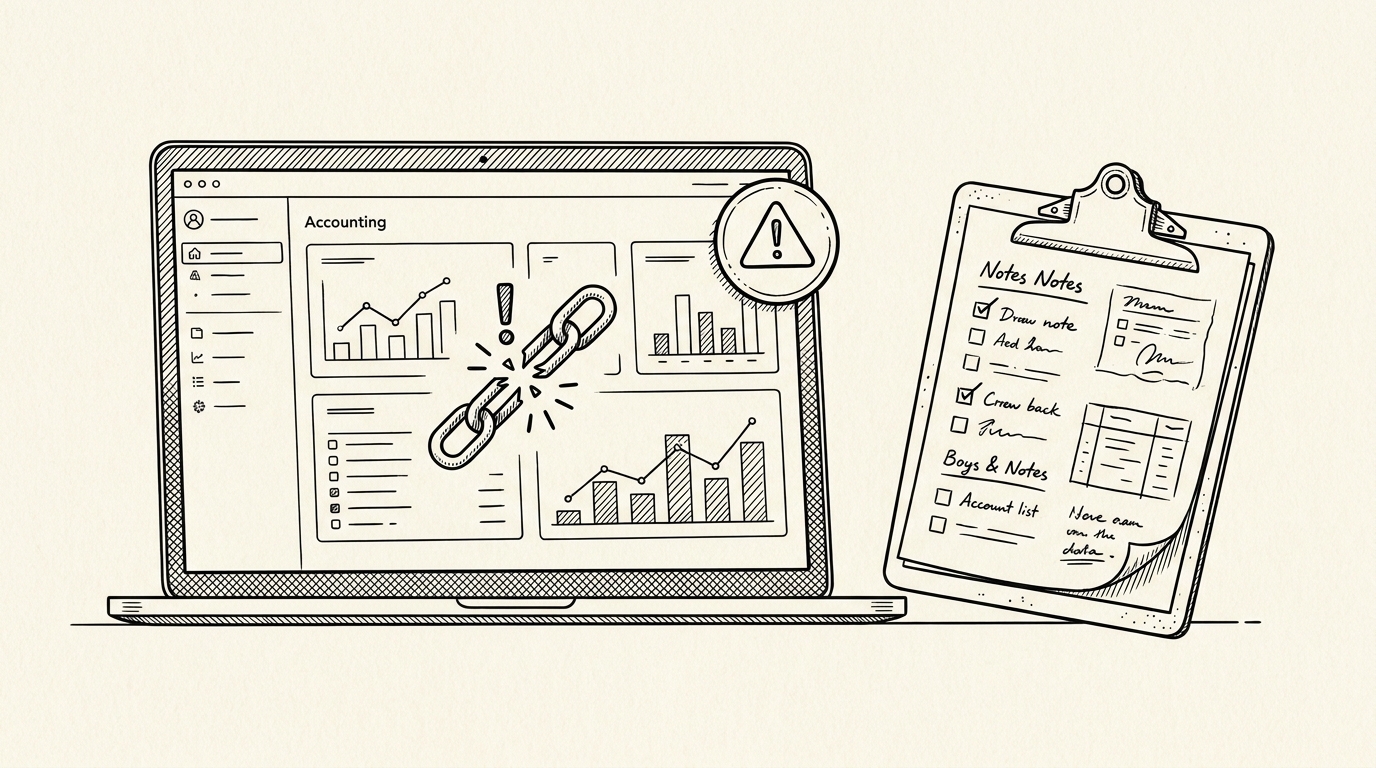
Conversion is not a single step. It is a chain, and accuracy depends on every link holding.
- Extraction. Text and numbers are pulled from the PDF. This is where OCR confidence and layout parsing matter most.
- Normalization. Dates are standardized, amounts are cleaned of currency symbols, and columns are mapped to the right fields.
- Balance check. Running balances are recomputed and compared against the statement’s printed balances.
- Independent review. A human or second process spot-checks rows the automated steps cannot fully validate.
Skipping any link weakens the result. A perfect extraction can still fail normalization if column headers shift. A passing balance check can still hide field-level errors, as you will see below.
From PDF to Excel in one click
Forget retyping line by line. Upload any bank statement, get a spreadsheet you can actually use. Your files are never stored, and you can test the converter with 3 free conversions.
Try it freeWhat Balance Verification Proves
Balance verification is an arithmetic check. It recomputes the running balance from the opening balance by applying each transaction in order, then compares the result to the balance printed on the statement. When they agree, you have proven arithmetic consistency across the whole transaction list.
That is genuinely useful. It catches a large class of errors: a dropped row, a transposed digit in an amount, a missing sign, a row entered twice, or a running balance that drifts. If the recomputed balance matches the printed one at the end, the sum of all transactions is internally consistent with the statement’s own math.
It also catches row-order mistakes. Because running balances depend on sequence, a row placed out of order will usually break the check. So balance verification proves the transaction set is arithmetically coherent and in the right order. That is a strong signal, and it is the reason every serious converter performs it.

What Balance Verification Does Not Prove
Here is the part most articles skip. Balance verification is necessary but not sufficient for field-level accuracy. Several real errors reconcile perfectly and pass the check without complaint.
- A wrong amount that still nets out. If one transaction is overstated by ten dollars and another is understated by ten, the running balance still closes. Both rows are wrong, but the check sees a clean result.
- Misclassified debit or credit. A withdrawal recorded as a deposit, or vice versa, can still reconcile if a compensating error exists elsewhere. Even alone, a sign flip on a row that is later offset by another flip may pass.
- Swapped descriptions. Two rows can trade descriptions while amounts and dates stay correct. The balance is untouched, but the audit trail now attributes money to the wrong payee.
- Missing plus extra that net to zero. A dropped transaction of one hundred dollars paired with a phantom transaction of one hundred dollars in the opposite direction keeps the balance intact while the underlying data is corrupt.
- Wrong dates with right amounts. If two rows swap dates but keep their amounts, the running balance can still close while the chronology is wrong. That breaks period-based reporting and reconciliation by date range.
The core limitation is structural. Balance verification checks the sum and sequence, not the identity of each field. It answers “do these numbers add up” rather than “is each number the right one.” Those are different questions, and only the first is automated by a balance check.
The 99.9% Claim: Methodology and Its Limits
Accuracy percentages are only as meaningful as the methodology behind them. A credible 99.9% claim rests on four things: a defined test dataset, transaction-level measurement, an explicit error definition, and stated exclusions.
The test dataset should be representative: multiple banks, multiple statement formats, scanned and digital PDFs, multi-page documents, and statements with complex layouts such as multi-column tables and merged cells. A claim tested on only clean digital statements from one bank is not portable.
Measurement must be at the transaction level, not the document level. A document that gets 49 of 50 transactions right is 98% accurate by transaction count, not 100%. Counting whole documents as pass or fail inflates the number.
The error definition must be explicit. Does a wrong date count as one error or does it invalidate the whole row? Does a misclassified debit/credit count as a field error or a transaction error? Without a stated definition, the percentage cannot be reproduced or compared.
Exclusions must be listed. Common exclusions include handwritten annotations, redacted statements, statements below a minimum resolution, and formats outside the supported set. A 99.9% figure that excludes half the real-world inputs is not the number you think it is.
Even with all four in place, an aggregate percentage hides distribution. A 99.9% overall rate can coexist with a 95% rate on scanned statements from a particular bank. Ask for the breakdown by input type, not just the headline.
OCR Limitations: Confidence and Misread Digits
OCR is where most field-level errors originate. Optical character recognition assigns a confidence score to each recognized character, and low confidence is a warning sign, not a guarantee of error. A digit read at 62% confidence may still be correct, and a digit read at 99% confidence may still be wrong.
Certain digit pairs are especially error-prone: 0 and 8, 1 and 7, 5 and 6, 3 and 8. These confusions are driven by font, scan quality, and compression artifacts. A single misread digit in an amount is the most damaging field error because it propagates into reconciliation, tax, and reporting.
OCR also struggles with structure, not just characters. Multi-column layouts, merged cells, and statements where the running balance column is interleaved with amounts can cause misalignment. The numbers may be read correctly while being assigned to the wrong field, which is a harder error to catch than a misread digit.
The practical takeaway: treat OCR confidence as a triage signal. Low-confidence fields deserve manual review. High-confidence fields deserve spot-checking, not blind trust.
When Balance Verification Is Impossible
Balance verification requires a running balance column. Many statements, especially credit card statements and some international bank formats, print only a statement balance or no running balance at all. In those cases the arithmetic check cannot run, and accuracy must rely entirely on extraction quality and independent review.
Other scenarios break the check even when a running balance exists. Statements with pending transactions, holds, or authorization adjustments may show balances that do not reconcile cleanly to the transaction list. Foreign currency statements with conversion fees applied mid-statement can also defeat a simple running-balance recomputation.
When balance verification is unavailable, the risk profile changes. You lose the one automated safety net, so independent review becomes mandatory rather than optional. This is also the case where a second verification pass, comparing totals by category or date, adds the most value.
Independent Review Steps That Actually Catch Errors
Independent review is the layer that closes the gap balance verification leaves open. It works best as a short, specific checklist rather than a vague “check the numbers.”
- Spot-check amounts against the PDF. Pick ten to twenty rows at random, including the first and last on each page, and compare amount, date, and description to the source.
- Verify debit/credit classification. Confirm that withdrawals, fees, and payments are debits and that deposits and interest are credits. Pay special attention to rows near zero and to refunded transactions.
- Check transaction count. The number of converted rows should equal the number of transactions on the statement. A mismatch means a drop or a duplicate.
- Compare totals. Sum debits and credits separately and compare to the statement’s printed totals if available.
- Review low-confidence fields. Any field flagged below your confidence threshold gets a manual look, regardless of whether the balance check passed.
These steps are cheap relative to the cost of a wrong number in your books. Ten minutes of review on a monthly statement is far less than the cost of reconciling a phantom transaction at year end.
When to Trust the Output and When to Re-Check
Trust is earned by input quality and verification depth, not by a headline accuracy percentage. A clean digital PDF from a supported bank, with a passing balance check and a clean spot-check, is trustworthy for routine use. A scanned statement, a new bank format, or a statement with no running balance deserves a full independent review before the data touches your accounting system.
Re-check when the input changes. A new bank, a new statement format, a different scan resolution, or a statement with unusual transactions such as reversals or foreign currency all raise the error rate. Re-check also when the output will be used for something high-stakes: tax filing, audit support, or a client deliverable.
The framing that serves you best is not “is this accurate” but “what kind of accuracy has been verified, and what remains unverified.” Balance verification proves arithmetic consistency. It does not prove field-level correctness. Treating those as the same claim is the single most common mistake in bank statement conversion, and it is the reason a second look is worth taking.
If you are building your own verification workflow, start with the conversion checklist and pair it with the steps to verify converted bank statement data.
When something looks off, the troubleshooting guide covers the common failure modes. For questions about data handling, see is a bank statement converter safe.
If you are pulling rows from a PDF, the guide to extract transactions from a PDF bank statement covers the extraction step in depth.
Turn PDF Bank Statements Into Workable Spreadsheets
Your bank statement is a mess of numbers, but your books shouldn't be. Use our converter to get Excel, CSV, or QBO files — ready for QuickBooks.
Try It Free Now