
Credit union statements do more than list transactions. They are the single document most members actually read each month, and they carry legal obligations that cannot be skipped or buried. Redesigning one is a chance to fix both problems at once: make the disclosure clearer and make the document useful.
This guide walks through what a periodic statement must contain, how the layout can support comprehension, and the practical steps a credit union can take to ship a new design without breaking compliance. It is written for operations and marketing teams who own the statement, not for members reading one.
For a baseline on what a statement already contains, see our guide to what a bank statement is.
What the statement must disclose
Under 12 CFR 707.6(b), which is the NCUA Truth in Savings rule, a credit union that mails or delivers a periodic statement must disclose several items.
These include the annual percentage yield earned, the dollar amount of dividends earned, fees imposed itemized by type and amount, the length of the statement period, and aggregate overdraft and returned item fees. None of these can be omitted because the layout is cleaner without them.
The rule also requires that disclosures be made clearly and conspicuously, in writing, and in a form the member may keep. Electronic delivery is allowed when it satisfies the E-Sign Act. That means a redesign cannot trade legibility for style. If a member cannot keep or read the disclosure, the design has failed regardless of how modern it looks.
Period length and fees
Per 12 CFR 707.6(b)(4), the statement period disclosure must give either the total number of days in the period or the beginning and ending dates. Either form is acceptable, but the choice should be consistent across all statements the credit union issues.
Per 12 CFR 707.6(b)(3), fees required under 707.4(b)(4) that were debited during the statement period must be itemized by type and dollar amounts. When a fee type is imposed more than once in the period, the items may be grouped by type. Grouping is a layout decision that keeps the fee section readable.
Overdraft fee disclosure on every statement
Per 12 CFR 707.11(a), credit unions must separately disclose on each periodic statement the total overdraft fees for paying items when funds are insufficient and total fees for returning items unpaid. Both figures are required for the statement period and for calendar year to date, using a format substantially similar to Sample Form B-10. This is a separate section from the general fee list.
Because members often misunderstand overdraft charges, this section deserves its own visual treatment. A small box or shaded band near the top of the transaction list keeps it visible without interrupting the flow of transactions. Our overview of what information appears on a bank statement can help teams map these required items to a layout grid.
From Bank Statement to QuickBooks-Ready File
That manual cleanup you just read about? This tool skips it. Turn your PDF into QBO for QuickBooks without storing your data anywhere.
Start ConvertingElectronic fund transfer rules
Per CFPB Regulation E at 12 CFR 1005.9(b), for an account to or from which electronic fund transfers can be made, a financial institution must send a periodic statement for each monthly cycle in which an EFT occurs, and at least quarterly if no transfer has occurred. This sets the minimum cadence a redesign must support.
The same provision requires the statement to include transaction amount, date credited or debited, type of transfer, account number, fees assessed, opening and closing balances, and an address and telephone number for inquiries preceded by the phrase “Direct inquiries to” or similar language.
A redesign should place the inquiry contact block where a member can find it without searching, ideally near the top or in a footer that repeats on every page.
Cycle length consistency
Per CFPB interpretation of 1005.9, periodic statements may be sent on a cycle shorter than monthly, but cycles must be reasonably equal and must not vary by more than four days from the regular cycle. A redesign that introduces a new cutoff date should be checked against this limit before launch.
According to the Consumer Financial Protection Bureau, banks and credit unions only have to send a monthly statement if the member made at least one electronic fund transfer that month, and a quarterly statement may suffice when there are no EFTs. This is a useful reminder that statement volume is not always monthly, and the design should work for sparse periods too.
Designing for comprehension
A statement is read, not browsed. The redesign should follow reading order: identity and period first, balances second, fees third, transactions last. Each section should be visually distinct so a member can jump to the part they need. Color can help, but it cannot be the only signal because statements are often printed in black and white.
Transaction rows should use consistent columns for date, description, amount, and balance. Our guide to reading a bank statement explains why column consistency matters for reconciliation. A redesign that changes column order mid document forces members to relearn the layout.
Fee section layout
The fee section is where members lose trust. Group fees by type with subtotals, then show a grand total. Itemize each fee with date and amount so a member can trace it to a transaction. Avoid burying fees inside the transaction list where they blend into ordinary debits.
When a fee type is charged more than once, grouping under one heading with a count and subtotal is clearer than repeating the heading. This follows the permission in 12 CFR 707.6(b)(3) to group fees imposed more than once. Keep the grouping rule visible in a small legend so members understand why a line shows a count.
Member facing usability checks
Before launch, test the new design with real members. Ask them to find the overdraft total, the closing balance, and the fee for a specific transaction. If any task takes more than a few seconds, the layout needs work. A redesign that looks good but fails these tasks has not succeeded.
Also test print and digital versions together. A layout that works on screen may break when printed on letter paper. Check that the inquiry contact block and the overdraft disclosure survive the page break. For credit union specific export needs, see our guide to credit union statement export by type.
Implementation and migration
Ship the new design in parallel with the old one for one cycle so members are not surprised. Communicate the change in advance through email and branch signage. Keep the core data fields identical so downstream systems that parse the statement continue to work.
After launch, monitor member service calls and complaints for two cycles. A spike in questions about a specific section signals a layout problem that needs a fix. Document what changed and why so the next redesign starts from a known baseline. For credit union specific patterns, our guide to credit union statement specifics is a useful reference during planning.
Compliance review before launch
Before the new statement goes live, have compliance review the full document against the verified fact list in this guide. Confirm that every required disclosure appears, that the overdraft box matches Sample Form B-10 in substance, and that the inquiry language uses the required phrasing.
According to the Electronic Code of Federal Regulations, the disclosure requirements in 12 CFR 707.6 govern what must appear, and the redesign must not drop any of them.
Keep a copy of the approved design and the compliance checklist on file. When regulations change, the checklist makes it faster to identify which sections need updates. This is the single most valuable artifact a redesign can produce beyond the statement itself.
Working with statement data downstream
A statement redesign is also a data contract. Any system that parses the statement, from core processors to bookkeeping tools, depends on stable field positions and consistent labels. If the redesign moves the account number or changes the balance column header, downstream automation may break. Document every field change and notify partners before launch.
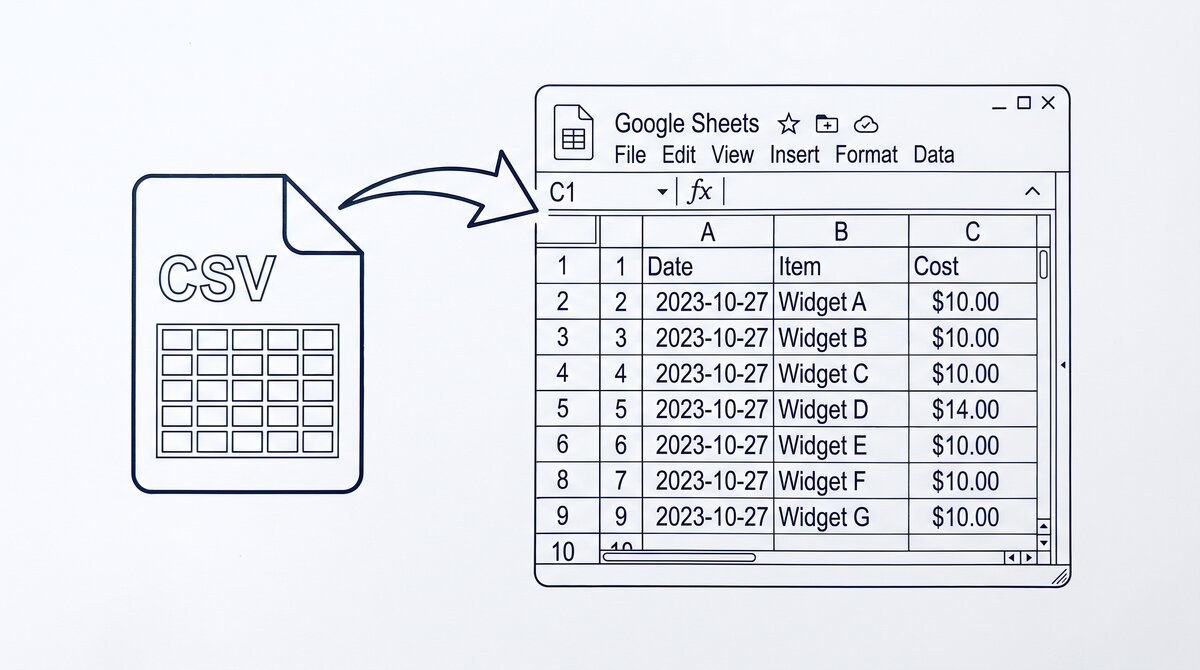
Members who convert statements to spreadsheets for tax or bookkeeping work benefit from clean column layouts. Tools like Easy Statement Sheet handle the conversion, but they rely on the statement being machine readable. Avoid scanned images without text layers when possible, and keep tables as real tables rather than flattened graphics.
Common redesign mistakes
The most common mistake is treating the statement as a marketing piece. Promotional content belongs in a separate mailer, not on the disclosure document. Adding product offers to the statement dilutes the required information and creates compliance risk.
Another frequent error is shrinking the font to fit more content. Members cannot read small print, and regulators expect clear and conspicuous disclosures. If content does not fit, reduce scope or add pages rather than compressing text. A two page statement that is readable beats a one page statement that is not.
A third mistake is changing the statement cycle date without checking the reasonably equal cycle rule. Even a well intentioned cleanup can violate the four day limit. Always verify the new cycle against the old one before committing.

Redesigning a credit union statement is a compliance project first and a design project second. Start from the required disclosures, build the layout around them, and test with members before launch. For export and parsing workflows that feed into the statement pipeline, see our guide to credit union statement export by credit union.
Turn That PDF Into a Spreadsheet in Minutes
You've seen how to do it manually — now let the tool handle the heavy lifting. Upload your bank statement and get Excel, CSV, or QBO in a few clicks.
Try It Free