
You sold crypto on Coinbase in 2025. You got a 1099-DA in the mail. You need to report it on Form 8949 and Schedule D.
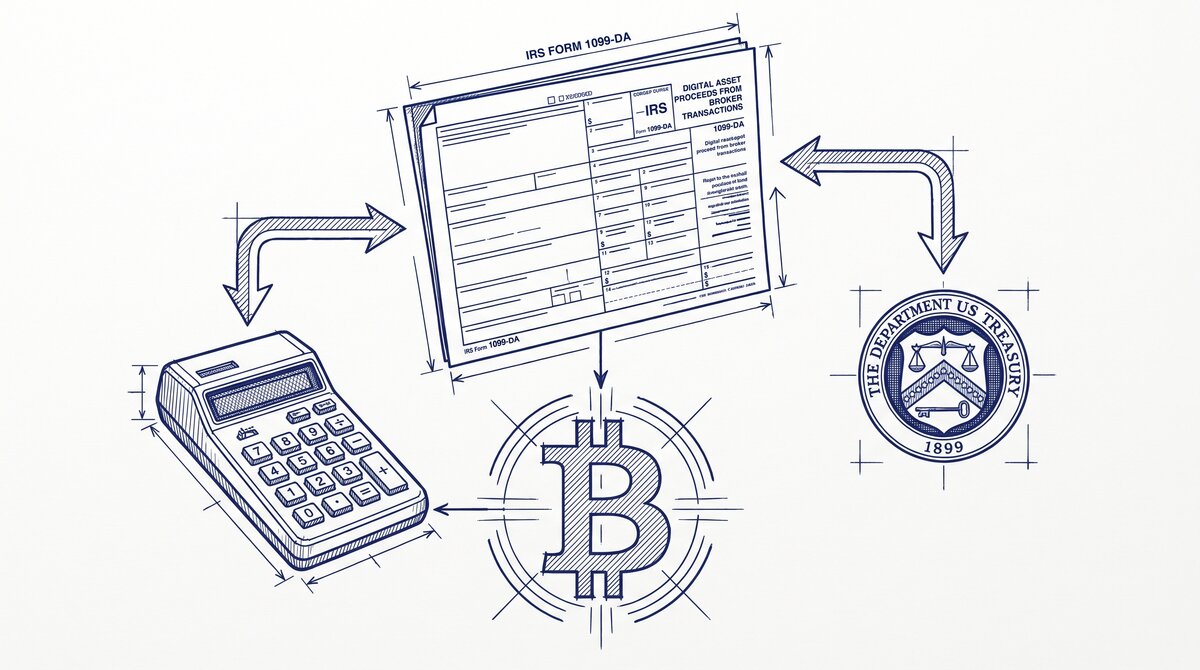
Form 1099-DA (Digital Asset) is the IRS form that brokers (Coinbase, Kraken, etc.) use to report digital asset transactions to the IRS. The form was finalized in 2024 and required for transactions in 2025+. The form reports gross proceeds, cost basis, and gains/losses for each transaction.
The new IRS form for reporting digital asset transactions. Required from brokers starting 2025.
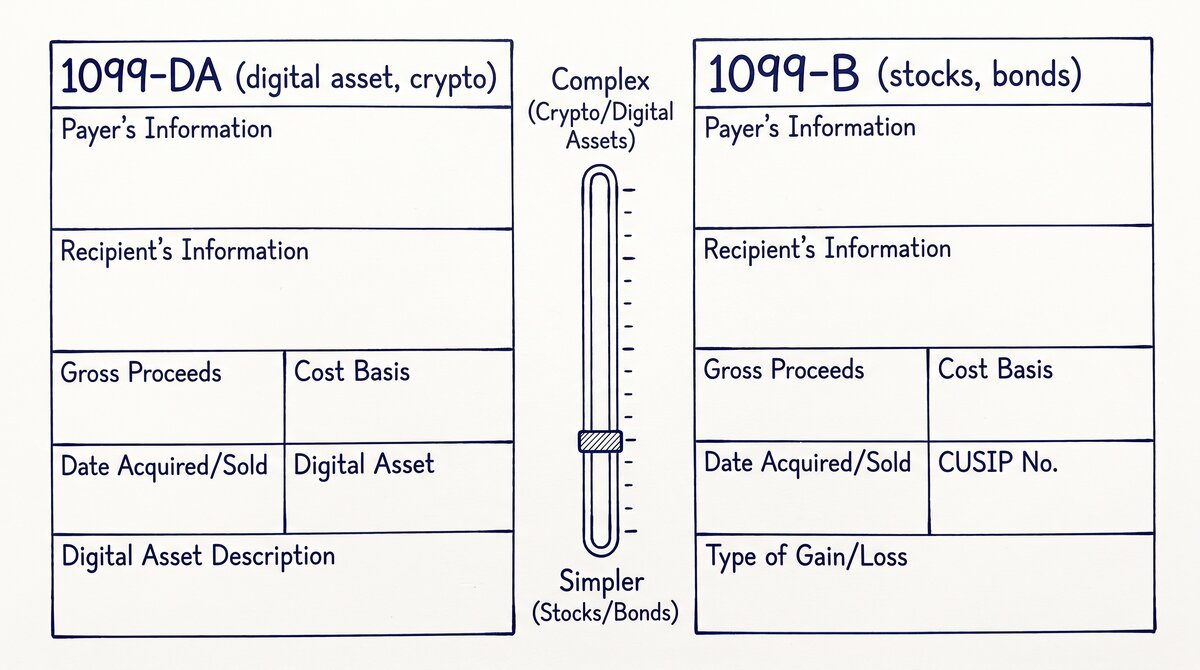
1099-DA is the crypto equivalent of a 1099-B (for stocks). The recon cutoff tool’s per-1099-da-handling reads the 1099-DA and generates the per-transaction Form 8949 entries. The recon cutoff tool’s per-cost-basis-flag identifies missing cost basis (a common 1099-DA gap).
For the broader bank statement workflow, see the bank statement converter guide. For the bookkeeper workflow, see the bookkeeper workflow. For the mortgage application, see the mortgage application guide.
What Is Form 1099-DA?
The new IRS form for reporting digital asset transactions. Required from brokers starting 2025.
1099-DA is the crypto equivalent of a 1099-B (for stocks). The recon cutoff tool’s per-1099-da-handling reads the 1099-DA and generates the per-transaction Form 8949 entries. The recon cutoff tool’s per-cost-basis-flag identifies missing cost basis (a common 1099-DA gap).
Why Form 1099-DA Matters
1099-DA is the IRS’s way of catching unreported crypto income. The form is new, the rules are still being clarified, and the cost basis reporting is often missing. The recon cutoff tool’s per-1099-da-export emits the complete Form 8949.
Turn any PDF statement into a clean sheet
Skip the typos and the hours of copying. Our converter handles any bank statement format and outputs Excel, CSV, or QBO for QuickBooks. No file retention, free to try.
Convert your statementA Concrete Example
Not reporting 1099-DA income. The IRS has a copy and will match.
The recon cutoff tool’s per-form-1099-da-handling covers this case. The recon cutoff tool’s per-related-tracking handles the document trail.
Common Mistakes with Form 1099-DA
Not reporting 1099-DA income. The IRS has a copy and will match.
Reporting gross proceeds without subtracting cost basis. This results in overpayment of tax.
Ignoring missing cost basis. The broker may not have it; the taxpayer must provide it.
A common failure mode is the taxpayer receiving a 1099-DA but not understanding that cost basis is missing. The form may show $0 cost basis even though the taxpayer has a real cost. The fix: gather the original purchase records before filing.
What Form 1099-DA Reports (Box by Box)
Form 1099-DA has 4 key boxes that determine the tax treatment:
Box 1a: Gross proceeds. Total sale proceeds before any fees or cost basis. For a $10,000 Bitcoin sale on Coinbase, Box 1a shows $10,000 (less any transaction fees, depending on broker reporting).
Box 1b: Realized gain or loss. Net gain/loss after subtracting cost basis. May show $0 if the broker did not have cost basis information at the time of sale. This is the most common 1099-DA gap.
Box 1c: Cost basis. Original purchase price. May be blank if the broker did not have this information, if the assets were transferred from another wallet, or if the assets were received as rewards or airdrops.
Box 1d: Date of acquisition. When the assets were originally acquired. May show “various” if multiple acquisition dates are aggregated.
The 4 boxes are reported for each transaction. A typical 1099-DA has 5-50 transactions, depending on trading volume.
Who Must Issue Form 1099-DA
The IRS requires brokers to issue 1099-DA starting with the 2025 tax year. The broker definition includes:
Centralized exchanges (CEX). Coinbase, Kraken, Gemini, Binance.US, Crypto.com, KuCoin, Bybit (for US customers). All must issue 1099-DA starting 2025.
Payment processors. PayPal, Venmo, and Cash App must issue 1099-DA for crypto transactions on their platforms starting 2025 (or 2026, depending on IRS guidance).
Wallet services that hold custody. Custodial wallets that hold user assets may be considered brokers. The IRS is still clarifying the definition for non-custodial and DeFi wallets.
Decentralized exchanges (Uniswap, etc.) and non-custodial wallets (MetaMask, etc.) are not currently required to issue 1099-DA. The taxpayer must self-report transactions on these platforms.
How to Use Form 1099-DA on Your Tax Return
3 steps to use the 1099-DA on your tax return:
Step 1: Transfer transactions to Form 8949. Each 1099-DA transaction becomes one row on Form 8949 (Sales and Other Dispositions of Capital Assets). The columns are: description of property, date acquired, date sold, proceeds, cost basis, gain/loss, and adjustment code.
Step 2: Total on Schedule D. The Form 8949 totals flow to Schedule D (Capital Gains and Losses). Short-term transactions (held 1 year or less) go to Part I. Long-term transactions (held more than 1 year) go to Part II.
Step 3: Check for missing cost basis. If the 1099-DA shows $0 cost basis but you have a real cost, you must use Form 8949 with adjustment code “C” to provide the correct basis. Otherwise you overpay tax.
The 4 Common 1099-DA Mistakes
4 mistakes that consistently cause problems:
1. Ignoring the 1099-DA. The IRS has a copy. Not reporting is automatic audit trigger. The fix: always report, even if the form shows $0 cost basis.
2. Reporting gross proceeds as income. Box 1a is gross proceeds, not taxable income. The taxable amount is the gain (proceeds minus cost basis). Reporting gross proceeds as income overpays tax by 15-37%.
3. Not reconciling missing cost basis. If the broker didn’t have cost basis, the taxpayer must find the original purchase records. Coinbase, for example, provides cost basis for assets purchased on Coinbase, but not for assets transferred in from other wallets.
4. Not reporting wallet-to-wallet transfers. Transferring crypto between your own wallets is not a taxable event. But selling or swapping is. The 1099-DA may show only the sale, not the transfer, which can lead to overcounting if you also report the transfer.
Related Terms
For the cost basis rules, see the Form 8949 and the crypto tax statement guide. For the 2025 reporting rules, see the 1099-DA reporting 2025. For converting exchange statements, see the convert crypto exchange statement to Excel. For the broader crypto tax workflow, see the crypto tax statement guide. For the bank statement workflow context, see the bank statement glossary.
The Memorable Line
1099-DA is the crypto 1099. New rules, missing data, IRS is watching.
Related Terms
Form 8949 | Crypto tax guide | 1099-DA reporting 2025 | Convert crypto statement | Bank statement glossary
Turn That PDF Into a Spreadsheet in Minutes
You've seen how to do it manually — now let the tool handle the heavy lifting. Upload your bank statement and get Excel, CSV, or QBO in a few clicks.
Try It Free