
Security deposits are one of the most regulated parts of a lease, yet they are also one of the most misunderstood. Landlords often treat the deposit as a safety net for any unpaid rent or damage, while tenants assume it is a refundable sum that comes back in full. In reality, every state sets its own rules on how much a landlord can collect, how it must be held, and when it must be returned. Bank statements enter the picture because landlords sometimes use them to verify that an applicant has the cash to cover both the first month’s rent and the deposit.
This guide explains the rules that govern security deposits in the US, the limits and timelines that vary by state, and how a bank statement can support or complicate a deposit request. It is educational, not legal advice. Laws vary by state and locality, so consult a licensed attorney or your local housing authority before taking action on a specific situation.
What a security deposit is and is not
A security deposit is money a landlord collects at the start of a tenancy to protect against unpaid rent, damage beyond normal wear and tear, and sometimes cleaning or key replacement costs. It is not rent and it is not a fee. In most states it must be returned at the end of the lease, minus documented deductions.
It is also not last month’s rent unless the lease says so in writing. Many leases include a clause stating the deposit cannot be applied to the final month. Tenants who try to use the deposit as their last month’s payment can be charged for unpaid rent. See the rental application bank statement guide for how financial documents fit into the broader application process.
State limits on security deposits
States cap the amount a landlord can charge. California limits the deposit to two months’ rent for an unfurnished unit and three months for a furnished one, under California Civil Code 1950.5. New York caps it at one month’s rent under NY General Obligations Law 7-108. Other states set limits of one to two months, and a few have no statutory cap but still require reasonableness.
Because the cap is tied to monthly rent, the deposit scales with the unit. A landlord cannot charge a flat fee that exceeds the cap. If rent is $1,500 in California, the maximum deposit for an unfurnished unit is $3,000. Charging more exposes the landlord to penalties and can void part of the lease.
From Bank Statement to QuickBooks-Ready File
That manual cleanup you just read about? This tool skips it. Turn your PDF into QBO for QuickBooks without storing your data anywhere.
Start ConvertingHow bank statements factor into deposit verification
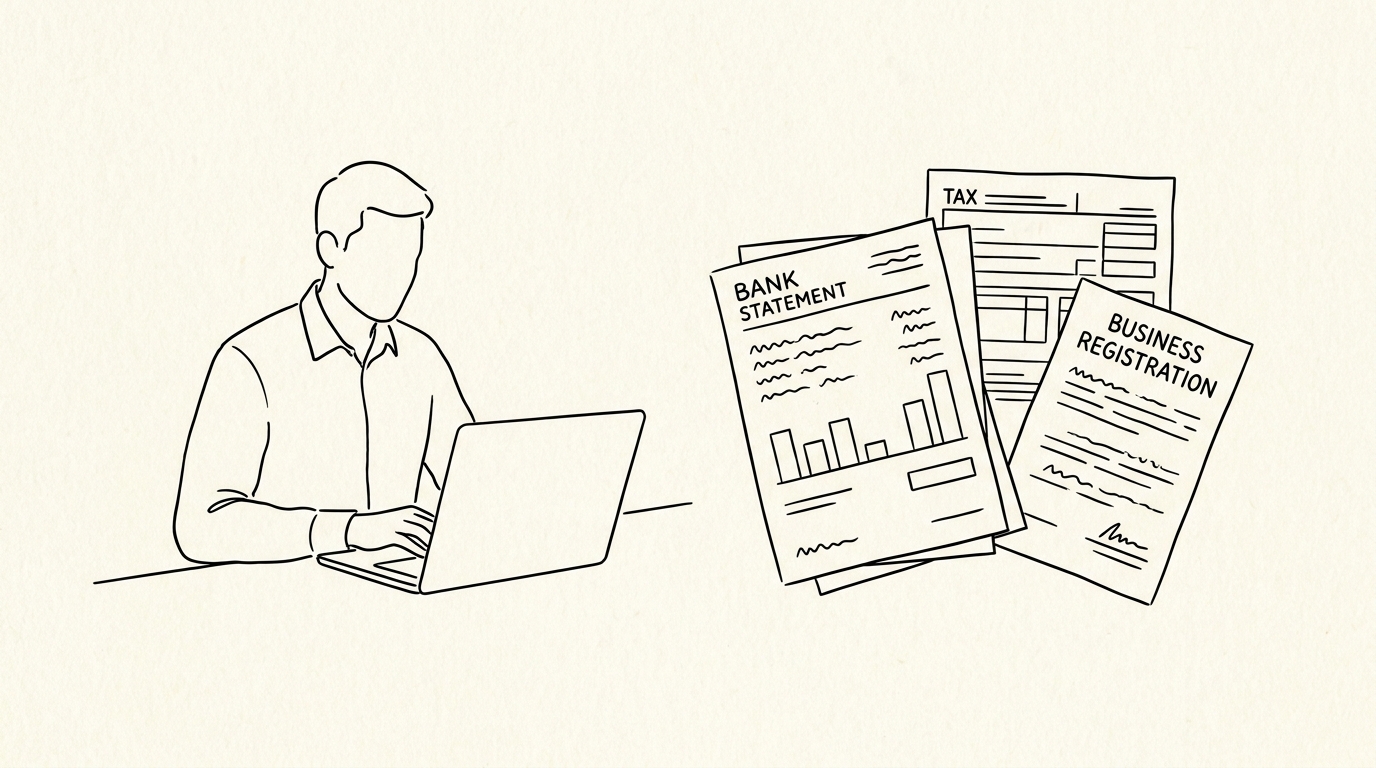
Landlords who want to confirm an applicant can cover the deposit and first month’s rent may ask for a bank statement showing sufficient available funds. This is a verification step, not a screening of spending habits. The landlord is checking that liquid funds exist, not judging how the applicant spends money.
Applicants can redact sensitive details while keeping the balance and account holder name visible. The privacy and redaction rights guide explains what can be redacted. For a full screening workflow, see the landlord bank statement screening guide and the screening checklist.

How deposits must be held
Some states require the deposit to be held in a separate interest-bearing account, distinct from the landlord’s operating funds. Massachusetts is a well-known example. Other states require disclosure of where the deposit is held and the interest rate. Failing to segregate funds can forfeit the landlord’s right to keep any of the deposit.
Landlords should keep records of the account and the interest earned. Tenants are often entitled to the interest, or to a statement showing it. This is an accounting duty as much as a legal one.
Return timelines and itemized deductions
After move-out, landlords must return the deposit within a state-set window, usually 14 to 30 days. The return must include an itemized list of any deductions with receipts or cost estimates. Deductions are limited to actual damage beyond normal wear and tear, unpaid rent, and contractually allowed charges.
Normal wear and tear, such as faded paint or worn carpet from ordinary use, cannot be charged. A landlord who misses the deadline or fails to itemize can lose the right to deduct at all and may owe penalties. Applicants who believe deductions are unfair can dispute them in small claims court.
Special cases and edge scenarios
Security deposit rules interact with other rental situations. Co-signers and guarantors may be asked to provide bank statements too; see the cosigner vs guarantor guide. Applicants with eviction history face additional scrutiny, covered in the eviction history screening guide. Income ratio tests also affect how much deposit a landlord can request; see the income ratio calculator guide.
After a denial, an applicant may need to fix issues in their bank statement before reapplying. The post-denial fix guide walks through that process. Fair housing rules also limit how deposits and statements are used; see the fair housing screening criteria guide.
Practical checklist for landlords
1. Check your state’s deposit cap before quoting a number. 2. Disclose where the deposit will be held. 3. Use a written lease clause stating the deposit is not last month’s rent. 4. Request bank statements only to verify liquid funds, and redact unrelated data. 5. Return the deposit within the state deadline with itemized deductions and receipts. 6. Keep records of the holding account and interest.
If you need to convert a tenant’s bank statement PDF into a clean spreadsheet for your records, convert your first 3 statements free with Easy Statement Sheet.
Practical checklist for tenants
1. Ask how the deposit will be held and whether it earns interest. 2. Confirm the amount does not exceed your state’s cap. 3. Document the unit’s condition at move-in with photos. 4. Keep a copy of your bank statement showing the funds you provided. 5. Request an itemized deduction list at move-out and dispute anything that is normal wear and tear.
This article is educational, not legal advice. Laws vary by state and locality. For a specific situation, consult a licensed attorney or your local housing authority before taking action.
Turn any PDF statement into a clean sheet
Skip the typos and the hours of copying. Our converter handles any bank statement format and outputs Excel, CSV, or QBO for QuickBooks. No file retention, free to try.
Convert your statement