
Landlords do not guess at income. They divide it by rent and compare the result to a threshold. The most common threshold is three times the monthly rent, but the rules vary by market, property type, and applicant profile.
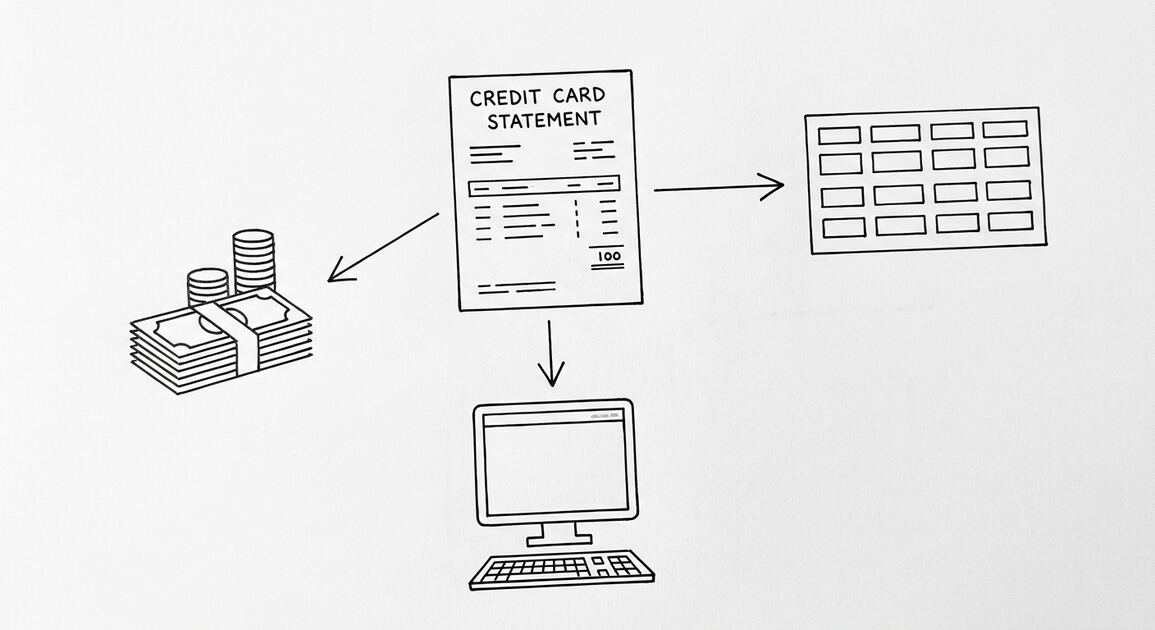
Bank statements are the document that makes the math auditable. A pay stub shows what an employer says you earn. A statement shows what actually landed in your account, month after month, in real dollars.
Most applicants learn the ratio only after a denial. By then the apartment is gone and the application fee is spent. Knowing the math in advance lets you target listings you can actually clear.
The ratio is simple to calculate but easy to misread. Gross versus net, monthly versus annual, and single versus household income all change the number. Each variant has its own rule and its own trap.
A landlord typically requires gross monthly income of at least three times the monthly rent. In New York City the standard is often annual income of forty times the monthly rent. Self-employed applicants usually must show twelve to twenty four months of bank statements. Housing voucher programs cap the tenant share at thirty percent of adjusted gross income.
Key facts. The National Apartment Association cites three times monthly rent as the common income requirement. New York City landlords often apply a forty times annual rent rule. Self-employed applicants typically provide twelve to twenty four months of bank statements. Section eight voucher programs limit the tenant contribution to thirty percent of adjusted gross income.
Three times rent is the most common income threshold in the United States rental market, applied to gross monthly income before taxes.
How landlords calculate the ratio from a bank statement
The calculation starts with gross income, not net. Gross is what you earn before taxes and deductions. A landlord does not adjust for your tax bracket or your 401k contribution. The number on your pay stub before withholdings is the number that counts.
For a W-2 applicant the landlord usually averages the last two to three months of deposits. For a self-employed applicant the window stretches to twelve or twenty four months to smooth seasonal swings. The deposit total is divided by the number of months, then compared to rent.
Deposits that are not income get excluded. Transfers from savings, refunds, and gifts do not count. A landlord who cannot tell which deposits are income will either ask for more documentation or apply a conservative estimate that works against you.
Our guide on rental application bank statements covers what to include and what to leave out. Our guide on rental income verification covers the document checklist.
| Applicant type | Income window | Common rule | Notes |
|---|---|---|---|
| W-2 employee | 2 to 3 months | 3x monthly rent | Pay stubs plus statements |
| Self-employed | 12 to 24 months | 3x monthly rent | Business and personal statements |
| NYC market | Annual | 40x monthly rent | Equivalent to 3.33x monthly |
| Voucher holder | Adjusted gross | 30 percent of income | HUD program rules apply |
The 2.5x, 3x, and 40x rules explained
Three rules dominate the market. Each one answers the same question in a different unit. Once you convert them to the same unit they are close, but the differences matter at the margin.
The 2.5x rule appears in softer markets and in affordable housing programs. It requires gross monthly income of two and a half times the rent. On a fifteen hundred dollar apartment that is thirty seven hundred fifty dollars per month, or forty five thousand dollars per year.
The 3x rule is the national standard. It requires gross monthly income of three times the rent. On the same fifteen hundred dollar apartment that is forty five hundred dollars per month, or fifty four thousand dollars per year. This is the rule the National Apartment Association most often references.
The 40x rule is a New York City convention expressed annually. It requires annual gross income of forty times the monthly rent. On a fifteen hundred dollar apartment that is sixty thousand dollars per year, which works out to five thousand dollars per month, or 3.33 times rent. The NYC Rent Guidelines Board context is where this convention is most discussed.
The 40x rule is stricter than 3x even though both sound similar. A renter who clears 3x but not 40x can be denied in New York even with identical income. The gap is not large but it is real, and it catches out of state applicants who assumed the rules were the same.
Turn PDF Bank Statements Into Workable Spreadsheets
Your bank statement is a mess of numbers, but your books shouldn't be. Use our converter to get Excel, CSV, or QBO files — ready for QuickBooks.
Try It Free NowWorked examples for three applicant profiles
Numbers make the rule concrete. The examples below use a fifteen hundred dollar monthly rent and show the income each rule requires.
| Rule | Monthly rent | Required income | Annualized |
|---|---|---|---|
| 2.5x monthly | $1,500 | $3,750 per month | $45,000 |
| 3x monthly | $1,500 | $4,500 per month | $54,000 |
| 40x annual | $1,500 | $5,000 per month | $60,000 |
For a W-2 applicant earning fifty thousand dollars a year, the ratio is 2.78 times rent. That clears 2.5x but fails 3x. The same applicant would need a cosigner or a cheaper unit to pass a standard screening.
For a self-employed applicant with sixty thousand dollars in annual deposits spread unevenly across the year, the monthly average is five thousand dollars. That clears all three rules, but the landlord will want twelve to twenty four months of statements to confirm the average. Our guide on self-employed rental applications covers that case.
For a voucher holder, the math flips. The tenant share is capped at thirty percent of adjusted gross income under HUD rules. On a fifteen hundred dollar apartment the tenant pays four hundred fifty dollars and the voucher covers the rest. Income verification still happens, but the ratio test is replaced by the program cap.
The honest traps: what they do not put on the listing
Several traps catch applicants who know the headline rule but miss the fine print. Each one is common and each one is avoidable.
Trap one. Landlords use gross income, not net. An applicant who budgets on take home pay will overestimate what they can afford. Always run the math on gross before you apply.
Trap two. Household income is not always pooled. Some landlords count only the primary applicant. Others count all adults on the lease. Ask before you assume your partner’s income helps.
Trap three. Bonuses and overtime count only if they are regular. A landlord who averages twelve months will dilute a one time bonus. Expect the conservative reading.
Trap four. Self-employed applicants face a longer lookback. Twelve to twenty four months of statements is standard, and the landlord will average the low months, not the high ones. Plan for the worst month to be the test.
Trap five. Cosigners follow a different path. A cosigner’s income is tested on its own, and the cosigner may be asked for statements too. Our guide on cosigner bank statements covers that variant.
Trap six. Inconsistent application of the ratio is a Fair Housing risk. HUD guidance requires income verification to be applied the same way to every applicant. If you are denied on ratio grounds while a comparable applicant was approved, that inconsistency may be worth questioning.
How to prepare your statement before you apply
- Download the PDF. Use the official statement from your bank, not a screenshot. Screenshots raise authenticity questions.
- Highlight deposits. Mark each income deposit with the source and the date. Make the landlord’s job easy.
- Exclude non-income deposits. Move savings transfers and refunds out of the income column, or note them clearly.
- Calculate your own ratio. Divide average monthly gross deposits by the target rent before you apply. Know your number.
- Gather backup documents. Pay stubs, tax returns, and an employer letter support the statement. Redundancy speeds approval.
- Ask the rule in writing. Get the income threshold and the lookback window in writing before you pay an application fee.
Final decision path
If your gross monthly income is at least three times the rent and you have two to three months of clean statements, apply with confidence. Include pay stubs alongside the statements and highlight the deposits.
If you fall short of 3x but clear 2.5x, target listings in softer markets or affordable programs, or bring a cosigner. Do not apply to 3x listings and hope the landlord bends.
If you are self-employed, build a twelve to twenty four month paper trail before you apply. Average your lowest three months and use that as your planning number. If that number clears 3x, you are in good shape.
If you use a housing voucher, the ratio test is replaced by the thirty percent cap. Focus on documentation and on landlords who accept vouchers, since the income test is different in that program.
If you are applying in New York City, run the 40x test separately. Sixty thousand dollars on a fifteen hundred dollar apartment is the threshold, and falling short means a cosigner or a guarantor.
Keep copies of every statement you send, along with the date and the channel used. If a question arises later about your income, that record is your proof. Store it outside of email, in a folder you control.
Last updated: October 2026 by ESS editorial team.
From PDF to Excel in one click
Forget retyping line by line. Upload any bank statement, get a spreadsheet you can actually use. Your files are never stored, and you can test the converter with 3 free conversions.
Try it free