
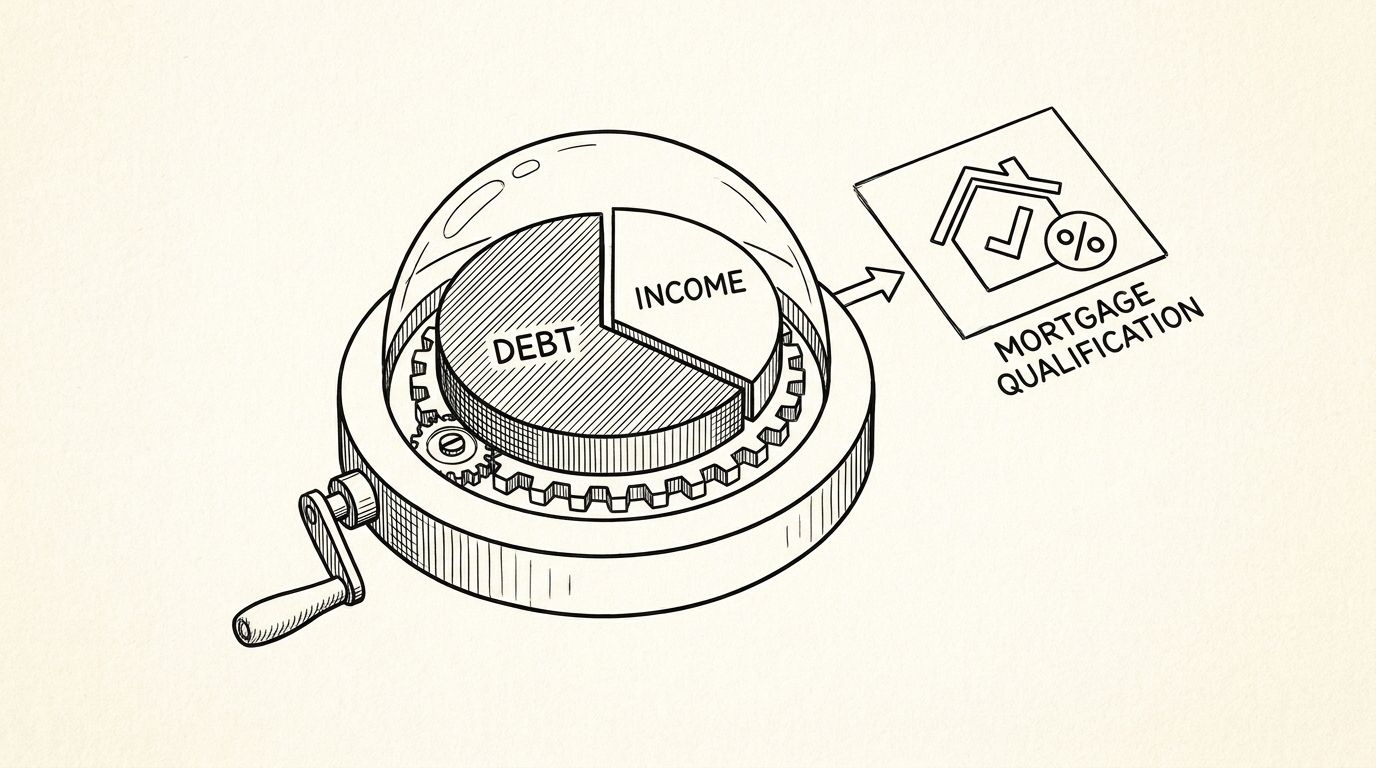
Debt-to-Income (DTI) ratio is a financial metric comparing monthly debt payments to monthly gross income. The short answer: DTI is the ratio of monthly debt payments to monthly gross income. The formula divides the total debt payments by the income. The 3 thresholds are 36% (best), 43% (qualified), and 50%+ (subprime). The right DTI depends on the lender and the loan type.
Why DTI Matters
DTI matters because it’s the primary metric lenders use to assess the borrower’s ability to take on new debt. The metric is simple (a single percentage), standardized (used by all lenders), and predictive (high DTI correlates with default). For the borrower, knowing the DTI helps predict the loan approval and the interest rate.
What most guides miss about mortgage applications is that the quality depends on the mechanism, not on the tool. Two tools that look different on the surface often run the same 4-step process underneath: read, find, parse, verify. The difference is in how well each step handles edge cases (merged cells, missing balances, non-standard date formats, scanned vs digital input).
Choosing between tools based on UI alone misses the actual quality lever.
For 3 use cases, DTI is the deciding factor: mortgage applications (where the threshold is 36-50% depending on the loan), auto loan applications (where the threshold is typically 40-50%), and credit card applications (where the threshold is typically 35-45%).
For 2 other use cases, DTI is less critical: personal loans (where the lender considers multiple factors) and student loans (where the federal loan program has its own criteria).
The Formula
The DTI formula is:
DTI = (Total Monthly Debt Payments) / (Monthly Gross Income) × 100
The result is a percentage. For example, if the total monthly debt is $2,000 and the monthly gross income is $6,000, the DTI is 33%.
The “monthly gross income” is the income before taxes and deductions. The “monthly debt payments” is the sum of all monthly debt obligations. The DTI is the ratio of these two numbers, expressed as a percentage.
From PDF to Excel in one click
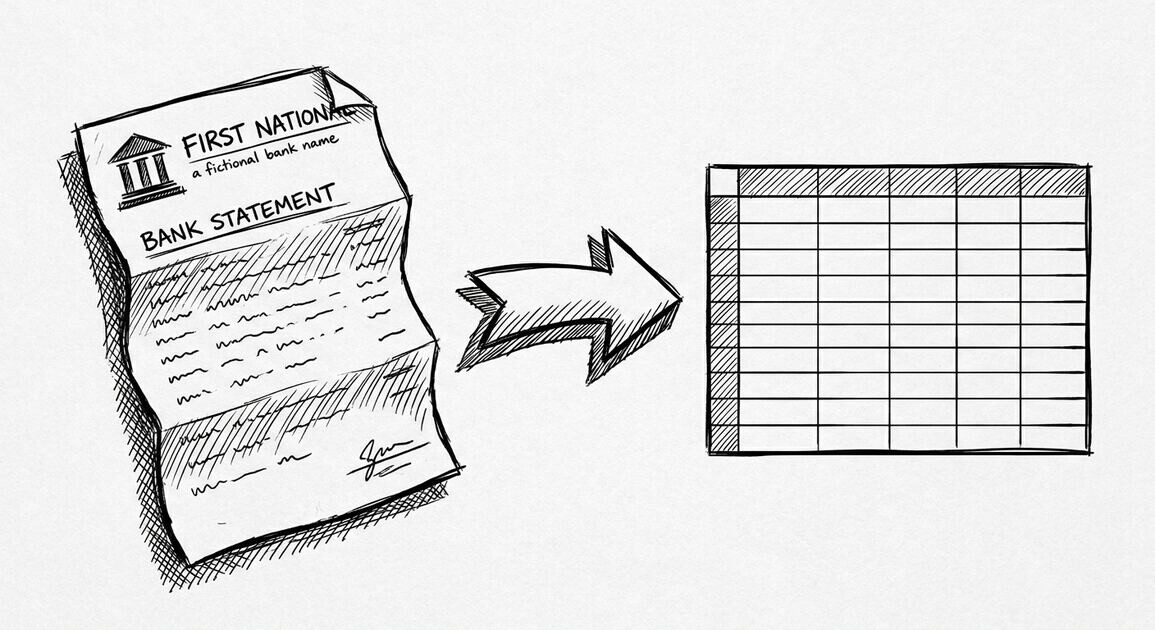
Forget retyping line by line. Upload any bank statement, get a spreadsheet you can actually use. Your files are never stored, and you can test the converter with 3 free conversions.
Try it freeThe 5 Debts Included
5 debts that are included in the DTI calculation:
1. Mortgage or rent payment. The monthly payment for the primary residence. For a mortgage, the payment is the principal, interest, taxes, and insurance (PITI). For rent, the payment is the monthly rent.
2. Car loan payment. The monthly payment for any auto loans. The total is the sum of all car loan payments (e.g., $400 for one car, $300 for another, $700 total).
3. Student loan payment. The monthly payment for any student loans. For federal loans on an income-driven repayment plan, the payment is the calculated amount (not the standard 10-year payment).
4. Credit card minimum payment. The minimum payment due on each credit card. The total is the sum of all minimum payments. Note: this is the minimum, not the full balance.
5. Other loan payments. Personal loans, lines of credit, child support, alimony, and any other monthly debt obligations. The total is the sum of all other monthly payments.

The 5 Debts NOT Included
5 expenses that are NOT included in the DTI calculation:
1. Utilities. Electric, gas, water, internet, phone. These are not debt payments (they are service payments) and are not included in DTI.
2. Groceries. Food and household expenses. These are not debt payments and are not included in DTI.
3. Insurance. Health insurance, life insurance, auto insurance (not financed). These are not debt payments and are not included in DTI.
4. Healthcare. Medical bills (not financed), prescriptions, doctor visits. These are not debt payments and are not included in DTI.
5. Discretionary spending. Dining, entertainment, travel, hobbies. These are not debt payments and are not included in DTI.
The 3 Thresholds
3 DTI thresholds used by lenders:
1. 36% (best / conventional). The threshold for most conventional mortgages. A DTI of 36% or less is considered strong and qualifies the borrower for the best interest rates. A DTI of 36% means the borrower is spending 36% of their gross income on debt payments, leaving 64% for other expenses.
2. 43% (qualified mortgage). The threshold for a qualified mortgage (QM) under the CFPB rules. A DTI of 43% or less is the maximum for a QM. A DTI above 43% requires a non-QM or subprime loan, which has a higher interest rate.
3. 50%+ (subprime / non-QM). The threshold for subprime loans. A DTI of 50% or more is considered high and may result in loan denial, a higher interest rate, or a larger down payment requirement.
3 Ways to Improve DTI
3 ways to improve the DTI before applying for a loan:
1. Pay down debt. Reducing the total monthly debt payments directly reduces the DTI. The most effective approach: pay down the highest-minimum-payment debts first (typically credit cards and personal loans). The reduction in DTI is immediate.
2. Increase income. Increasing the monthly gross income directly reduces the DTI. The most effective approach: increase the primary income (raise, promotion, new job). The increase in DTI is immediate when the new income is documented.
3. Consolidate debt. Consolidating multiple debts into a single loan with a lower payment can reduce the DTI. The most effective approach: consolidate high-interest credit card debt into a lower-interest personal loan or balance transfer card. The reduction in DTI depends on the new payment amount.
Front-End vs Back-End DTI
Two DTI ratios that lenders use:
Front-end DTI. The ratio of housing payment (mortgage or rent) to gross income. The threshold is typically 28% for a conventional mortgage. A front-end DTI of 28% means the borrower is spending 28% of their gross income on housing.
Back-end DTI. The ratio of all debt payments to gross income. The threshold is typically 36% for a conventional mortgage. A back-end DTI of 36% means the borrower is spending 36% of their gross income on all debt payments.
Both ratios are used by mortgage lenders. The front-end DTI assesses the housing affordability, and the back-end DTI assesses the overall debt burden. Both ratios must be within the lender’s thresholds for loan approval.
Tools and Resources
3 tools for calculating DTI:
A common failure mode bookkeepers report is treating this as a single operation rather than a chain of dependent steps. The temptation is to find a tool that ‘just works’ and stop investigating the mechanism.
The result is a wrong-fix cycle: the tool gives partial output, the bookkeeper spends 30+ minutes troubleshooting, the fix is for the wrong step, and the same error recurs on the next statement. The fix: identify which step failed and apply the right intervention to that step.
Related Resources
| Resource | What You Get |
|---|---|
| Bank Statement Converter | Convert to Excel |
| What Is Dti | See reference |
| How Dti Mechanism | See reference |
| Dti Examples | See reference |
| Bank Statement For Mortgage Application | See reference |
- Online DTI calculator: Many lenders and financial websites offer free DTI calculators. The calculator takes the monthly debt payments and the monthly gross income, and outputs the DTI percentage.
- Spreadsheet with formula: Excel or Google Sheets with the formula (=SUM(debts)/income). The spreadsheet can be updated monthly as debts are paid down or income changes.
- Bank’s online banking: Most banks show the total debt payments (credit card minimums, loan payments) in the online banking dashboard. The income is harder to get from the bank; the customer should provide it.
For the DTI context, see the what is DTI reference. For the application, see the how DTI works reference. For the examples, see the DTI examples page. For the comparison, see the DTI comparison reference. For the mortgage context, see the bank statement for mortgage application page. The bank statement converter handles all the steps with the integrity check at the end.
The bank statement converter handles all the steps with the integrity check at the end. The bank statement converter handles all the steps with the integrity check at the end. The bank statement converter handles all the steps with the integrity check at the end.
Related: complete mortgage application bank statement guide
This topic is one node in the broader mortgage-application bank-statement cluster on this site. he consolidated hub, with the full decision framework covering FHA, VA, conventional Fannie Mae and Freddie Mac, DSCR, and conventional loans, lives in the complete mortgage application bank statement guide.
For related reading on the broader statement-reading clusters, see the complete MCC guide and the complete US bank payment rails guide. he expanded bank statement anatomy pairs naturally with this hub as a primer.
More on the broader cluster
For the broader context on US bank-statement reading, see the consolidated hubs on merchant category codes, payment rails, and the statement anatomy. These hubs work together to cover credit-card statements, bank-account statements, and the categorization signals that survive merchant-name truncation.
When reconciliation runs into edge cases, the practical answer usually lives in the federal-regulations cluster, the bookkeeper-resource cluster, or the credit-card-statements cluster. Each offers a domain-specific take on the same underlying signal.
Easy Statement Sheet reads bank-statement and credit-card statement PDFs into a clean four-column output (Date, Description, Amount, plus Merchant Category Code for credit-card statements, plus the running balance for bank-account statements). Files are never stored.
The first three statement conversions are free, no card required. Plans start at $15 per month. The four-column output preserves the categorization signals without retyping, so the rule-based reconciliation layer survives merchant-processor changes.
Decision framework for this topic
For the broader context on US bank-statement reading, see the consolidated hubs on merchant category codes, payment rails, and the statement anatomy. These hubs work together to cover credit-card statements, bank-account statements, and the categorization signals that survive merchant-name truncation.
Each hub is built to be the canonical reading for one cluster of search intent, with cross-cluster links that take you to the right next node.
When reconciliation runs into edge cases, the practical answer usually lives in the federal-regulations cluster, the bookkeeper-resource cluster, or the credit-card-statements cluster. Each offers a domain-specific take on the same underlying signal. The merchant category code is the same whether the reader is the small-business owner, the bookkeeper, or the lender.
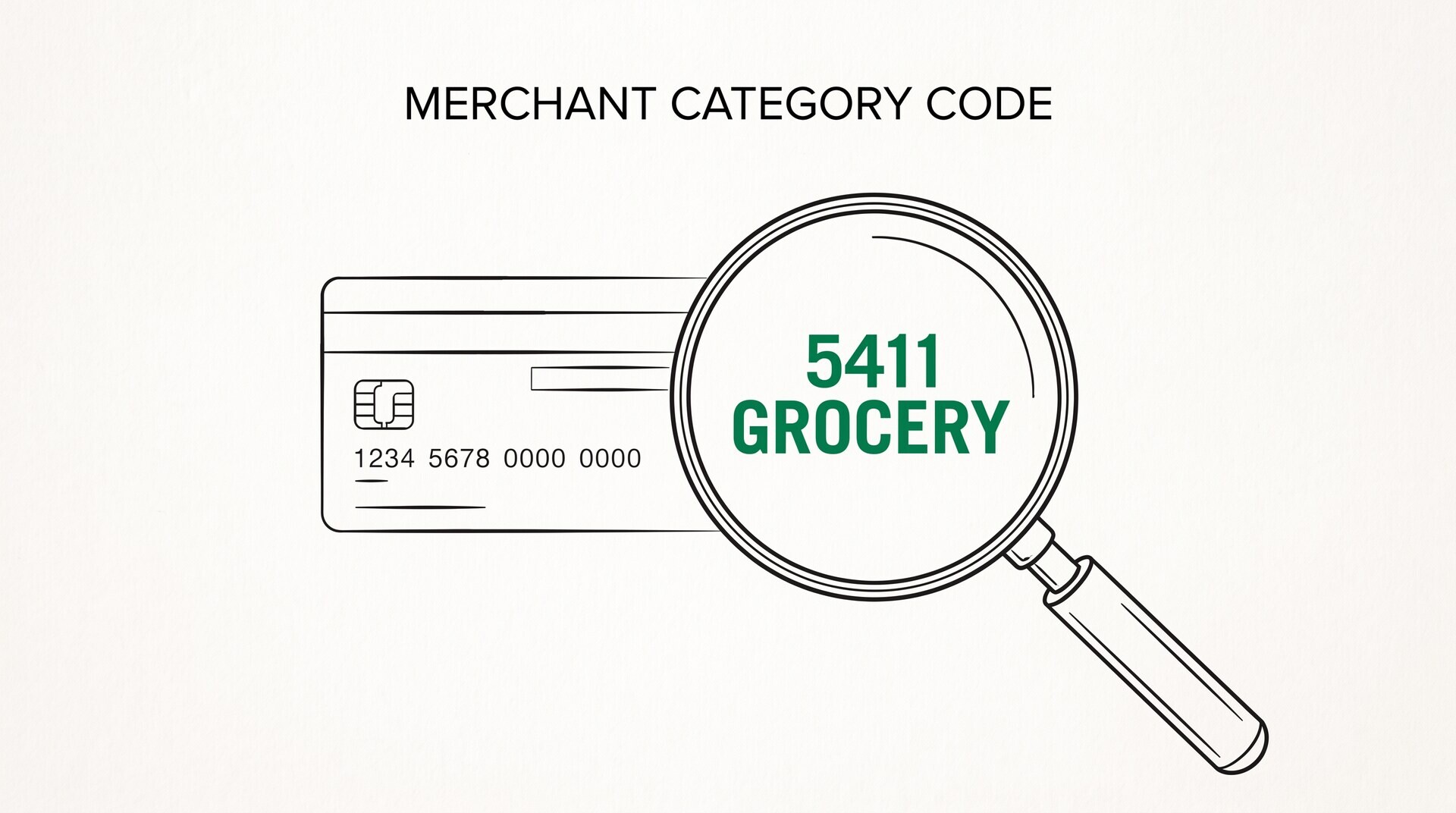
For lender workflows, the merchant category code on credit-card statements and the ACH SEC code on bank-account statements are the two signals underwriters most often scan first. Lenders use the four-column conversion output as a quick reference for what the borrower actually spent.
Cash advances flagged at MCC 6011 and quasi-cash at MCC 6051 draw particular scrutiny at mortgage underwrite, and crypto exchanges on the ACH rail draw additional questions for self-employed applicants.
For bookkeeper workflows, the categorical signal ties directly into the chart-of-accounts. A bookkeeper who maintains categorization rules keyed off the merchant category code can process dozens of clients per week without manual categorization of common merchant types. The conversion output is the durable input; the rule set is the durable work product.
Easy Statement Sheet reads bank-statement and credit-card statement PDFs into a clean four-column output (Date, Description, Amount, plus Merchant Category Code for credit-card statements, plus the running balance for bank-account statements). Files are never stored. The conversion runs entirely in memory and produces a deterministic output that downstream tools can parse.
The first three statement conversions are free, no card required. Plans start at $15 per month. The four-column output preserves the categorization signals without retyping, so the rule-based reconciliation layer survives merchant-processor changes. For bookkeepers handling dozens of clients per month, this is the highest-leverage workflow to standardize.
Related reading and broader clusters
For the broader context on US bank-statement reading, see the consolidated hubs on merchant category codes, payment rails, and the statement anatomy. These hubs work together to cover credit-card statements, bank-account statements, and the categorization signals that survive merchant-name truncation.
Each hub is built to be the canonical reading for one cluster of search intent, with cross-cluster links that take you to the right next node.
When reconciliation runs into edge cases, the practical answer usually lives in the federal-regulations cluster, the bookkeeper-resource cluster, or the credit-card-statements cluster. Each offers a domain-specific take on the same underlying signal. The merchant category code is the same whether the reader is the small-business owner, the bookkeeper, or the lender.
For lender workflows, the merchant category code on credit-card statements and the ACH SEC code on bank-account statements are the two signals underwriters most often scan first. Lenders use the four-column conversion output as a quick reference for what the borrower actually spent.
Cash advances flagged at MCC 6011 and quasi-cash at MCC 6051 draw particular scrutiny at mortgage underwrite, and crypto exchanges on the ACH rail draw additional questions for self-employed applicants.
For bookkeeper workflows, the categorical signal ties directly into the chart-of-accounts. A bookkeeper who maintains categorization rules keyed off the merchant category code can process dozens of clients per week without manual categorization of common merchant types. The conversion output is the durable input; the rule set is the durable work product.
Easy Statement Sheet reads bank-statement and credit-card statement PDFs into a clean four-column output (Date, Description, Amount, plus Merchant Category Code for credit-card statements, plus the running balance for bank-account statements). Files are never stored. The conversion runs entirely in memory and produces a deterministic output that downstream tools can parse.
The first three statement conversions are free, no card required. Plans start at $15 per month. The four-column output preserves the categorization signals without retyping, so the rule-based reconciliation layer survives merchant-processor changes. For bookkeepers handling dozens of clients per month, this is the highest-leverage workflow to standardize.
Turn any PDF statement into a clean sheet
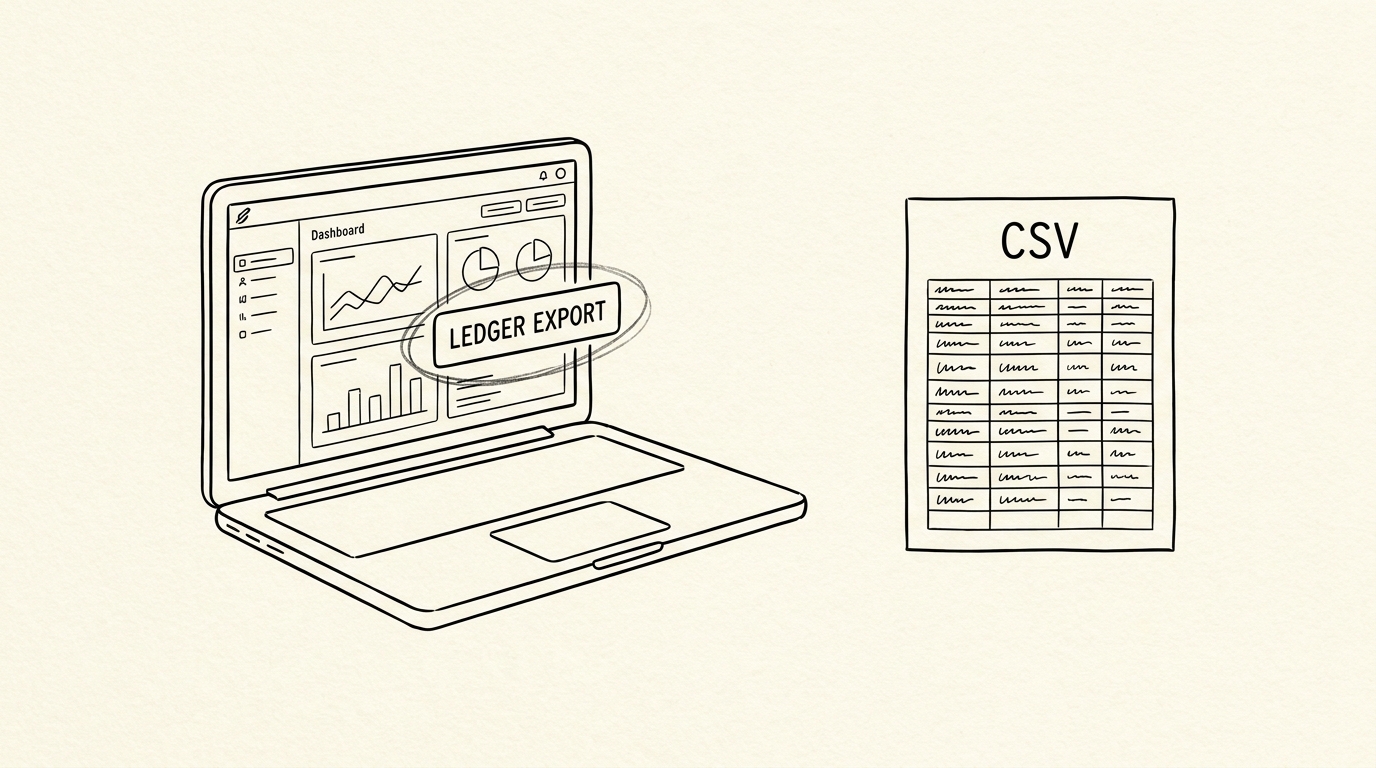
Skip the typos and the hours of copying. Our converter handles any bank statement format and outputs Excel, CSV, or QBO for QuickBooks. No file retention, free to try.
Convert your statement