
You are self-employed. You owe taxes every quarter, not just in April. The IRS expects 4 estimated payments a year, and missing one triggers an underpayment penalty. The bank statement is the primary input for the actual method calculation.
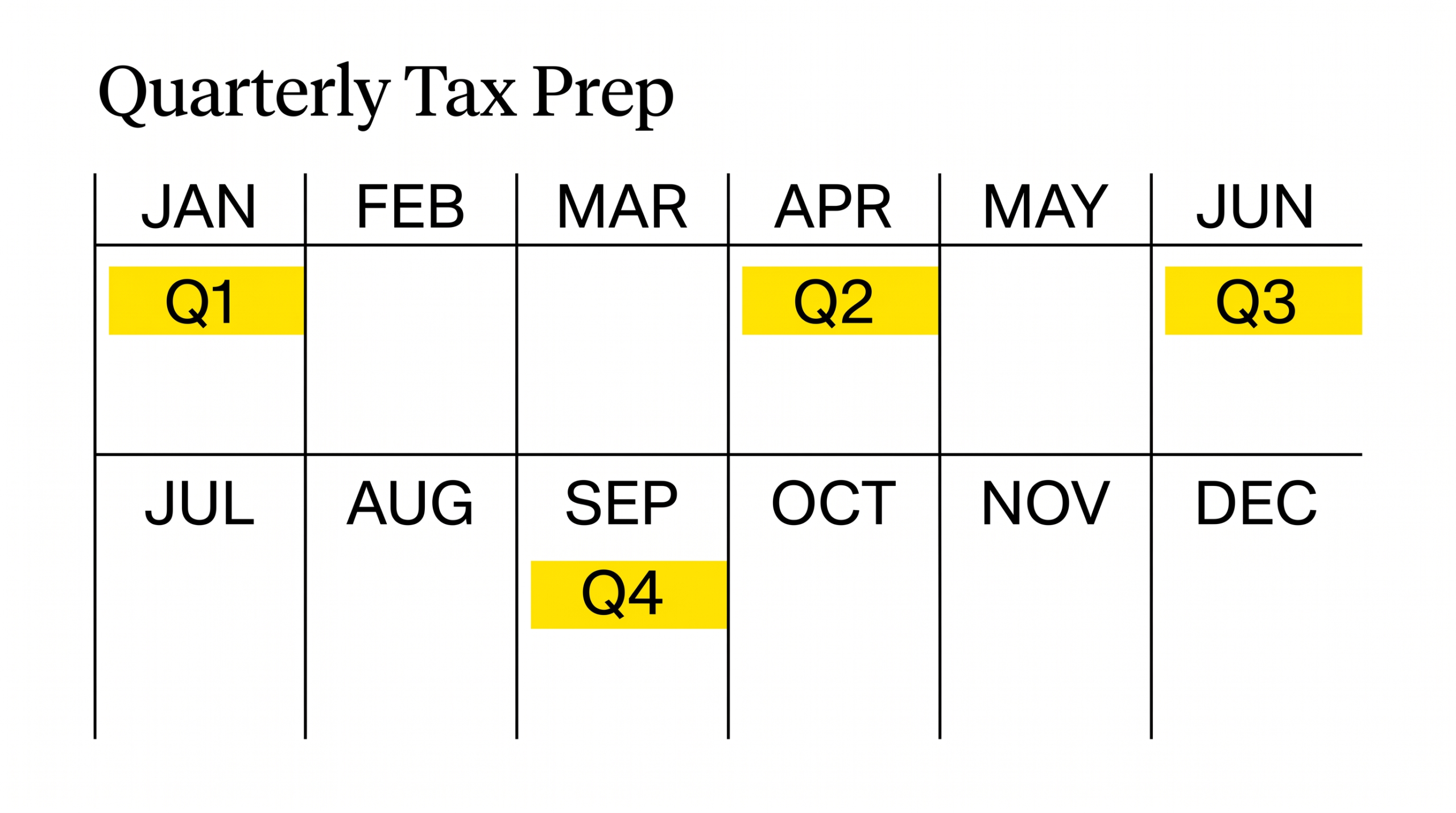
Quarterly tax prep is the process of calculating and paying estimated taxes every 3 months. For self-employed individuals (1099 contractors, freelancers, small business owners), the IRS requires 4 quarterly payments: Q1 (April 15), Q2 (June 15), Q3 (September 15), Q4 (January 15 of the following year). The payment is calculated from the prior year’s tax (safe harbor) or the current year’s actual income (actual method). The bank statement is the primary input for the actual method: deposits become income, expenses become deductions, the net is the taxable amount.
Quarterly tax prep is the process of calculating and paying estimated taxes every 3 months. The 4 due dates: April 15, June 15, September 15, January 15. The 2 calculation methods: safe harbor (prior year) and actual (current year). The bank statement is the primary input for the actual method.
For the broader bank statement workflow, see the bank statement converter. For the annual tax prep, see the how to organize bank statements for tax preparation. For the self-employed workflow, see the bank statement for self-employed tax filing. For the bank statement glossary, see the bank statement glossary.
What most quarterly tax prep guides miss is that the bank statement is not just the source of income data. It is also the source of expense data, the source of deduction data, and the source of estimated tax payment data. The self-employed person needs to reconcile 4 things every quarter: the income (deposits), the expenses (withdrawals for business), the estimated tax payment itself (paid via EFTPS), and the cash flow (the actual balance after all of the above). The 4 reconciliations are the quarterly tax prep. Most guides focus on the income calculation and miss the expense tracking, which is where the real time savings are. A bookkeeper who tracks expenses weekly saves 4+ hours per quarter vs one who tracks quarterly.
The 4 Quarterly Tax Due Dates
The 4 estimated tax payment due dates for the 2026 tax year:
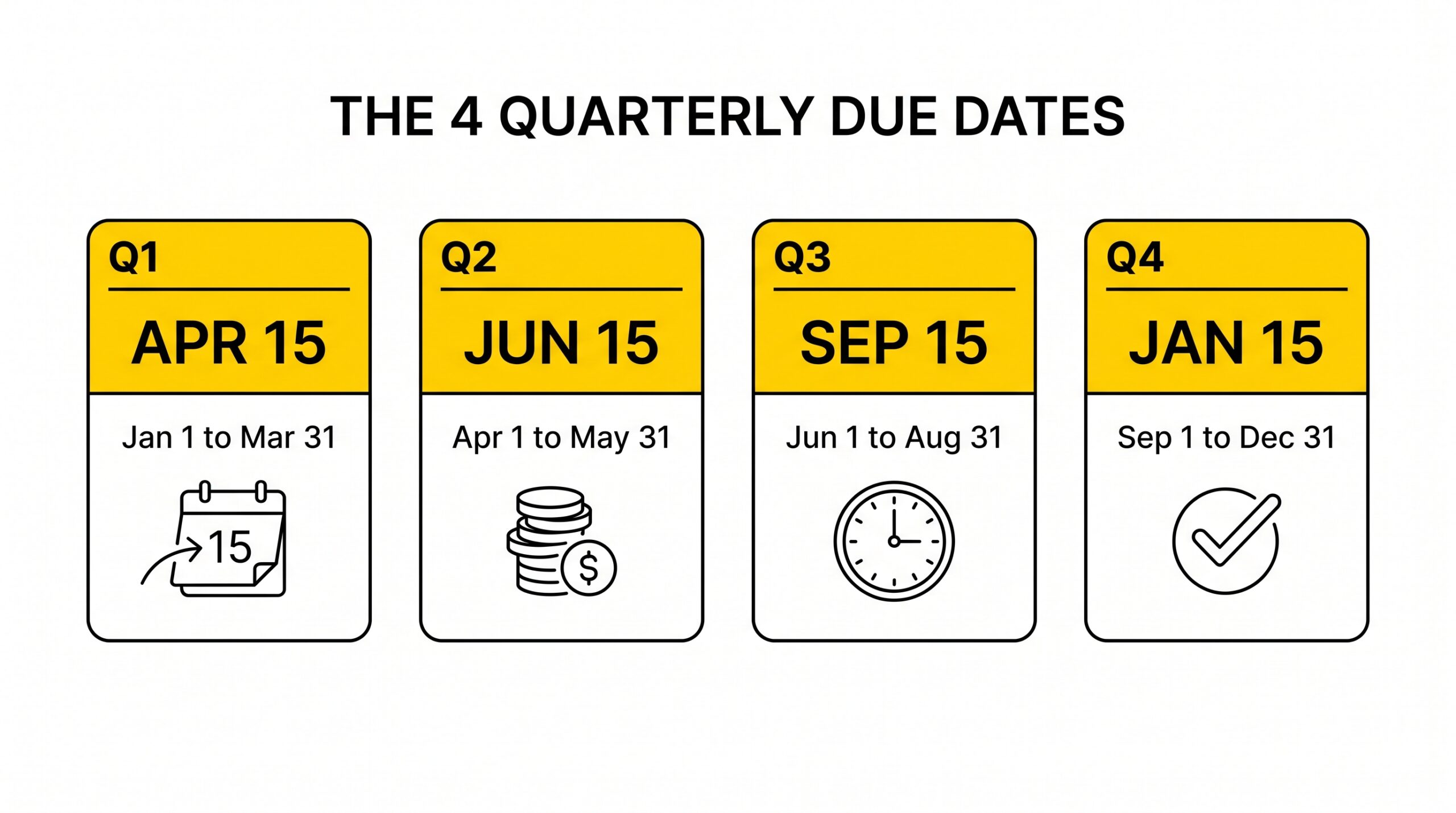
Q1 2026: April 15, 2026. Covers income from January 1 to March 31. Payment covers the estimated tax for the first 3 months of the year.
Q2 2026: June 15, 2026. Covers income from April 1 to May 31. Payment covers the estimated tax for months 4-5 of the year. Q2 is the shortest quarter (2 months) because the IRS adjusted the periods.
Q3 2026: September 15, 2026. Covers income from June 1 to August 31. Payment covers the estimated tax for months 6-8 of the year.
Q4 2026: January 15, 2027. Covers income from September 1 to December 31. Payment covers the estimated tax for months 9-12 of the year.
Missing a quarterly payment triggers an underpayment penalty. The penalty is calculated based on the federal short-term rate plus 3%, prorated for the number of days late. The penalty is added to the next quarterly payment or to the annual tax return. The cumulative penalty can be significant for chronically late payers.
The 2 Calculation Methods
2 methods to calculate the quarterly estimated tax payment:
Method 1: Safe harbor (prior year tax). Pay 100% of last year’s tax (110% if prior year AGI was over $150K). The 4 quarterly payments are each 25% of the prior year total. This method avoids underpayment penalties regardless of current year income. The downside: if current year income is higher than prior year, the taxpayer owes more at annual filing.
Method 2: Actual (current year income). Calculate the actual income for the quarter, apply the tax rate, and pay 25% of the annual estimate. This method matches the payment to the actual income, so the taxpayer owes little or nothing at annual filing. The downside: requires accurate quarterly income calculation, which requires the bank statement.
Most self-employed taxpayers use the safe harbor method for simplicity. The actual method is preferred when the current year income is significantly higher or lower than the prior year. The actual method is also preferred when the taxpayer wants to avoid a large annual tax bill.
Turn any PDF statement into a clean sheet
Skip the typos and the hours of copying. Our converter handles any bank statement format and outputs Excel, CSV, or QBO for QuickBooks. No file retention, free to try.
Convert your statementThe 4-Step Quarterly Bank Statement Workflow
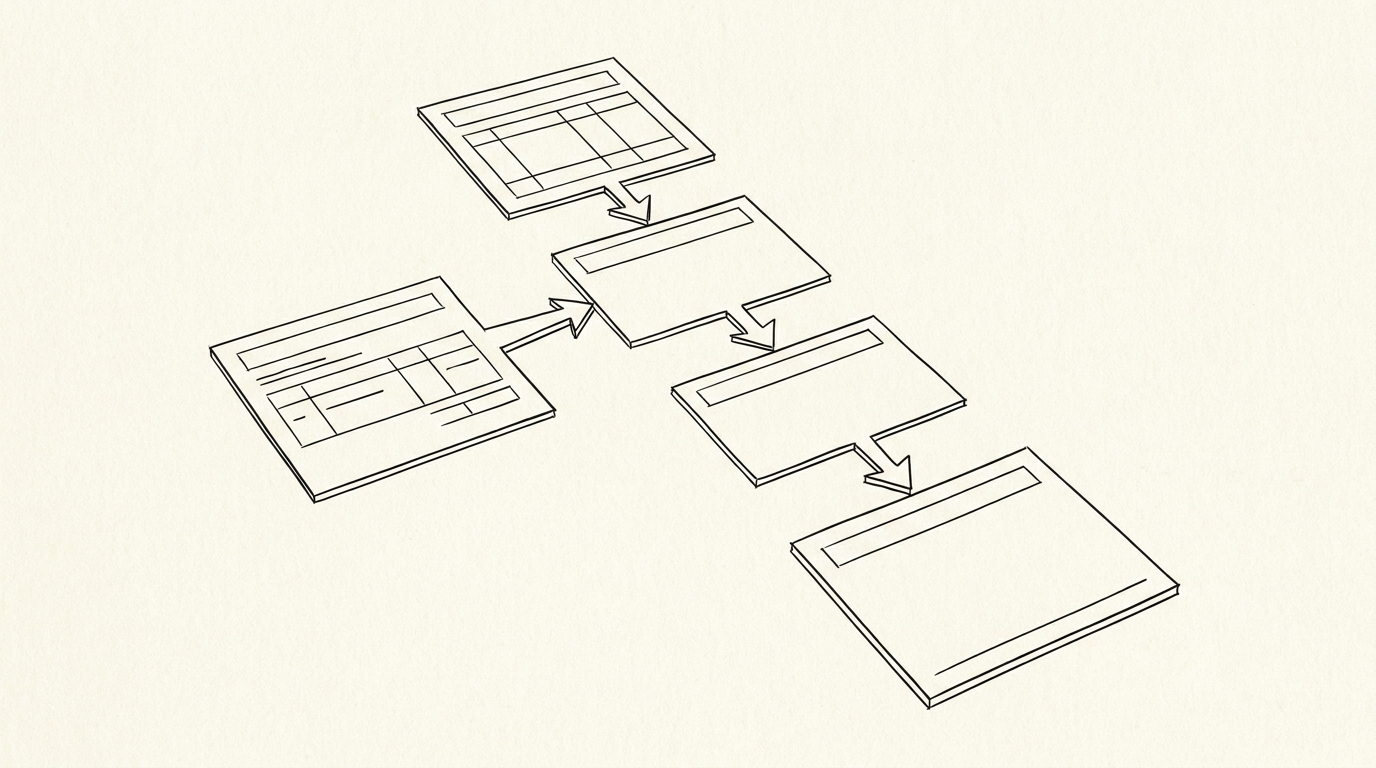
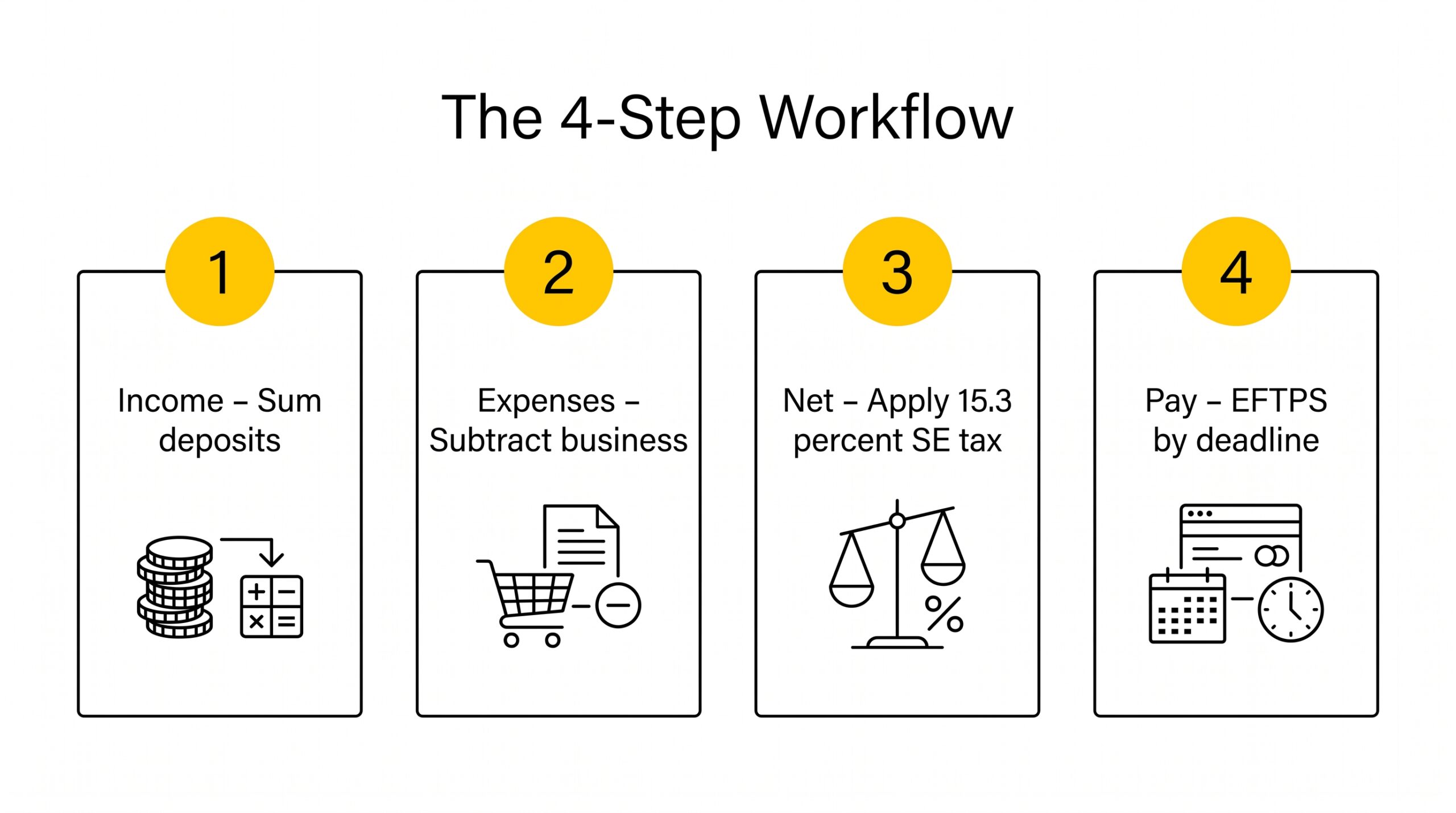
The 4-step workflow to prepare quarterly taxes from bank statements:
Step 1: Identify the period income. Filter the bank statement for the quarter (e.g., January 1 to March 31 for Q1). Sum the deposits. The result is the gross income for the quarter.
Step 2: Identify the business expenses. Filter for business expenses: software subscriptions, contractor payments, supplies, travel, meals (50% deductible), equipment. Sum the expenses. The result is the total deductible business expenses for the quarter.
Step 3: Calculate the net self-employment income. Subtract expenses from income. The result is the net self-employment income. Apply the self-employment tax (15.3%) and the income tax (based on tax bracket) to get the total estimated tax for the quarter.
Step 4: Pay via EFTPS. Pay the estimated tax via the Electronic Federal Tax Payment System (EFTPS) by the quarterly due date. The payment is debited from the bank account on the date specified.
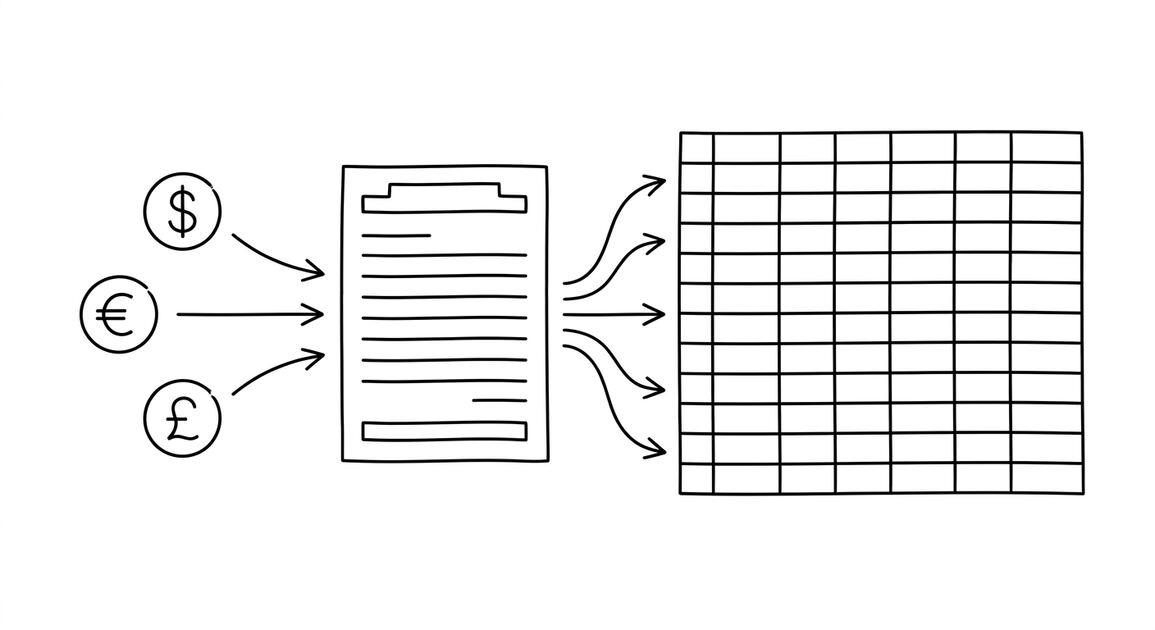
For the workflow that produces clean bank statement data for the quarterly tax prep, see the bank statement converter. The output is structured data that the bookkeeper or self-employed person can analyze in Excel.
Quarterly Income: What Counts and What Doesn’t
3 categories that count as quarterly income:
1. Client payments (1099 income). All payments from clients for services rendered. This is the primary income source for most self-employed individuals. The bank statement shows the deposit, the bank statement description typically includes the client name.
2. Business income (LLC, S-corp). For LLCs and S-corps, the bank statement shows business income (customer payments) and business expenses. The net is the pass-through income that flows to the owner’s personal tax return.
3. Other income. Interest, dividends, capital gains, rental income, royalties, and any other income reported on the bank statement. The bank statement captures all of these as deposits.
3 categories that do NOT count as quarterly income:
1. Transfers between own accounts. Moving money from a savings account to a checking account is not income. The bank statement shows the transfer, but it is not taxable income.
2. Loan proceeds. Receiving a loan (mortgage, business loan, personal loan) is not income. The bank statement shows the deposit, but it is a liability, not income.
3. Refunds and reimbursements. A refund from a vendor or a reimbursement from an employer is not income. The bank statement shows the deposit, but it is the return of funds previously paid.
For the income vs non-income distinction, the bank statement converter can filter deposits by description and amount. A $5,000 deposit with no clear source is more likely to be flagged for review than a $500 deposit from a known client.
Quarterly Expenses: The 7 Deductible Categories
7 categories of deductible business expenses for self-employed individuals:
1. Software and subscriptions. SaaS products, hosting, domain names, professional subscriptions. Common examples: Adobe, Microsoft 365, QuickBooks, Slack, Zoom. The bank statement shows the recurring monthly charge.
2. Contractor payments. Payments to subcontractors, freelancers, or other 1099 contractors. The bank statement shows the payment, and the contractor may issue a 1099-NEC at year-end.
3. Office and supplies. Office furniture, supplies, equipment under $2,500 (Section 179 immediate expensing). The bank statement shows the one-time or occasional purchase.
4. Travel. Airfare, hotels, rental cars, ride-shares, mileage (at the standard rate). The bank statement shows the travel expenses; the personal vs business distinction requires review of each transaction.
5. Meals (50% deductible). Business meals with clients, prospects, or team members. The bank statement shows the meal expense; the business purpose must be documented.
6. Education and training. Courses, conferences, books, certifications related to the business. The bank statement shows the expense; the business purpose must be documented.
7. Professional services. Accountant fees, lawyer fees, consulting fees. The bank statement shows the payment; the business purpose is clear from the payee.
For the broader deductible expense rules, see the IRS Publication 535 (Business Expenses) and the IRS Publication 552.
The 5 Common Quarterly Tax Mistakes
5 mistakes that consistently cause problems for self-employed quarterly tax prep:
1. Missing a quarterly payment. Missing a payment triggers an underpayment penalty. The fix: set up automatic EFTPS payments, mark the 4 due dates on the calendar, and pay 1 week early to avoid last-minute issues.
2. Underestimating income. A self-employed person who has a good Q1 may underestimate Q2, Q3, Q4. The fix: review the bank statement every month, not just every quarter, to spot income trends.
3. Not tracking expenses. A self-employed person who only tracks income is overpaying tax. The fix: track every business expense weekly, with a separate business credit card if possible.
4. Mixing personal and business expenses. A self-employed person who uses a personal credit card for business expenses misses the deduction. The fix: separate business and personal expenses, either with separate cards or with a clear tagging system.
5. Not saving for the annual tax bill. A self-employed person who spends the quarterly payment money ends up unable to pay in April. The fix: open a separate tax savings account, deposit 25-30% of every payment, and pay quarterly estimated taxes from that account.
A common failure mode bookkeepers report is the self-employed person treating the quarterly tax payment as a savings account, then spending the money and not being able to pay in April. The fix: separate the tax savings from the operating account, so the money is not available for spending.
The 3 Tools for Quarterly Tax Prep
3 tools that simplify the quarterly tax prep workflow:
1. Bank statement converter. Converts PDF bank statements to Excel/CSV/QBO. The output is structured data that the bookkeeper or self-employed person can analyze in Excel. The cost is typically $0-30 per statement.
2. Bookkeeping software (QuickBooks, Xero, Wave). Imports the bank statement, categorizes transactions, calculates the quarterly tax estimate. The cost is $0-80 per month. Most bookkeeping software integrates with the bank statement converter or imports the file directly.
3. Tax software (TurboTax, H&R Block, TaxAct). Calculates the annual tax return, including the quarterly estimated tax payments made during the year. The cost is $0-200 per return.
For the self-employed person on a budget, the bank statement converter + free bookkeeping software (Wave) + free tax software (IRS Free File for AGI under $84K) is the lowest-cost path. For the self-employed person who values time, the bank statement converter + paid bookkeeping software (QuickBooks Self-Employed) + paid tax software is faster but costs more.
Quarterly Tax for Different Entity Types
3 entity types have different quarterly tax workflows:
1. Sole proprietor (Schedule C). The self-employment tax (15.3%) and income tax are calculated on the net profit from Schedule C. The estimated tax is paid quarterly via EFTPS. The 1099 income is reported on the personal tax return, not the entity return.
2. Single-member LLC (taxed as sole proprietor). Same as sole proprietor for tax purposes. The LLC is a legal entity, but the IRS taxes it as a sole proprietor. The estimated tax is paid quarterly via EFTPS.
3. S-corp (Form 1120-S). The S-corp files Form 1120-S annually, but the owner takes a salary (subject to payroll tax) and distributions (subject to income tax). The estimated tax is paid quarterly via EFTPS, and the salary is subject to quarterly Form 941 (payroll tax return).
For the entity-specific workflows, see a CPA or tax professional. The bank statement workflow is the same (extract income and expenses), but the tax calculation is different.
The Quarterly Tax Calendar
4 quarterly milestones for self-employed tax prep:
End of Q1 (March 31). Review the bank statement for January-March. Calculate the net self-employment income. Calculate the estimated tax. Pay via EFTPS by April 15.
End of Q2 (May 31). Review the bank statement for April-May. Calculate the cumulative H1 income. Adjust the estimated tax if income is higher or lower than expected. Pay via EFTPS by June 15.
End of Q3 (August 31). Review the bank statement for June-August. Calculate the cumulative 9-month income. Project the full year. Adjust the estimated tax if needed. Pay via EFTPS by September 15.
End of Q4 (December 31). Review the bank statement for September-December. Calculate the full year income. Pay the Q4 estimated tax by January 15. Begin preparing the annual tax return (due April 15).
For the workflow that produces clean bank statement data for each quarterly review, see the bank statement converter. The output is structured data that the self-employed person or bookkeeper can analyze in Excel.
The Memorable Line
Quarterly tax is the cost of being self-employed, paid in advance. The bank statement is the proof. The 4 due dates are the deadline. The underpayment penalty is the cost of missing them.
Related Pages
For the annual tax prep, see the how to organize bank statements for tax preparation. For the self-employed tax filing, see the bank statement for self-employed tax filing. For the tax preparer workflow, see the bank statements for tax preparers. For the bookkeeper workflow, see the bank statement workflow for bookkeepers. For the self-employed mortgage, see the self-employed mortgage application. For the IRS Pub 552, see the what is IRS Publication 552. For the bank statement glossary, see the bank statement glossary.
For the workflow that produces clean bank statement data for quarterly tax prep, see the bank statement converter. The output is structured data with income, expenses, and net for each quarter, ready for the estimated tax calculation.
From PDF to Excel in one click
Forget retyping line by line. Upload any bank statement, get a spreadsheet you can actually use. Your files are never stored, and you can test the converter with 3 free conversions.
Try it free