
For credit card debt consolidation, you typically need 3 months of bank statements showing your monthly income, your monthly expenses, and your current debt payments.
The short answer: download 3 months of statements, organize them, and submit with the application. The 3-month requirement is shorter than a mortgage (12-24 months) but longer than a rental application (2-3 months). Lenders want to see consistent income, consistent payments, and enough remaining cash flow to cover the new payment.
TL;DR. For credit card debt consolidation, prepare 3 months of bank statements. The lender looks for: consistent monthly income (proof you can afford the new payment), current debt payments (proof of your debt burden), remaining cash flow (proof of capacity), and no new debt accumulation. Format: combine all statements in one PDF, redact account numbers, include the most recent statement first. The 4 mistakes: missing statements, wrong time period, undisclosed new debt, and cash flow that doesn’t support the consolidation.
Why Lenders Want Bank Statements for Debt Consolidation
Debt consolidation is a loan that pays off multiple high-interest debts (typically credit cards) and replaces them with one lower-interest payment. The lender uses bank statements to verify the borrower can afford the new payment, because:
- Credit report shows your debt, not your ability to pay: A borrower with $30,000 in credit card debt may have the income to pay it off, or may be one missed paycheck away from default. The credit report doesn’t distinguish between these two cases. The bank statement does.
- Income verification: A pay stub shows one paycheck. A bank statement shows 3 months of paychecks, which is more reliable. The lender can see if the income is consistent, increasing, or decreasing.
- Spending pattern: The bank statement shows the borrower’s spending pattern. A borrower who spends $2,000/month on dining out has different consolidation risk than a borrower who spends $200/month on dining out.
The 3-month requirement is enough to see the pattern without being too burdensome on the applicant. Most lenders accept 3 months; some require 6 months for self-employed applicants.
What Lenders Look For in 3 Months of Statements
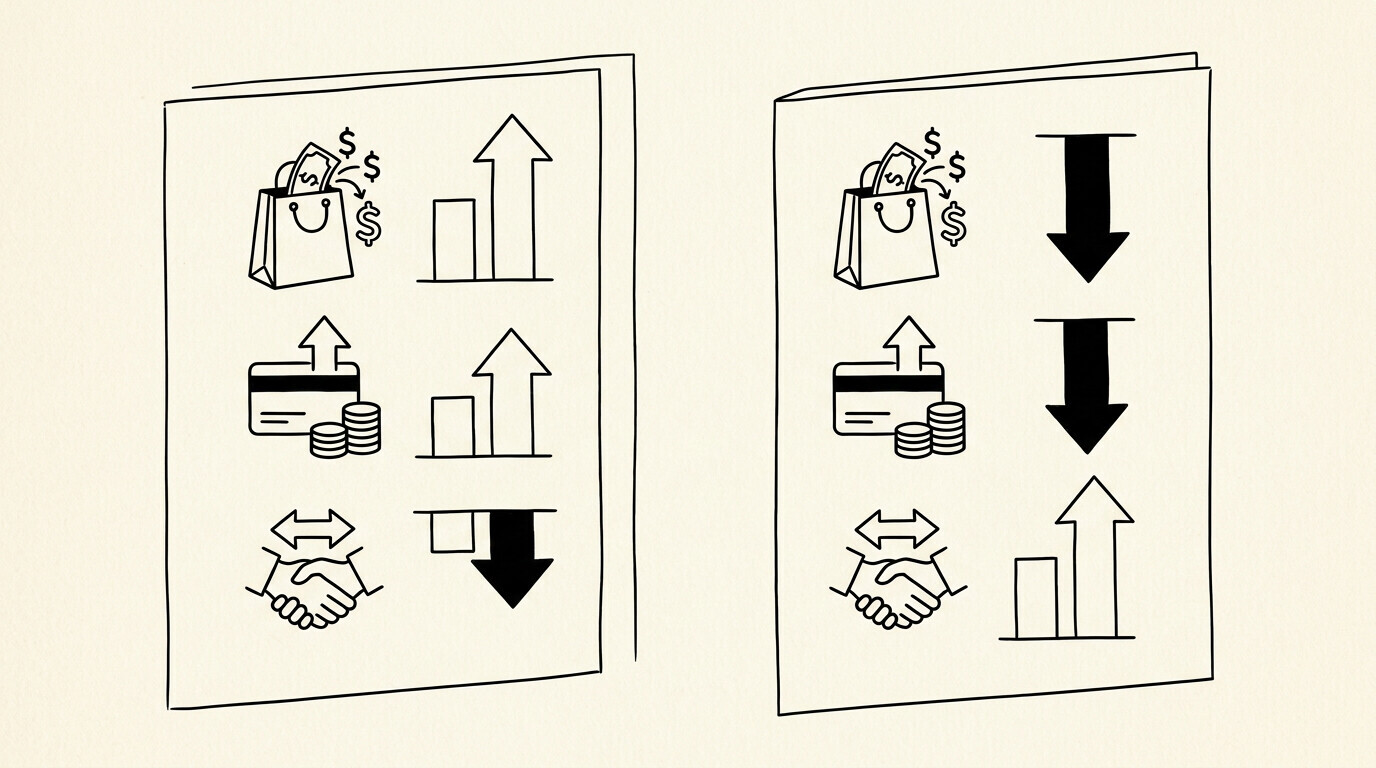
4 things the lender checks:
1. Consistent monthly income (proof you can afford the new payment). The lender wants to see at least 3 months of consistent income, in approximately the same amount. The minimum income requirement varies by lender and by loan size, but a rule of thumb is that the new consolidated payment should be less than 30-40% of the monthly income.
For a borrower with $5,000/month income, the maximum new payment is $1,500-$2,000/month. If the borrower is consolidating $30,000 in credit card debt at 8% over 5 years, the new payment is approximately $610/month. The debt-to-income ratio is 12%, well under the 30-40% threshold. The borrower qualifies.
2. Current debt payments (proof of your debt burden). The lender wants to see that you are currently making the minimum payments on your credit cards. If your statements show minimum payment due but no actual payment made, that’s a red flag. The fix: make the minimum payments on all cards before applying for consolidation.
3. Remaining cash flow (proof of capacity). The lender wants to see that you have cash flow left over after all expenses, including the new consolidated payment. A borrower with $5,000 income and $4,500 expenses has only $500 of capacity, which is not enough to absorb a $610 consolidation payment plus a $200 emergency fund contribution. The fix: reduce discretionary spending before applying, or wait for a higher income month.
4. No new debt accumulation. The lender wants to see that you are not accumulating new credit card debt. If your statements show a $10,000 balance in month 1, $11,000 in month 2, and $12,000 in month 3, the trend is negative. The lender may deny the application because consolidation won’t help if you keep accumulating debt. The fix: stop using credit cards for new purchases for at least 3-6 months before applying.
Turn That PDF Into a Spreadsheet in Minutes
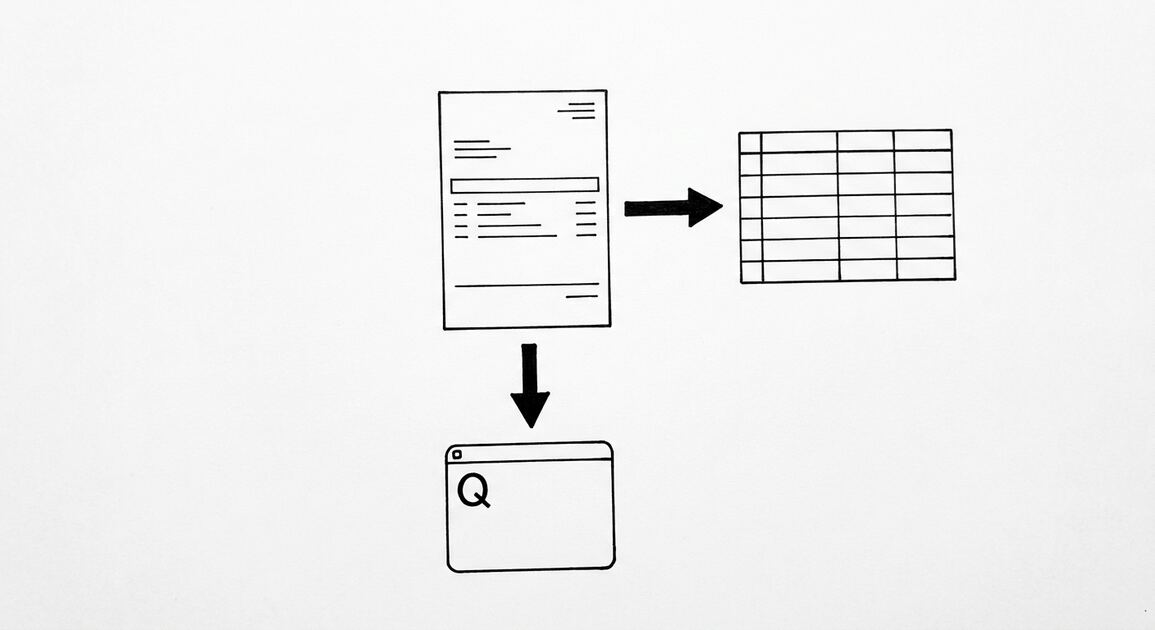
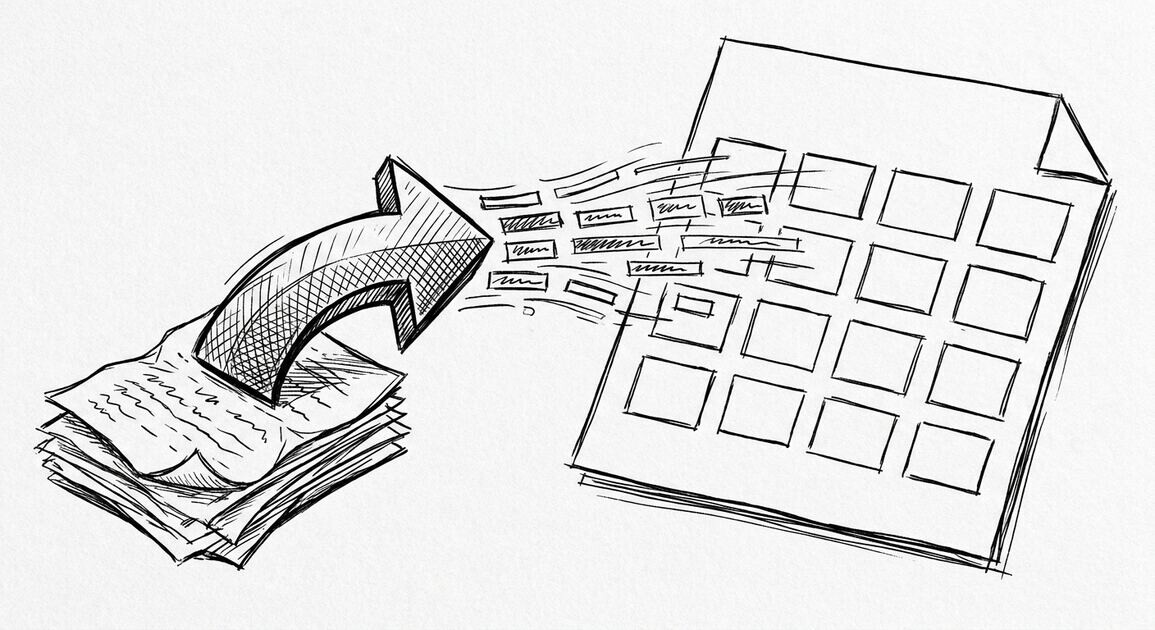
You've seen how to do it manually — now let the tool handle the heavy lifting. Upload your bank statement and get Excel, CSV, or QBO in a few clicks.
Try It FreeThe 3 Types of Debt Consolidation
3 options, in order of recommendation:
Option 1: Balance transfer card (0% APR for 12-21 months). A balance transfer card offers 0% APR on transferred balances for an introductory period (typically 12-21 months). The transfer fee is 3-5% of the balance. For a $10,000 balance, the fee is $300-$500. The benefit: you pay $0 interest for 12-21 months, so every dollar goes to principal. The risk: if you don’t pay off the balance before the intro period ends, the rate jumps to 20-30%.
The best balance transfer cards require a 700+ credit score. The 0% intro period is typically reserved for borrowers with excellent credit. For borrowers with lower credit scores, the intro period may be 6-12 months.
Option 2: Personal loan (fixed rate, 3-7 years). A personal loan from a bank, credit union, or online lender offers a fixed interest rate (typically 8-20%) and a fixed term (typically 3-7 years). The benefit: fixed monthly payment, fixed total interest, no surprises. The risk: the rate is higher than a balance transfer card, but lower than a credit card.
The best personal loans require a 580+ credit score. The rate depends on the credit score, income, and debt-to-income ratio. For a borrower with $30,000 in credit card debt at 22% APR, a personal loan at 12% over 5 years saves approximately $200/month and $8,000 in total interest.
Option 3: Home equity loan or HELOC (lowest rate, but secured by home). A home equity loan or HELOC uses the equity in your home as collateral. The rate is typically 6-10%, much lower than credit cards. The benefit: lowest rate, tax-deductible interest (for some borrowers). The risk: if you can’t make the payment, you lose your home.
The home equity option is only available to homeowners with sufficient equity (typically 20%+ of the home value). The risk of losing the home is significant. The 0% intro period of a balance transfer is a better option for most borrowers who own a home.
How to Prepare the Statements
The 5-step preparation process, 30-60 minutes total:
Step 1: Download 3 months of statements (10-20 minutes). Log into your bank’s online portal and download 3 months of statements. Save them in a single folder.
Step 2: Redact the account number (5 minutes). Use a PDF editor to redact the middle digits of the account number. Leave the last 4 digits visible.
Step 3: Combine into one PDF (5-10 minutes). Use a free tool to combine the 3 statements into one PDF. Put the most recent statement first.
Step 4: Verify the PDF is readable (5 minutes). Verify all pages are present, the text is searchable, the pages are in order.
Step 5: Submit with the application (5 minutes). Upload or email with the application.
The 4 Common Mistakes
4 mistakes that delay or derail consolidation applications:
1. Missing statements. The lender wants 3 months, you provide 2. The fix: always provide one more month than requested.
2. Wrong time period. The lender wants the most recent 3 months, you provide the oldest 3 months you have. The fix: download fresh statements, within 1 week of the application.
3. Undisclosed new debt. The statements show new credit card balances or new loans. The lender considers this a red flag. The fix: stop applying for new credit for at least 3-6 months before applying for consolidation.
4. Cash flow that doesn’t support the consolidation. The new payment would be 50% of the income, leaving no room for other expenses. The fix: reduce discretionary spending first, or choose a longer loan term (which lowers the monthly payment but increases the total interest).
The 3 Best Practices for Debt Consolidation
3 best practices that make the consolidation successful:
1. Stop using credit cards before and after consolidation. The consolidation only works if you don’t accumulate new debt. Close the credit card accounts or freeze them in a block of ice in the freezer (so you can use them for emergencies but not for impulse purchases). For the underlying spending analysis, see the bank transaction categorization reference.
2. Build an emergency fund alongside the consolidation payment. The consolidation lowers your interest, but you still need an emergency fund to avoid future credit card debt. The rule of thumb: 3-6 months of expenses in savings. While paying off the consolidation, save $50-100/month in a separate savings account.
3. Track progress monthly. Use a spreadsheet to track the balance, the monthly payment, and the months remaining. The visual progress is motivating and helps you stick to the plan. For the underlying data extraction, see the bank statement data extraction workflow.
For the conversion step, see the bank statement converter page. For combining multiple months, see the combine multiple bank statements guide. For the underlying transaction analysis, see the bank transaction categorization reference.
Turn any PDF statement into a clean sheet
Skip the typos and the hours of copying. Our converter handles any bank statement format and outputs Excel, CSV, or QBO for QuickBooks. No file retention, free to try.
Convert your statement