
Your bank statement shows two balances. They’re different. The lower one is the one that matters for spending and for loan applications.
The ledger balance (also called ‘current balance’ or ‘posted balance’) is the sum of all transactions that have posted to the account. The available balance is the ledger balance minus any pending transactions or holds. For most accounts, available balance is the lower number.
Ledger balance is the total of all posted transactions. Available balance is what’s actually accessible, after pending holds and pending debits.
When you swipe a debit card, the transaction is ‘pending’ for 1-3 business days before it ‘posts’. During the pending period, the available balance reflects the deduction, but the ledger balance does not. For loan applications, the underwriter typically uses the ledger balance, not the available balance. For day-to-day spending, the available balance is what prevents overdrafts.
For the broader bank statement workflow, see the bank statement converter guide. For the bookkeeper workflow, see the bookkeeper workflow. For the mortgage application, see the mortgage application guide.
What Is Ledger vs Available Balance?
Ledger balance is the total of all posted transactions. Available balance is what’s actually accessible, after pending holds and pending debits.
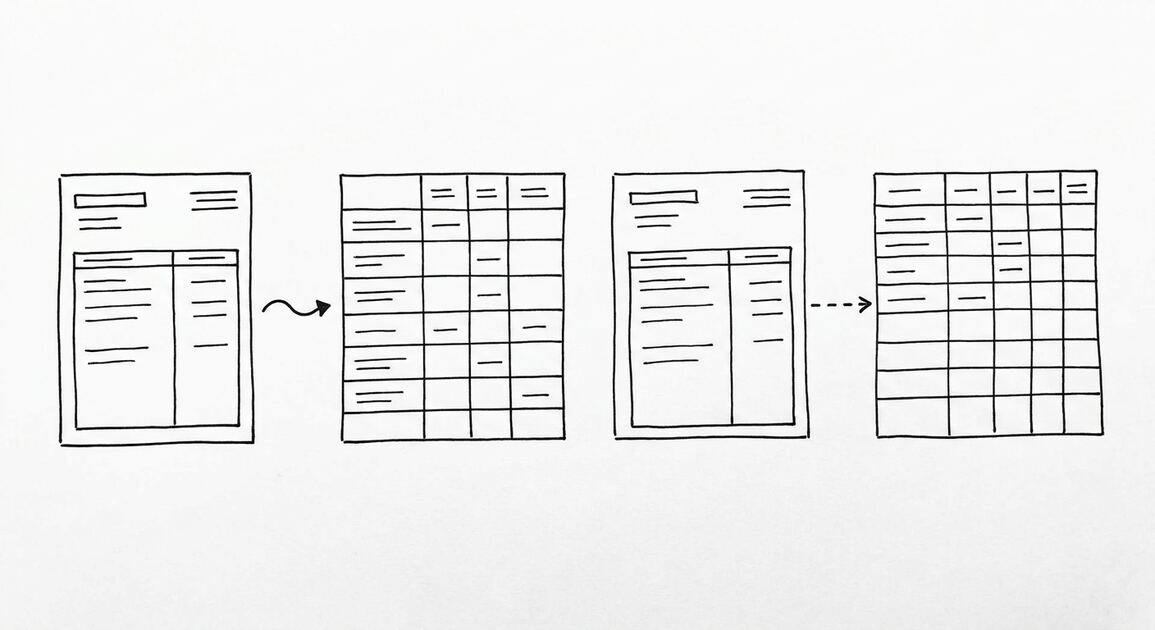
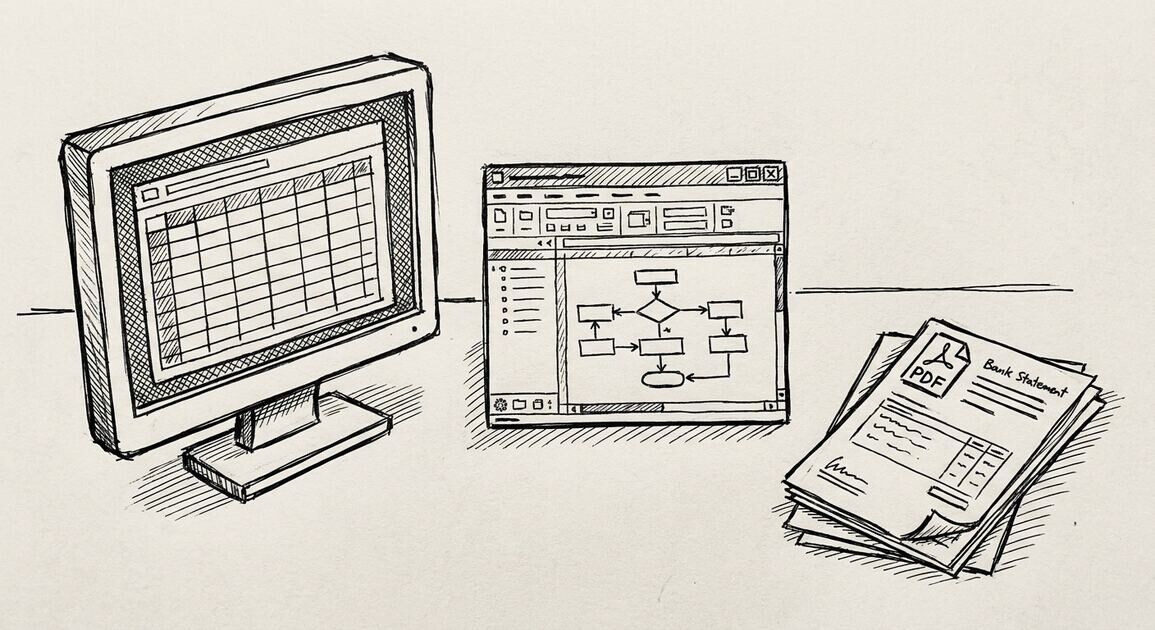
What most guides miss about this workflow is that the quality depends on the mechanism, not on the tool. Two tools that look different on the surface often run the same 4-step process underneath: read, find, parse, verify. The difference is in how well each step handles edge cases (merged cells, missing balances, non-standard date formats, scanned vs digital input). Choosing between tools based on UI alone misses the actual quality lever.
When you swipe a debit card, the transaction is ‘pending’ for 1-3 business days before it ‘posts’. During the pending period, the available balance reflects the deduction, but the ledger balance does not. For loan applications, the underwriter typically uses the ledger balance, not the available balance. For day-to-day spending, the available balance is what prevents overdrafts.
Why Ledger vs Available Balance Matters
The difference between ledger and available balance is the difference between what’s already happened and what’s about to happen. For reconciliation, bookkeepers use the ledger balance. For cash flow planning, business owners use the available balance.
Turn any PDF statement into a clean sheet
Skip the typos and the hours of copying. Our converter handles any bank statement format and outputs Excel, CSV, or QBO for QuickBooks. No file retention, free to try.
Convert your statementA Concrete Example
Using the available balance for loan applications. The underwriter wants the ledger balance.
The recon cutoff tool’s per-ledger-vs-available-balance-handling covers this case. The recon cutoff tool’s per-related-tracking handles the document trail.
Common Mistakes with Ledger vs Available Balance
Using the available balance for loan applications. The underwriter wants the ledger balance.
Using the ledger balance for daily cash flow. The available balance is what prevents overdrafts.
Ignoring pending transactions. Pending transactions are real and will post.
Bookkeepers report that reconciling on available balance (instead of ledger balance) is a common source of discrepancies. The fix: always reconcile on the ledger balance. The recon cutoff tool’s per-ledger-handling enforces this.
The 5 Balance Types on a Bank Statement
A typical bank statement shows 3-5 different balances. The most common:
Ledger balance. The total of all posted transactions, regardless of whether the funds have actually settled. Does not include pending transactions. This is the “official” balance for the day.
Available balance. The ledger balance minus any holds, pending debits, or pending transactions. This is what the account holder can actually spend right now.
Current balance. Sometimes used interchangeably with ledger balance, but can also include pending credits (like direct deposits that have been initiated but not yet posted).
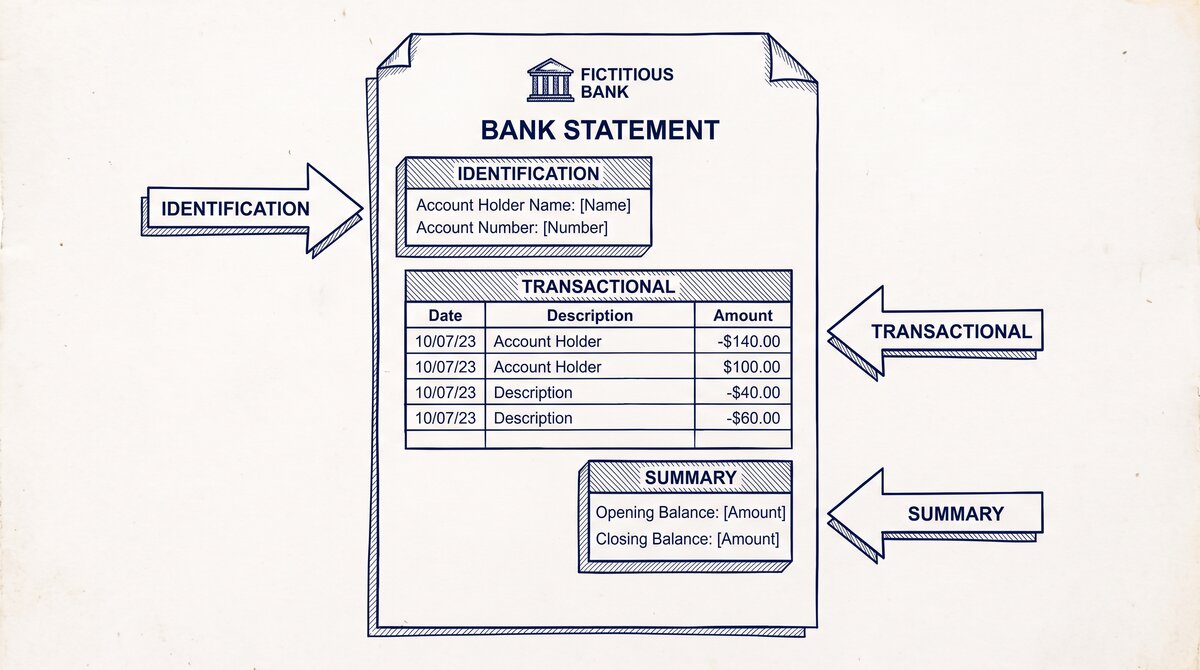
Opening balance. The balance at the start of the statement period. Equal to the closing balance from the previous period.
Closing balance. The balance at the end of the statement period. Equal to the opening balance plus all credits minus all debits.
The 3 balances that matter for daily decisions are ledger, available, and current. The opening and closing are statement-period anchors, not real-time balances.
Why the Ledger vs Available Difference Matters
3 scenarios where the ledger vs available difference causes problems:
Scenario 1: Pending debit. You have a $1,000 ledger balance. A pending $800 debit (e.g., a debit card authorization at a gas station) is held. The available balance is $200. If you try to spend $500, the transaction may be declined even though your ledger balance shows $1,000.
Scenario 2: Check deposit hold. You deposit a $5,000 check. The ledger balance includes the deposit immediately (or within 1 business day). The available balance is held for 2-5 business days while the check clears. You can see the deposit in the ledger but cannot use the funds until the hold releases.
Scenario 3: Overdraft prevention. Some banks offer “balance assistance” or low-balance alerts based on the available balance, not the ledger. A ledger balance that looks healthy might trigger an overdraft fee if the available balance is negative due to pending debits.
The fix for the bookkeeper: reconcile against the available balance, not the ledger. The available is the real spending capacity. The ledger is the record of what has posted.
How Banks Calculate the Available Balance
Each bank uses a different formula, but the most common calculation is:
Available = Ledger – Pending debits – Holds – Uncleared deposits + Pending credits
The components:
Pending debits. Debit card authorizations, scheduled bill payments, checks that have been written but not yet presented. These reduce available but not yet ledger.
Holds. Funds held by the bank for a specific reason: pending debit card transaction (especially for hotels, car rentals, gas stations), check deposits pending clearance, legal holds (court order, lien), merchant holds (pre-authorized payments).
Uncleared deposits. Deposits that have been received but not yet fully processed. Check deposits typically have 2-5 business day hold. Mobile check deposits may have 1-2 business day hold.
Pending credits. Direct deposits initiated but not yet posted. Incoming wires that are in process. These increase available but not yet ledger.
The 2-second rule: the available balance can change every 2 seconds as new pending transactions arrive. The ledger balance changes only when transactions post (typically once per business day for checks, in real-time for electronic transactions).
The 4 Common Mistakes with Ledger vs Available
4 mistakes that consistently cause problems:
1. Reconciling against the ledger balance. The ledger is the official record but does not reflect real-time spending. Reconciling against the ledger misses pending debits. The fix: reconcile against the available balance.
2. Triggering automatic payments based on the ledger. If you have a $1,000 ledger balance and a $900 pending debit, the $500 automatic payment scheduled for tomorrow will see the ledger balance as $1,000 (after the pending debit posts) or $100 (if the pending debit has not yet posted). The timing determines whether the payment succeeds.
3. Assuming the available balance includes all credits. Some banks show a “current balance” that includes pending credits and a “available balance” that does not. A direct deposit that has been initiated but not posted may not be in the available balance. The fix: check the bank’s specific policy.
4. Not accounting for holds. Hotel and car rental pre-authorizations can hold $200-$500 for 3-7 days. The hold reduces available but not ledger. A $500 hold can push a $600 available balance to $100, triggering overdraft on small purchases.
Bank Statement Reconciliation: The Workflow
For bookkeepers reconciling accounts:
Step 1: Pull the ledger balance from the bank statement. This is the closing balance at the end of the period. It’s the starting point for the reconciliation.
Step 2: Add back any deposits in transit. Deposits that have been initiated but not yet posted. Common at month-end.
Step 3: Subtract any outstanding checks. Checks that have been written but not yet cashed. Common for businesses with check payments.
Step 4: Compare to the book balance. The book balance is the accounting system’s record. Differences should be: deposits in transit, outstanding checks, bank fees, interest, errors. Each difference must be identified and either corrected or documented.
For the workflow that produces clean bank statement data for reconciliation, see the bank statement converter. The output formats the data so the reconciliation can be done in 5-10 minutes rather than 30-60 minutes.
Related Terms
For the broader bank statement workflow, see the bookkeeper workflow guide. For bank reconciliation, see the bank reconciliation guide. For the recon cutoff tool, see the bank reconciliation cutoff. For the bank statement glossary, see the bank statement glossary.
The Memorable Line
Ledger is the past. Available is the future. Reconcile on the past.
Related Terms
Pending vs posted | Recon cutoff date | Bank reconciliation cutoff guide | Bookkeeper workflow | Bank statement glossary
Turn That PDF Into a Spreadsheet in Minutes
You've seen how to do it manually — now let the tool handle the heavy lifting. Upload your bank statement and get Excel, CSV, or QBO in a few clicks.
Try It Free