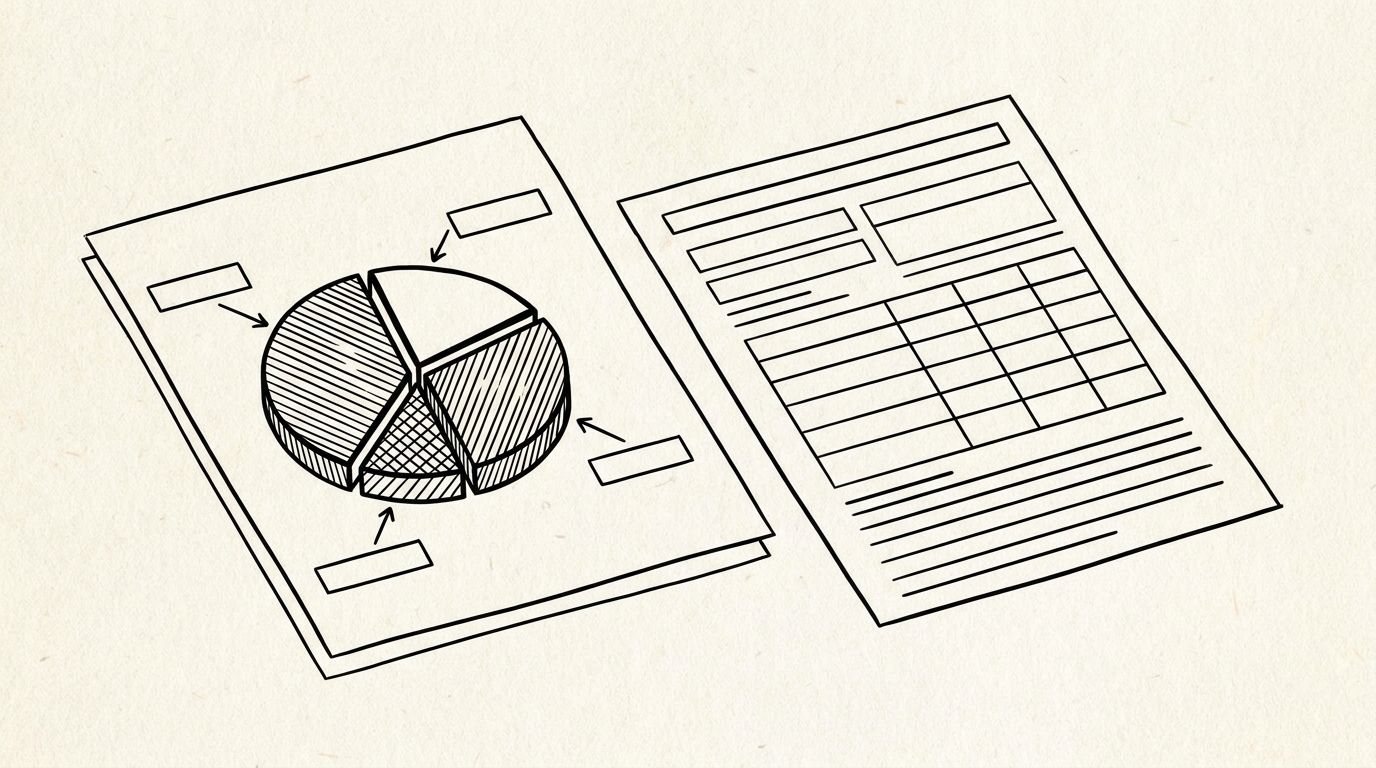

PITI is the 4 components of a full mortgage payment: Principal, Interest, Taxes, and Insurance. Lenders quote mortgage payments as “PITI” because the full housing
Lenders use PITI for the front-end DTI calculation (housing cost / income), which is why the figure matters for mortgage qualification.
This page covers what PITI is, how each of the 4 components is calculated, the difference between PITI and the full housing cost (which includes HOA), how lenders use PITI for DTI qualification, the relationship between PITI and the escrow account, and the 3 common mistakes that lead to PITI surprises. For the broader context, see the mortgage application bank statement guide and the bank statement glossary.
TL;DR. PITI stands for Principal, Interest, Taxes, and Insurance. It is the full monthly housing cost for a mortgaged home. P&I is determined by the loan amount, interest rate, and term. Taxes are property taxes (paid monthly into escrow, paid annually to the county). Insurance is homeowners insurance (paid monthly into escrow, paid annually to the insurer). Lenders use PITI for the front-end DTI calculation. For most loans, the front-end DTI target is below 28% of gross income. The 3 common PITI mistakes: forgetting insurance when budgeting, underestimating property taxes in a new area, and not accounting for HOA fees (which are added to PITI for the lender’s affordability calculation).
What PITI Is
PITI is the acronym for the 4 components of a complete mortgage payment: Principal (the loan balance being paid down), Interest (the cost of borrowing, calculated on the outstanding balance), Taxes (property taxes, collected monthly and held in escrow to be paid annually to the county), and Insurance (homeowners insurance, also collected monthly into escrow to be paid annually to the insurer). When a lender quotes a monthly payment, the PITI figure is what they mean, because the borrower’s actual monthly housing cost is all 4 components combined, not just the principal and interest.
For a $320,000 loan at 7% interest for 30 years, the principal and interest (P&I) is $2,130/month. Add $400/month for property taxes ($4,800/year), $100/month for homeowners insurance ($1,200/year), and the total PITI is $2,630/month. The lender collects $2,630/month from the borrower, keeps the $2,130 for the loan payment, holds the $500 for taxes and insurance in an escrow account, and pays the taxes and insurance bills when they come due. The escrow mechanism is why the borrower pays monthly but the bills are annual, which matters because without escrow the borrower would need to save $6,000/year separately for taxes and insurance.
A common failure mode is borrowers who budget for the P&I but forget the taxes and insurance. They get approved for a loan with a $2,130 P&I and assume that’s the monthly cost, then are surprised when the actual payment is $2,630 because the lender collects taxes and insurance through escrow. The fix: always look at the PITI figure, not just the P&I, when budgeting for a mortgage.
The 4 PITI Components in Detail
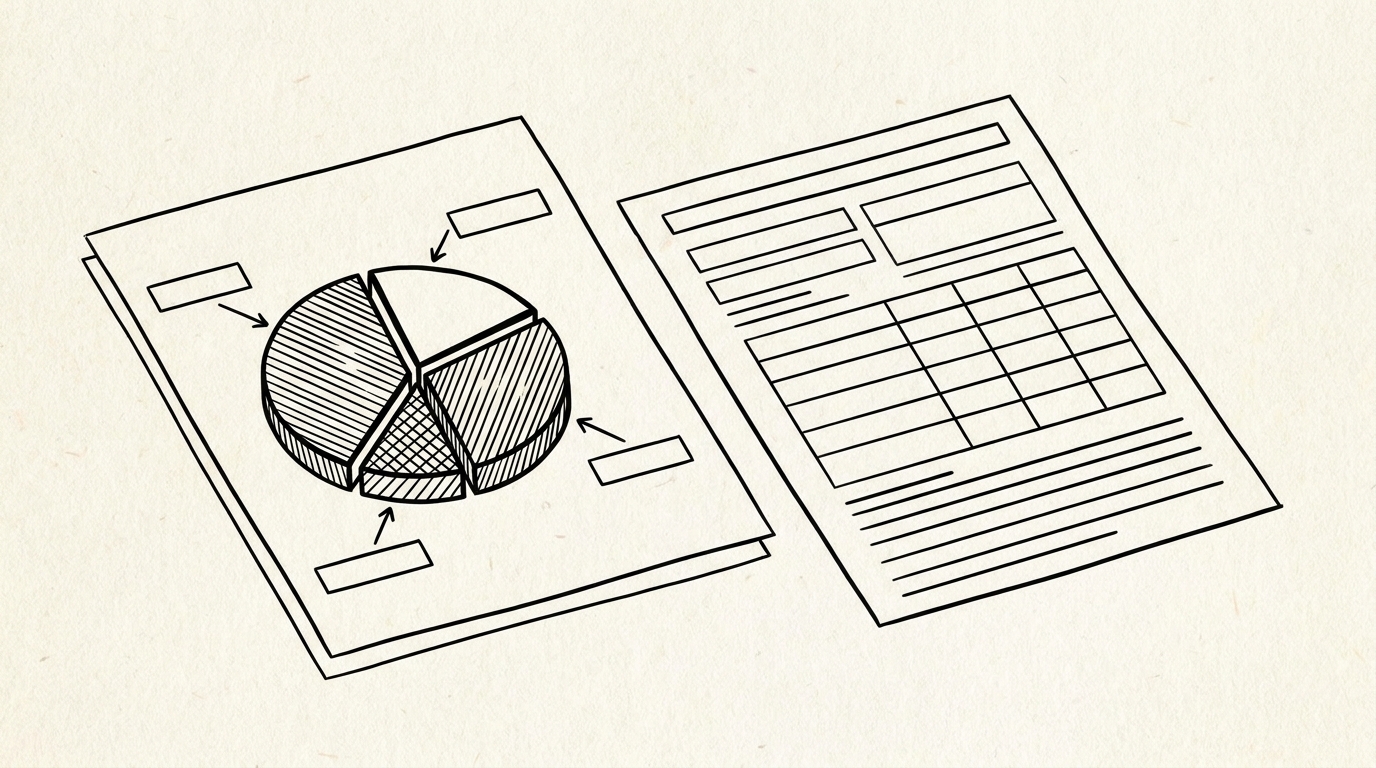
Each of the 4 components is calculated differently and paid through a different mechanism:
Principal. The portion of the payment that reduces the loan balance. In the early years of a mortgage, most of the P&I payment goes to interest; in the later years, more goes to principal. For a $320,000 loan at 7% for 30 years, the first payment is $1,996 total, of which $1,866 is interest and $130 is principal. By year 15, the split is roughly 50/50. By year 30, the final payment is mostly principal.
Interest. The cost of borrowing, calculated as the loan balance times the interest rate, divided by 12 for the monthly figure. For a $320,000 loan at 7%, the monthly interest is $320,000 x 0.07 / 12 = $1,867. The interest portion decreases as the balance is paid down, which is why the principal portion grows over time.
Taxes. Property taxes are set by the local county or municipality, typically as a percentage of the property’s assessed value. Property tax rates vary widely: 0.5% in Hawaii, 2.5% in New Jersey, 1.0-1.5% in most other states. For a $400,000 home with a 1.2% tax rate, annual property taxes are $4,800, or $400/month. The lender collects this monthly into an escrow account and pays the annual bill when it comes due, which matters because the county does not care about the borrower’s payment schedule; they want their money once a year.
Insurance. Homeowners insurance is set by the insurance company, not the lender. Typical premiums are $1,000-$2,000/year depending on the property value, location, and coverage. For a $400,000 home, the annual insurance is often $1,200, or $100/month. Like taxes, the lender collects this monthly into escrow and pays the annual premium when due. The lender may also require flood insurance if the property is in a flood zone, which can add $500-$3,000/year to the insurance cost.
Turn any PDF statement into a clean sheet
Skip the typos and the hours of copying. Our converter handles any bank statement format and outputs Excel, CSV, or QBO for QuickBooks. No file retention, free to try.
Convert your statementPITI vs Full Housing Cost: HOA and Other Fees
The PITI figure does not include HOA (homeowners association) fees, which are common in condos, townhomes, and some planned communities. The full housing cost is sometimes called “PITIA” (adding “A” for association dues) or “Total Housing Payment.” For affordability calculations, lenders add the HOA fee to the PITI for the front-end DTI calculation, even though HOA fees are not technically part of the PITI acronym.
For a condo with $300/month HOA fees, the lender treats the housing cost as $2,930 ($2,630 PITI + $300 HOA) for DTI qualification. This matters because the borrower’s actual monthly housing cost is $2,930, even though the “PITI” figure is $2,630. The fix: when budgeting, use the full housing cost (PITI + HOA), not just the PITI figure from the lender’s quote.
For properties with Mello-Roos (a special tax district in California), the lender typically includes the Mello-Roos payment in the property tax component of PITI, which raises the PITI but keeps the calculation simple. For properties with other special assessments (sewer, water, garbage), the lender may or may not include them in PITI
depending on whether they are billed through the property tax bill.
How Lenders Use PITI for DTI Qualification
Lenders use the PITI figure (plus HOA if applicable) for the front-end DTI calculation, which is the proposed housing cost divided by gross monthly income. The target front-end DTI is below 28% for most conventional loans, below 31% for FHA, and the back-end DTI (all debts including PITI) is below 36% for conventional, below 43% for FHA. For the full DTI mechanics, see the DTI definition and the DTI mechanism pages.
For a borrower with $8,000 gross monthly income, the maximum PITI for 28% front-end DTI is $2,240/month. For 31% FHA front-end DTI, the maximum PITI is $2,480/month. These are tight limits that determine what the borrower can afford. For the broader mortgage qualification, see the mortgage application guide.
A common failure mode is borrowers who focus on the P&I (loan payment) when budgeting and forget that the lender uses the full PITI for qualification. A borrower pre-approved for a $2,130 P&I may find that the full PITI is $2,500, which puts them over the f
ront-end DTI limit. The fix: get pre-approved based on the full PITI, not just the P&I, and budget accordingly.
PITI, Escrow, and the Annual Tax/Insurance Bills
The escrow account is the mechanism the lender uses to collect taxes and insurance monthly and pay them annually. Each month, 1/12 of the annual tax bill and 1/12 of the annual insurance premium are added to the mortgage payment and held in escrow. When the annual bill comes due, the lender pays it from the escrow account. The escrow balance fluctuates through the year: it builds up before the annual bills, then drops to near zero after the bills are paid, then rebuilds.
The lender performs an annual escrow analysis to ensure the monthly collection matches the actual bills. If the taxes or insurance went up, the lender increases the monthly collection to cover the higher bills. If the taxes or insurance went down, the lender refunds the difference or reduces the monthly collection. The escrow analysis is typically done once per year, 30-60 days before the annual bills come due.
For the first year of a mortgage, the lender may collect a few months of escrow upfront at closing to build the initial escrow balance. This is shown on the closing disclosure as “initial escrow payment” or “escrow cushion.” For buyers, this is part of the closing costs, on top of the down payment. The fix: budget for the initial escrow payment separately from the down payment, typically 2-3 months of taxes and insurance.
The 3 Common PITI Mistakes
3 mistakes that consistently cause PITI-related budget surprises:
1. Forgetting insurance when budgeting. The P&I is the most visible number, but the full PITI includes taxes and insurance. A borrower who budgets for $2,130 P&I but pays $2,630 PITI is $500/month short. The fix: always use the full PITI figure, not just the P&I, when calculating affordability.
2. Underestimating property taxes in a new area. Property tax rates vary widely by state and county. A buyer moving from Texas (1.8% effective rate) to Hawaii (0.5%) will see a major decrease; a buyer moving the other way will see a major increase. The fix: research the property tax rate in the target area before committing, and use the actual rate, not the current state rate.
3. Not accounting for HOA fees. For condos, townhomes, and some planned communities, HOA fees can be $200-$800/month. The lender adds HOA to PITI for the DTI calculation, so a $2,630 PITI condo with $400 HOA is treated as $3,030 housing cost for qualification. The fix: ask about HOA fees early, and include them in the affordability calculation from the start.
Start with the Workflow
The fastest path is to start with the conversion step, which produces the data that every other step needs. The bank statement converter handles the PDF-to-Excel step in 2-5 minutes, with no upload to a server.
For a complete reference of the terms used throughout this article, see the bank statement glossary.
Turn That PDF Into a Spreadsheet in Minutes
You've seen how to do it manually — now let the tool handle the heavy lifting. Upload your bank statement and get Excel, CSV, or QBO in a few clicks.
Try It Free