
Landlords ask for bank statements, but not every account tells the same story. A checking account shows income flow, while a savings account shows reserves. Knowing which to submit can speed up approval and avoid confusion.
Most landlords want the account where your salary lands. That is usually a checking account with regular deposits and monthly spending. It proves you can pay rent from cash flow, not just from savings.
Savings accounts still matter. They show reserves and emergency funds. A healthy savings balance reassures a landlord that a short gap in income will not cause a missed payment.
Some applicants have multiple accounts across banks. Landlords may ask for all accounts that show income or significant balances. Hiding an account that holds your main income can look like a red flag.
Preparation is simple. Identify your primary checking account, gather two to three months of statements, and add savings statements if they show meaningful reserves. Clarity beats volume.
Landlords prefer checking account statements showing regular income deposits. Savings account statements show reserves but not income flow. Applicants should provide the primary checking account where salary deposits. Multiple accounts means providing all accounts that show income or significant balances. Landlords may require two to three months of the primary checking account.
Key facts. Landlords prefer checking account statements showing regular income deposits. Savings account statements show reserves but not income flow. Applicants should provide the primary checking account where salary deposits. Multiple accounts means providing all accounts that show income or significant balances. Landlords may require two to three months of the primary checking account.
Checking vs savings for rental applications. Checking shows income flow and monthly spending. Savings shows reserves and emergency funds. Landlords weigh both, but the checking account carries the most weight.
Why checking accounts come first
A checking account is where salary lands and rent leaves. That makes it the best proof of ability to pay. Landlords read deposits and withdrawals to confirm steady income and controlled spending.
Regular deposits on a predictable schedule carry weight. Biweekly or monthly deposits that match a stated salary read as stable employment. Irregular deposits raise questions that slow approval.
Spending patterns matter too. A checking account that shows rent sized withdrawals and modest discretionary spending signals a renter who lives within means. Overdrafts or frequent late fees signal risk.
Our guide on rental application bank statements covers the standard document checklist landlords use. The primary checking account sits at the top of that list.
Landlords often require two to three months of the primary checking account. That window captures a full pay cycle and smooths out one off events. A single month can mislead if it includes a bonus or a missed paycheck.
If your salary goes to a different account than your spending account, provide both. A landlord needs to trace income from deposit to rent payment. Gaps in that chain invite extra questions.
| Account type | What it shows | Landlord weight |
|---|---|---|
| Primary checking | Income deposits and monthly spending | Highest |
| Savings | Reserves and emergency funds | Moderate |
| Secondary checking | Side income or bill payments | Supporting |
| Money market | Higher yield reserves | Supporting |
When savings accounts help
Savings accounts show reserves. A balance that covers three to six months of rent reassures a landlord that a short income gap will not cause a missed payment. That buffer matters for applicants with thin credit.
Savings statements do not show income flow. A landlord cannot confirm salary from a savings account alone. That is why savings statements supplement rather than replace checking statements.
Large savings balances can also support a higher rent bracket. A landlord may accept a lower income ratio if reserves are strong. Each property sets its own rules on this.
Our guide on rental income verification with bank statements explains how landlords combine deposit history with balance checks. Savings figures into that combined picture.
Be ready to explain large transfers into savings. A sudden deposit from family or a asset sale can look like unexplained income. A short note clears it up.
Do not move money into savings right before applying. A balance that appears overnight looks manufactured. Steady growth over months reads as real financial health.
Turn any PDF statement into a clean sheet
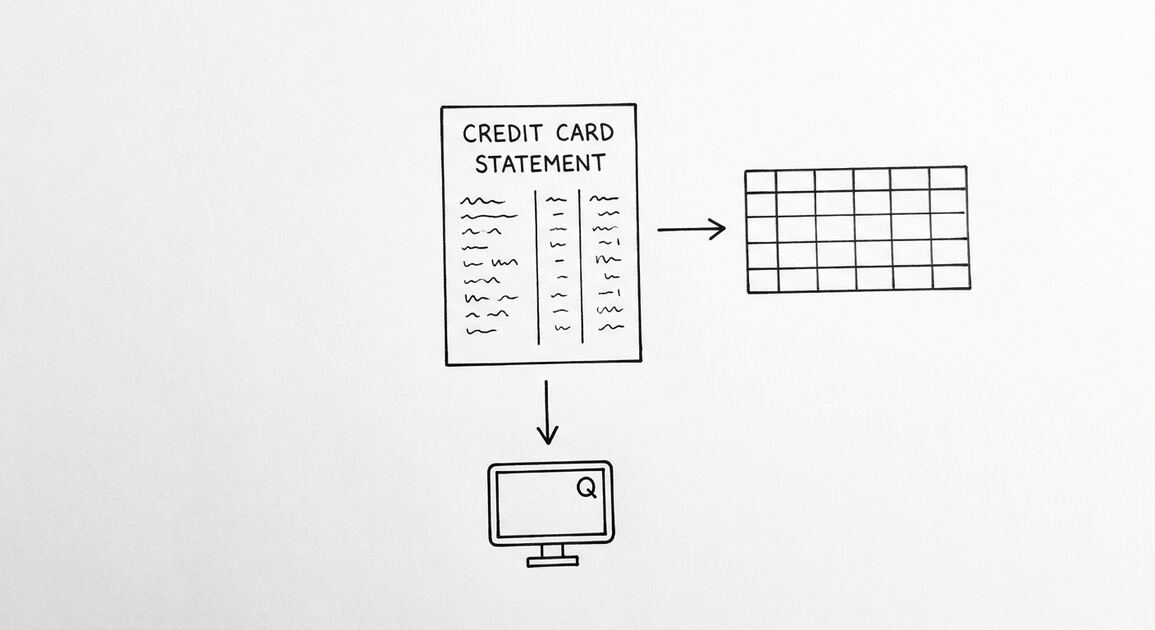
Skip the typos and the hours of copying. Our converter handles any bank statement format and outputs Excel, CSV, or QBO for QuickBooks. No file retention, free to try.
Convert your statementMultiple accounts and disclosure
Many applicants use more than one bank. A primary checking at one bank, a savings at another, and a bill pay account at a third. Landlords may ask for all accounts that show income or significant balances.
Disclose every account that touches your income. If your salary splits across two accounts, provide both. If a side gig pays into a separate account, include it. Transparency builds trust.
Small accounts with trivial balances can be left out if the landlord agrees. A five dollar account used only for a streaming subscription does not need a statement. Ask the landlord what they want rather than guessing.
Our guide on income documentation checklist lists the accounts and documents a complete packet should include. Use it to avoid missing one.
Joint accounts need care. If you share an account with a partner who is not on the application, the landlord may ask how expenses split. Be ready to explain the arrangement in writing.
Business accounts are a separate case. A self employed applicant may run income through a business checking account. Provide both business and personal statements and a clear explanation of transfers.

Which statements to submit
Start with the primary checking account. Provide two to three months of statements. That is the core of most applications and the first thing a landlord reviews.
Add savings statements if the balance is meaningful. A savings account with a few hundred dollars adds little. A savings account with several months of rent adds real strength.
Our guide on two month bank statement prep walks through gathering and formatting statements. The same steps apply to multiple account types.
If you have a money market or certificate of deposit, include the most recent statement. These accounts show reserves but rarely show income. A single recent statement is usually enough.
Redact account numbers and non relevant transactions if the landlord allows. Keep income deposits and balance figures visible. Our guide on explaining large deposits helps when a statement shows a big one time transfer.
Label each statement with the account type and bank name. A landlord sorting through a stack of PDFs will appreciate a clear filename. Small effort, big clarity.
| Scenario | Statements to provide | Notes |
|---|---|---|
| Single checking account | Two to three months of checking | Standard case |
| Checking plus savings | Checking months plus latest savings | Shows reserves |
| Multiple checking accounts | All accounts with income deposits | Full income picture |
| Self employed | Business and personal statements | Explain transfers |
Special cases and red flags
Cash deposits into a checking account can look like unexplained income. A landlord may ask for the source. Be ready with receipts or a written explanation. Our guide on special cases for bank statements covers this.
Overdrafts on a checking account are a red flag. Even one overdraft in three months can raise questions. Avoid overdrafts in the months before you apply.
Large transfers between your own accounts can confuse a reviewer. Moving money from savings to checking right before applying looks like manufactured liquidity. Keep your normal patterns.
Closed accounts need a note. If a landlord asks for six months and you switched banks three months ago, provide statements from both banks. Explain the switch in one sentence.
Student or custodial accounts may not count as your own funds. A landlord may ask whether you control the money. Be clear about ownership and access.
Finally, keep every statement you submit. If a question arises later about a deposit or a transfer, your copy is your record. Organization now saves stress later.
- Identify the primary checking account. The one where salary lands is the core document.
- Gather two to three months. Cover a full pay cycle and avoid single month quirks.
- Add savings if meaningful. Reserves strengthen the application.
- Include other income accounts. Side gigs and secondary accounts belong in the packet.
- Label and organize. Clear filenames and a short cover note help the reviewer.
- Redact with care. Hide account numbers, keep income and balances visible.
- Explain transfers. A one line note prevents confusion.
Final decision path
If you have one checking account with regular salary deposits, submit two to three months of that account. That is the standard and usually sufficient.
If you also have savings with meaningful reserves, add the latest statement. It strengthens the application without adding much work.
If your income splits across accounts, provide all of them. A complete picture beats a partial one every time.
If you are self employed, include both business and personal statements and explain any transfers. Clarity on cash flow wins approval.
If a statement shows a large deposit or transfer, add a short note. Proactive explanation prevents delays.
Keep copies of everything you submit. Your own records are your best defense if a question arises later.
Last updated: October 2026 by ESS editorial team.
Turn PDF Bank Statements Into Workable Spreadsheets
Your bank statement is a mess of numbers, but your books shouldn't be. Use our converter to get Excel, CSV, or QBO files — ready for QuickBooks.
Try It Free Now